
Home mechanic (basic tools) · Time: 30 to 45 min (estimate) (estimate)
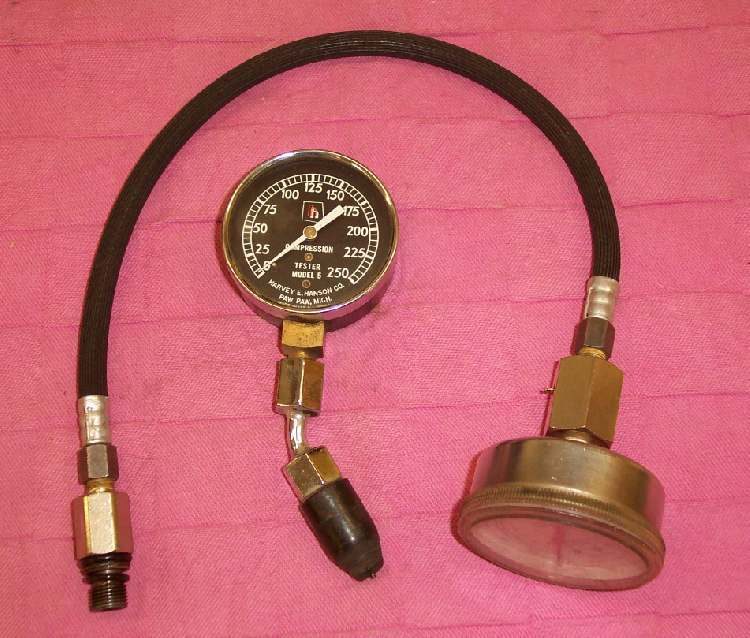
Compression is how tightly the piston squeezes the air in the cylinder. Rings, valves and the head gasket must seal for the engine to start and pull well. A gauge in the spark plug hole measures the highest pressure while you turn the engine over. A "wet" test with a little oil tells you whether the leak is at the rings or at the valves and gasket.
Safety
- Work on a warm engine but take care: the head and exhaust are hot.
- Fuel can spray from the plug hole. Keep sparks and flames away and work outside or with good air flow.
- Fuel-injected bikes: unplug the injector or remove the fuel pump fuse so fuel does not wash into the cylinder. Carburettor bikes: turn the fuel tap off.
- Hold the plug cap against the engine or fit it to a spare plug grounded on the engine. Never leave the coil firing into the air; it can damage the ignition.
You need
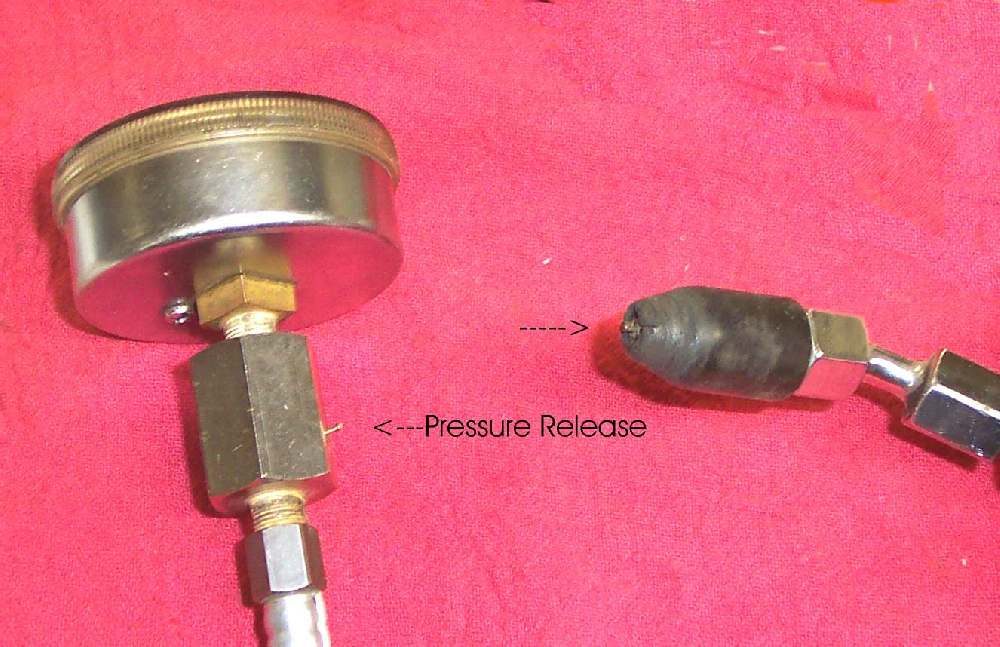
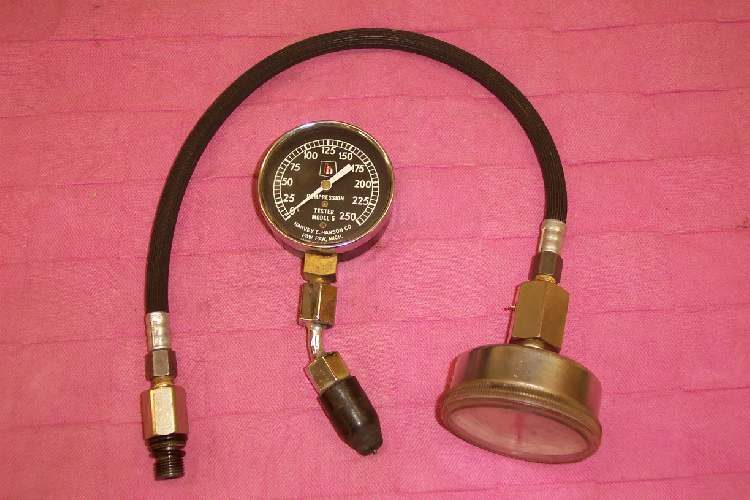
- A compression gauge with a screw-in adapter for your plug thread. Push-in rubber cones leak and read low on small engines.
- Your manual's compression value. Readings differ between gauges, so also compare with a known good engine of the same model.
Steps
- Warm the engine to normal temperature, then stop it.
- Check the battery is well charged (electric start) or that you can kick steadily (kickstart). Slow cranking reads low.
- Disable fuel as above. Remove the spark plug.
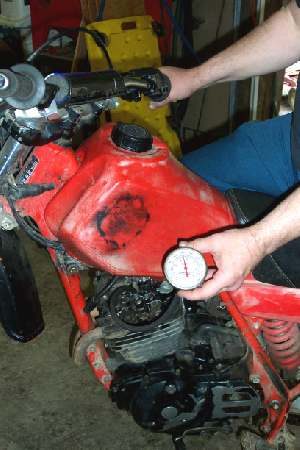
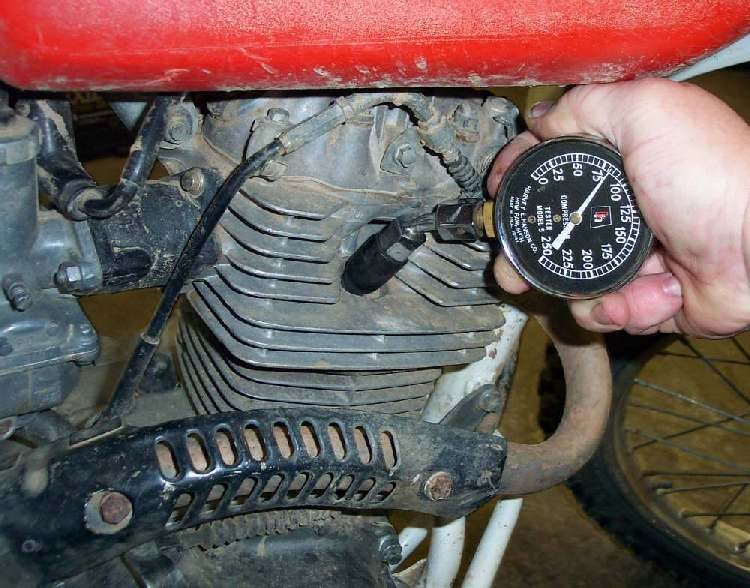
- Screw the gauge adapter in by hand until it seals.
- Open the throttle fully and hold it open.
- Crank the engine until the needle stops rising (usually 4 to 8 strokes). Read and write down the value.
- Release the gauge pressure and repeat once to check.
- Compare with your manual. K-Light 125: 1.0 to 1.2 MPa.
- If the reading is low, do a wet test: squirt a small amount of engine oil (about a teaspoon) into the plug hole, turn the engine over a few times to spread it, and test again.
- Refit the plug, the plug cap and the fuel supply.
Reading the result
| Dry | Wet | Likely cause |
|---|---|---|
| Normal | not needed | Compression is fine. The fault is in fuel, spark or air. |
| Low | Rises clearly | Worn or stuck piston rings, worn cylinder |
| Low | Little or no rise | Valve not closing (clearance too small, burnt or bent valve, carbon on seat) or head gasket leak |
| Very low on a four-stroke after work on the top end | Valve timing wrong; workshop | |
| Higher than normal | Heavy carbon in the combustion chamber |
On a two-stroke the wet test is less clear because oil can seal the ports; use Do a leak-down test for a firmer answer.
Check your work
- Plug refitted to torque, fuel restored, engine starts.
If it did not fix the problem
- Low dry and wet, valves suspected: first Check and adjust valve clearance, then retest.
- Low and rising wet, or any doubt: Do a leak-down test and Assess the top end (cylinder, piston, valves).
Reference values (K-Light 125)
| Item | Value | PDF page |
|---|---|---|
| Compression pressure (warm, throttle open) | 1.0 to 1.2 MPa | 60 |