
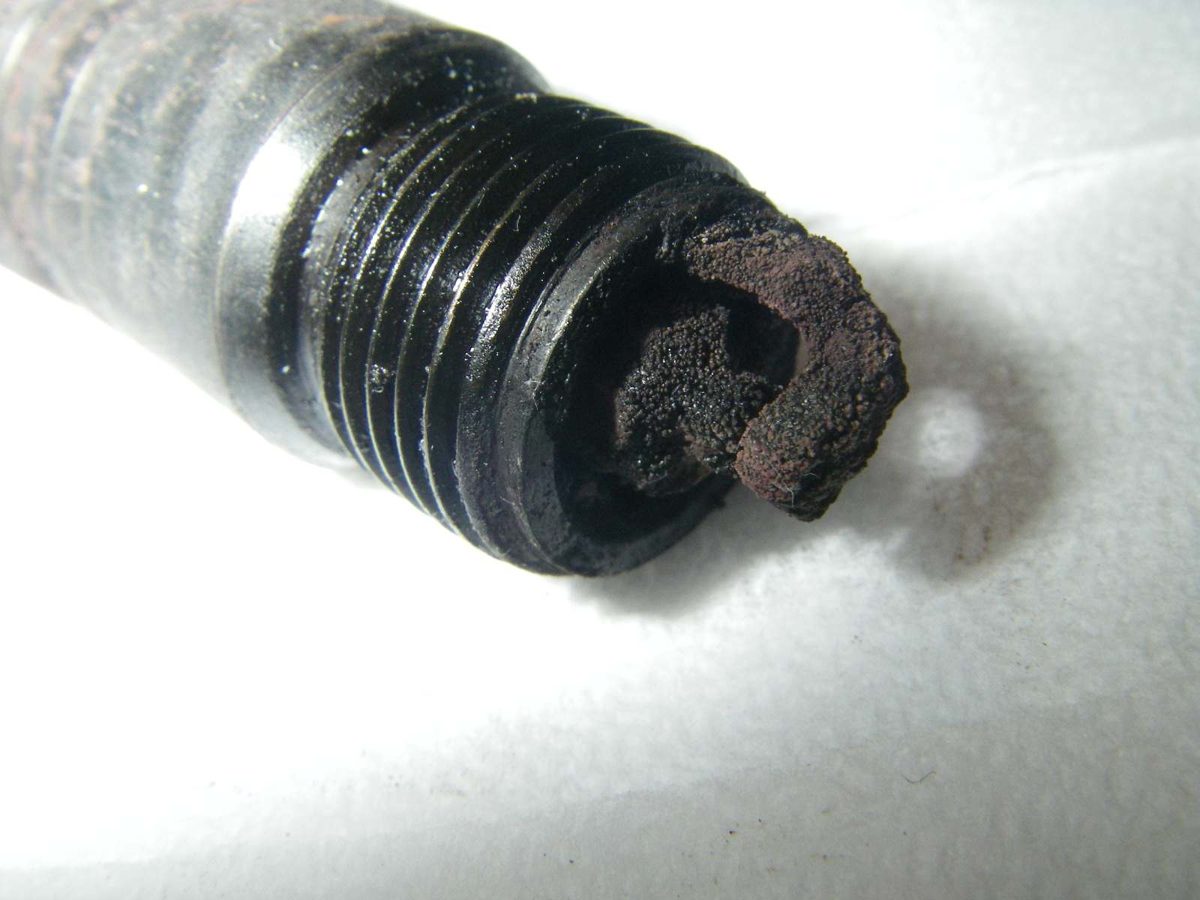
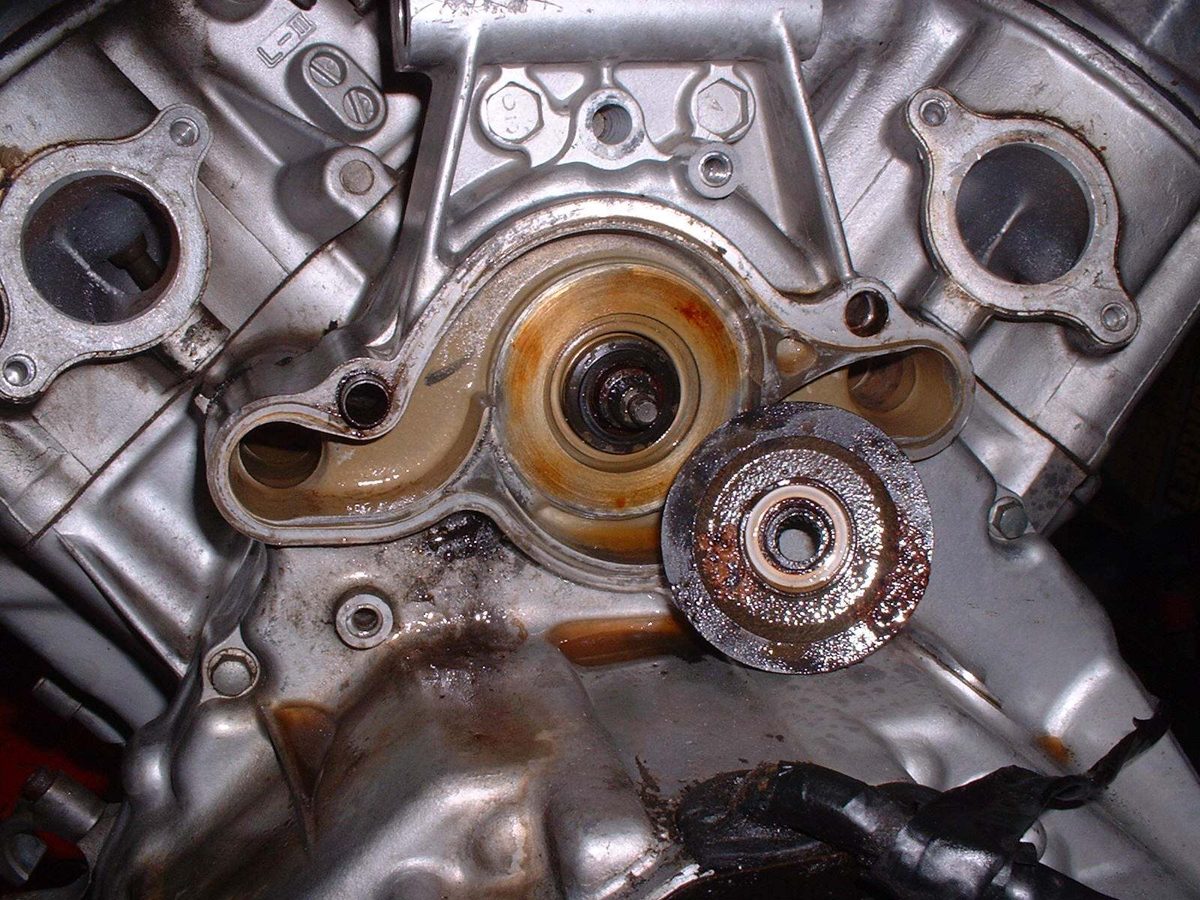
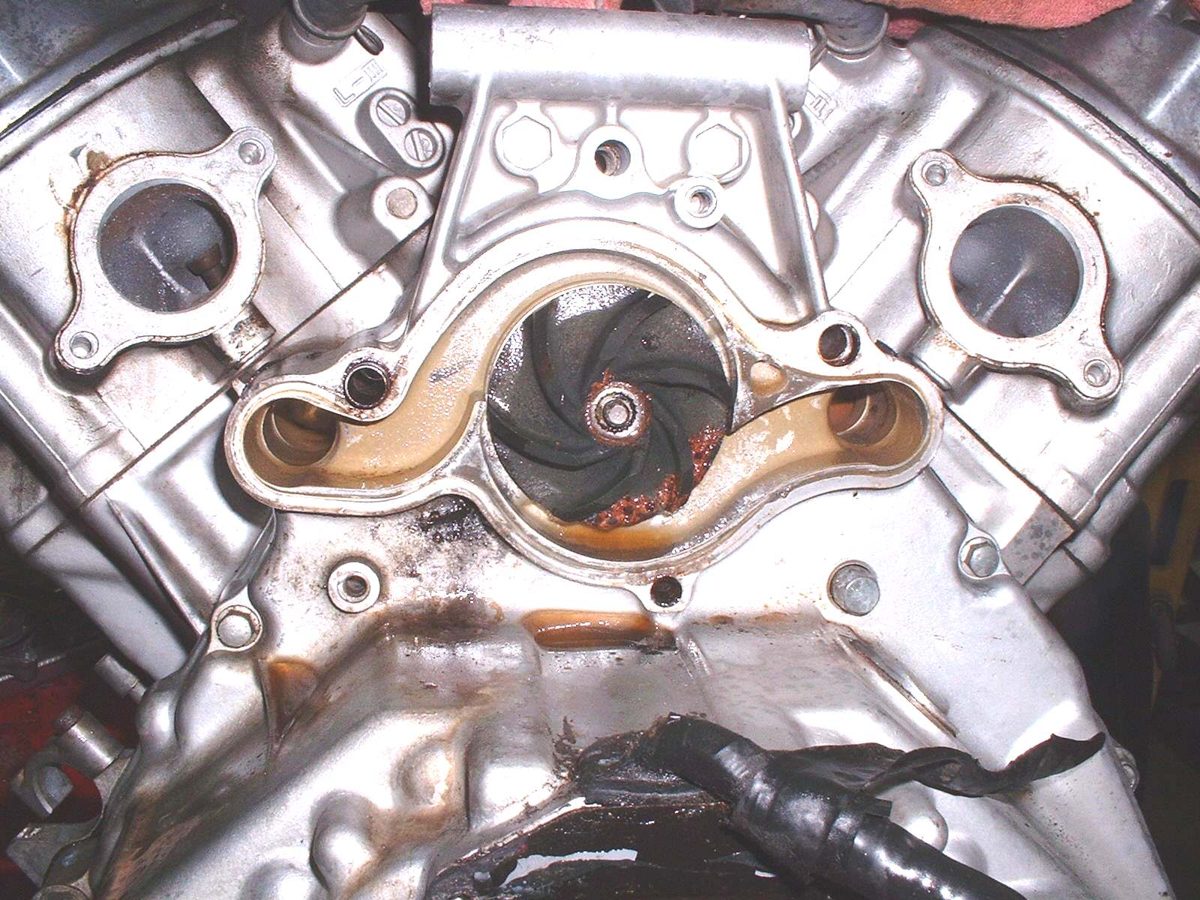
Thin white vapour when the engine is cold is normal. Burning fuel makes water, and it condenses in a cold pipe and drips from the outlet. It should clear within a few minutes as the pipe warms. Thick white smoke that stays when the engine is warm, and smells sweet, means coolant is burning in the cylinder on a liquid-cooled engine, usually through a failed head gasket or a cracked head. Some manuals, including the K-Light, call oil smoke "white"; if the smoke is bluish and smells of burnt oil, it is oil.
Is it safe to ride?
Cold-start vapour that clears: yes. Thick white smoke when warm on a liquid-cooled bike: do not ride; the engine can overheat and coolant can damage the bearings.
Quick checks first
- Does it clear after 5 minutes of riding?
- Is your bike air-cooled or liquid-cooled?
- Liquid-cooled: is the coolant level falling?
- Smell: sweet (coolant), burnt oil, or petrol?
Diagnose it step by step
1Does the vapour clear once the engine and pipe are warm, with only water drips at the outlet?
- Yes: normal condensation, especially in cool or humid weather and on short trips. No repair needed. Short trips also put water in the oil; see Oil is milky or creamy if the oil looks creamy.
- No, it stays when warm: go to step 2.
2Is your engine air-cooled?
- Yes: there is no coolant to burn. Persistent white or grey smoke is oil. Go to Blue or grey smoke from the exhaust.
- No, liquid-cooled: go to step 3.
3Engine cold: check the reserve tank with Check and top up coolant. Has the level fallen with no outside leak?
- Yes: coolant is likely going into the engine. Go to step 4.
- No: confirm the smoke colour with Diagnose exhaust smoke by colour. If it is oil, go to Blue or grey smoke from the exhaust.
4Check the engine oil with Check the engine oil level. Is it milky or above the mark?
- Yes: coolant is mixing with the oil. Stop riding. Go to Oil is milky or creamy.
- No: go to step 5.
5With the engine running, are there bubbles in the reserve tank, or does it smell of exhaust?
- Yes: combustion gas is entering the coolant: head gasket or cracked head.
- No: still possible. Go to step 6.
6. Workshop: Find a coolant leak with a pressure test, and Do a leak-down test for bubbles in the radiator. A head gasket job also needs the head checked for flatness, because overheating warps heads.
What happens if you ignore it: the engine loses coolant, overheats and can warp the head; coolant in the oil destroys bearings.
Causes, most likely first
| Cause | How to confirm | Fix |
|---|---|---|
| Normal condensation | Clears when warm | None needed |
| Oil smoke called "white" | Bluish, burnt oil smell | Diagnose exhaust smoke by colour |
| Head gasket leak (liquid-cooled) | Coolant loss, bubbles | Do a leak-down test |
| Cracked head or cylinder | Coolant loss after overheating | Find a coolant leak |