
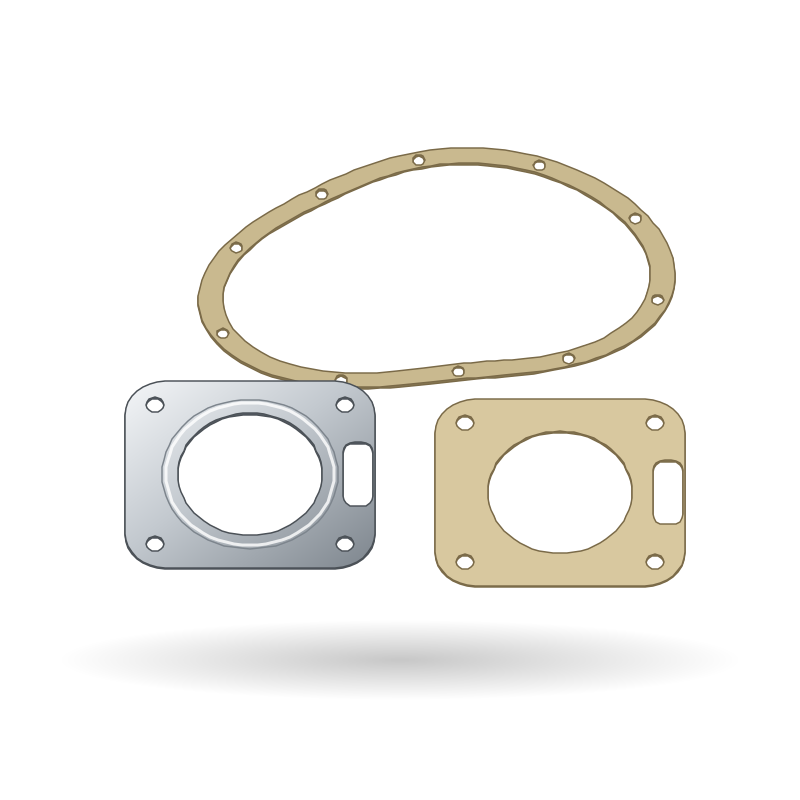
Gaskets are thin seals between two metal faces of the engine. The main ones are the head gasket (between head and cylinder), the base gasket (between cylinder and crankcase), the side cover gaskets, the rocker or cam cover gasket and the crankcase gasket. Many small joints use rubber O-rings instead.
What it does
A gasket fills the tiny gaps between two faces so oil, compression and air cannot leak. The head gasket also has to hold combustion pressure and heat. Gaskets harden and shrink with heat and age, and are crushed when first tightened, so a used gasket rarely seals a second time.
Signs it is worn or failing
- Oil leaking under the bike, from a side cover or the head or base.
- Low compression from a blown head gasket.
- White smoke or milky oil on a liquid-cooled engine if coolant is getting past the head gasket.
- Hissing or a puff of gas at the head joint when the engine runs.
When to replace it
Every time a joint is opened. Also when a joint leaks after the bolts are checked to the right torque. Follow your bike's manual.
What to match when buying
- Match engine code. Gasket sets are sold as top-end (head, base, cover) or full sets.
- Head and base gaskets come in thicknesses. Fit the same thickness as the old one, or the compression and valve-to-piston gap change.
- Check bolt holes, oil holes and dowel holes line up with the old gasket before fitting. Poor gaskets are often missing an oil hole.
Fitting notes
- Clean both faces without gouging them; aluminium scratches easily.
- Use new dowels or O-rings where fitted. Do not add sealant unless the manual says so; it can block oil holes.
- Tighten in steps, inside to outside, in a cross pattern. Cover gaskets: Replace an engine cover gasket. Finding the leak first: Trace an oil leak.