
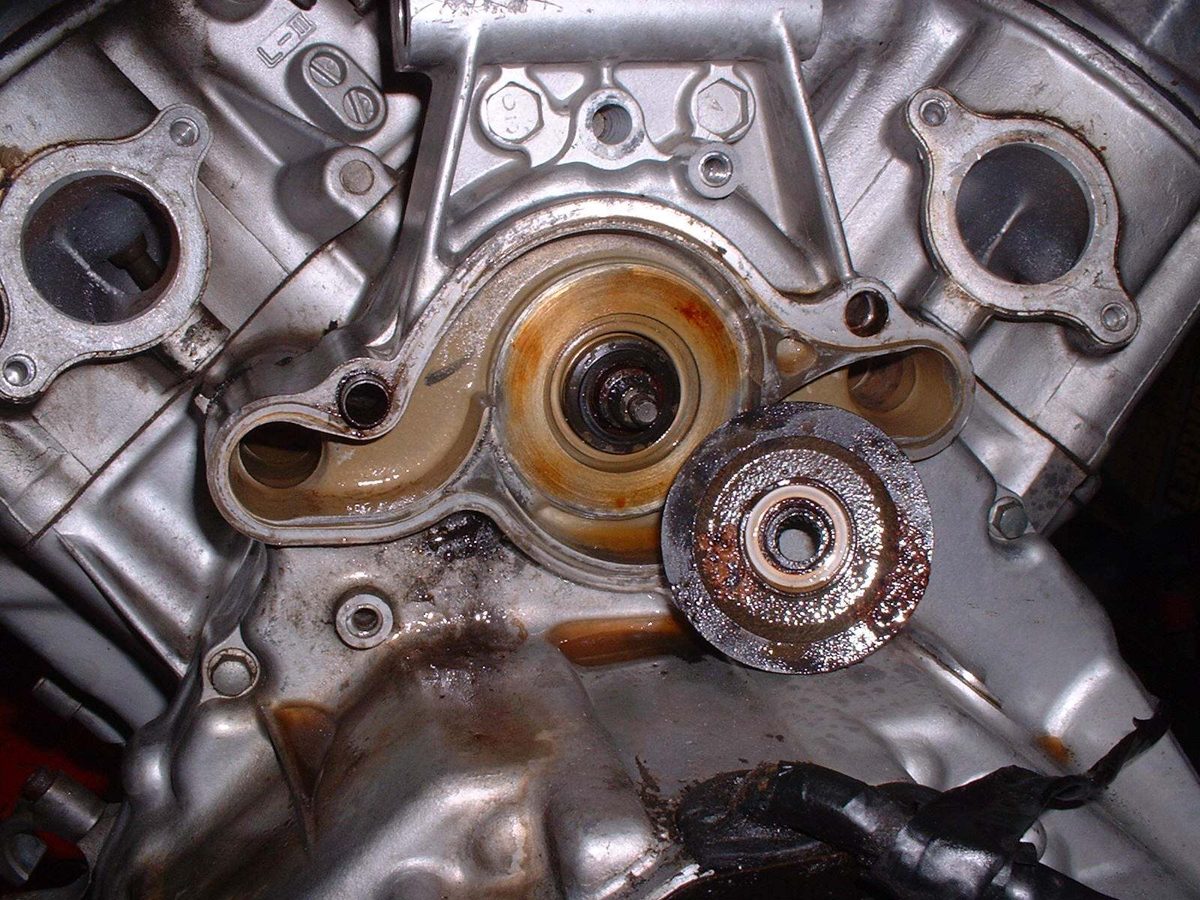
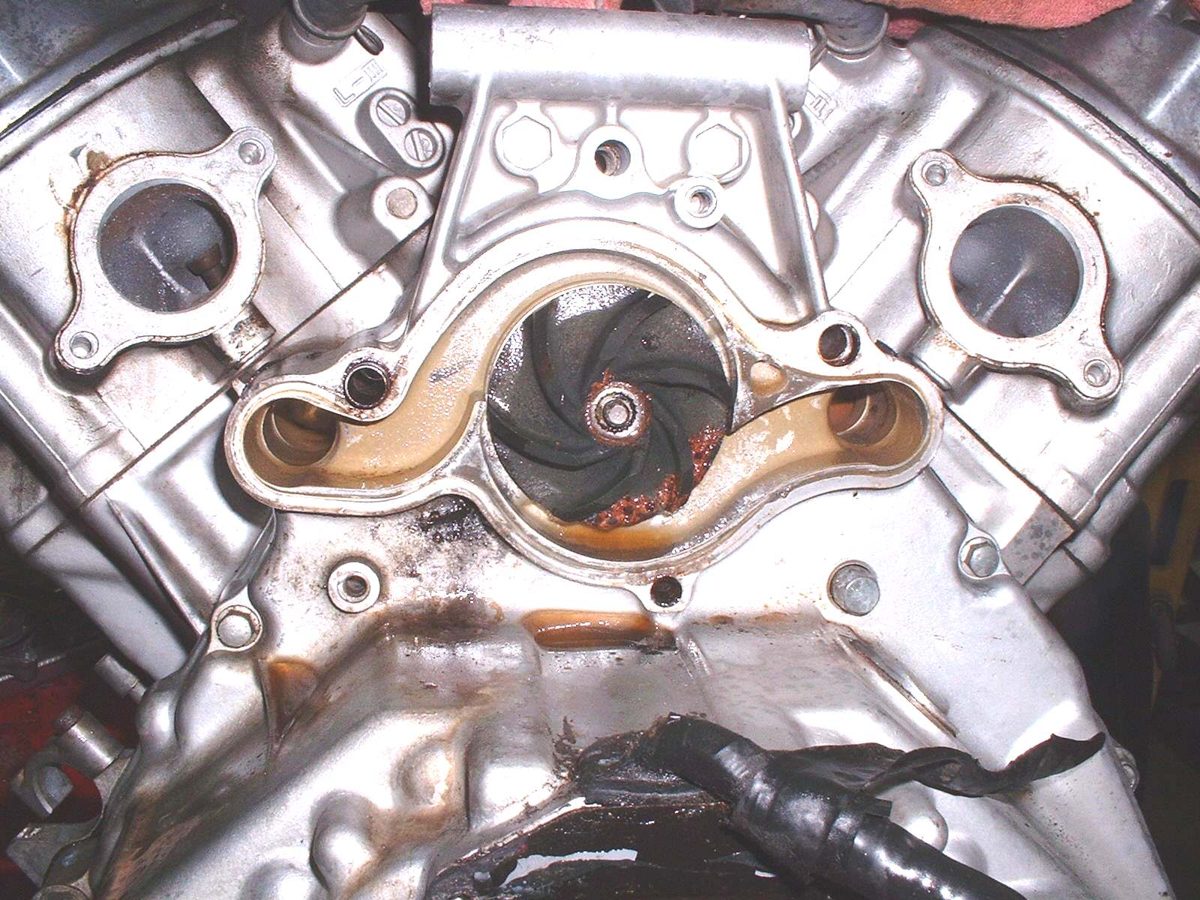
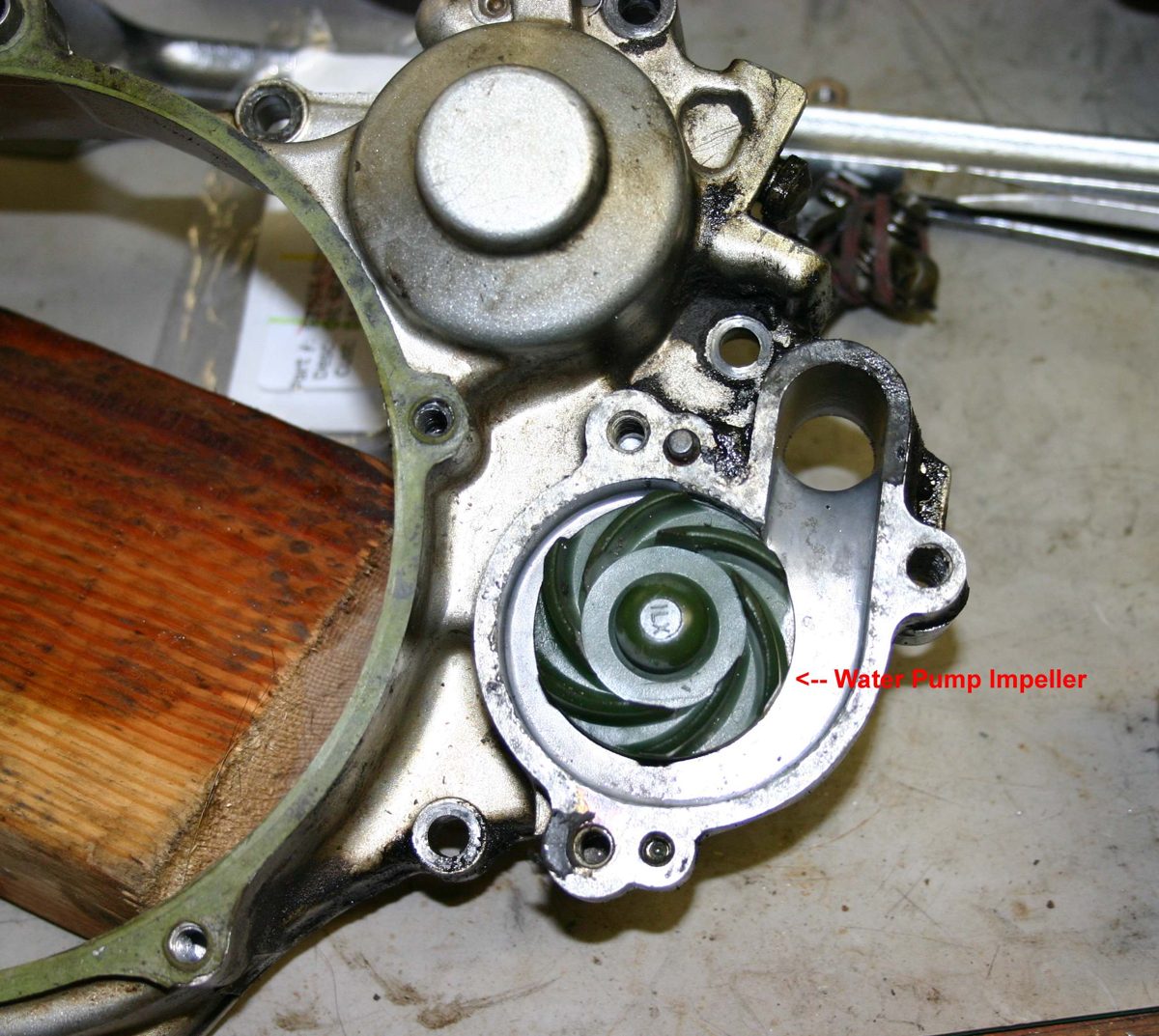
Oil that looks like milky coffee or has a creamy yellow sludge under the filler cap has water in it. On air-cooled bikes the water usually comes from condensation (short trips that never warm the engine fully, cold damp weather) or from washing or riding through deep water. On liquid-cooled bikes it can also be coolant leaking in through the head gasket, a cracked head or the water pump seal. Water in oil stops it protecting bearings and causes rust.
Is it safe to ride?
Do not ride until you know the cause. A little cream only under the filler cap after short winter trips is less serious; milky oil on the dipstick is serious.
Quick checks first
- Is the cream only on the inside of the filler cap, or is the whole oil milky?
- Is the bike used only for short trips?
- Has it been through deep water or a flood, or washed with a pressure jet?
- Liquid-cooled: is the coolant level falling?
- Coolant pushing out of the radiator cap with the engine running points to a leak of combustion pressure into the coolant. Check the head gasket.
Diagnose it step by step
1Is there only a small amount of cream under the filler cap, and the oil on the dipstick looks normal?
- Yes: condensation from short trips. Take a longer ride (at least 20 to 30 minutes, estimate) to warm the engine fully, then recheck. Change oil sooner than usual.
- No, the oil itself is milky: go to step 2.
2Has the bike been in deep water, a flood, or washed with water aimed at the engine?
- Yes: water entered through the breather or air box. Go to step 4.
- No: go to step 3.
3Is the engine liquid-cooled?
- Yes: check the coolant with Check and top up coolant. If it has fallen, go to step 5.
- No (air-cooled): water came from condensation or the breather. Go to step 4.
4. Drain the oil and look at it with Inspect drained oil for clues. Change it with Change the engine oil and clean the strainer. Check the air filter and air box for water. After a short run, check again with Check the engine oil level.
- Stays clean: done. If it was flooded, change it again after a short distance.
- Turns milky again: go to step 5 (liquid-cooled) or ask a workshop (air-cooled).
5Liquid-cooled with coolant loss: find where the coolant enters with Find a coolant leak.
- Water pump weep hole wet or seal suspected: workshop pump repair.
- Bubbles in the coolant, white smoke: head gasket or cracked head. Ask for Do a leak-down test.
- After the repair, the engine needs fresh oil, and bearings should be checked if it ran on milky oil: Assess bottom end and internal engine damage.
Causes, most likely first
| Cause | How to confirm | Fix |
|---|---|---|
| Condensation from short trips | Cream under cap only | Longer rides, earlier oil change |
| Water entry (flood, washing) | Recent water, wet air box | Change the engine oil and clean the strainer |
| Head gasket leak (liquid-cooled) | Coolant loss, white smoke | Do a leak-down test |
| Water pump seal | Weep hole, coolant loss | Find a coolant leak |
| Cracked head | After overheating | Assess bottom end and internal engine damage |