
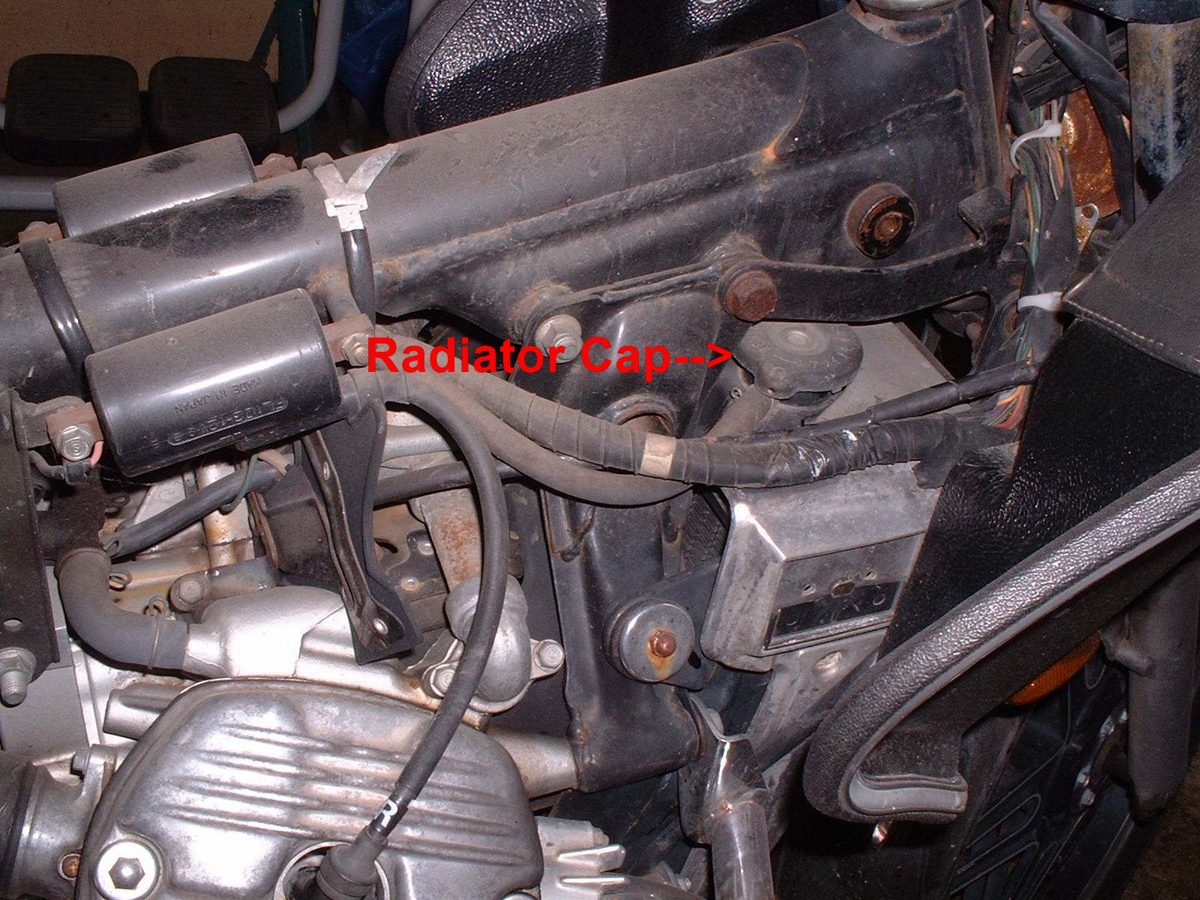
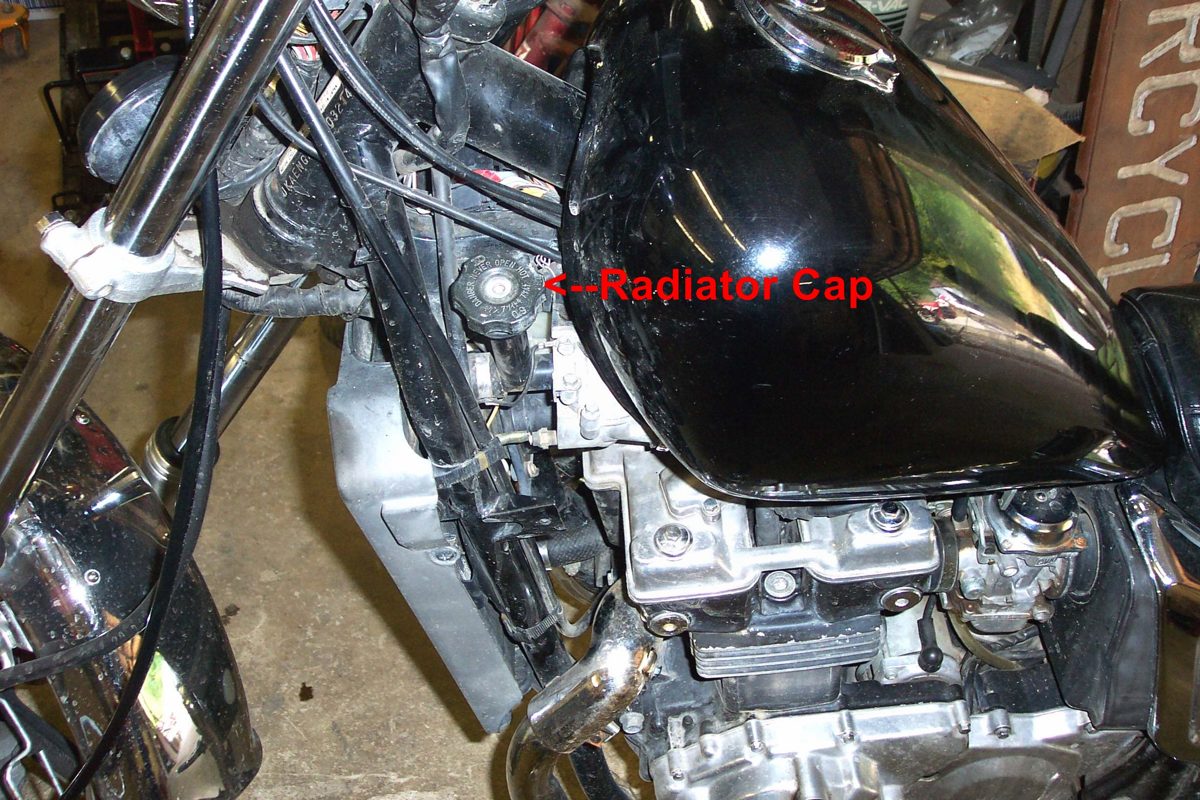
The radiator cap seals the cooling system and holds it under pressure. Many bikes have it on top of the radiator. Others hide it under the tank or a cover.
What it does
Pressure raises the boiling point of the coolant. The cap holds pressure until it reaches the value it is made for. Above that, a spring valve lifts and sends coolant to the overflow or recovery tank. When the engine cools, a second valve draws the coolant back in. The reservoir tank cap is a different part and does not hold pressure.
Signs it is worn or failing
- Coolant on the outside of the radiator neck, or a steady loss from the overflow. See Coolant is leaking.
- An engine that overheats and boils over with the level correct.
- Hoses that collapse when cooling, from a stuck cap valve.
- A cracked or hard rubber seal.
When to replace it
Replace the cap when the seal is cracked, the spring is weak or the cap fails a pressure test. It is a cheap part that is easy to forget. Replace it before the radiator or head.
What to match when buying
- Match the pressure rating stamped on the cap. Use the value in your bike's manual.
- Match the neck shape and seal size. A wrong cap will not seal.
- Buy a cap with both valves working: the pressure valve and the vacuum valve.
Fitting notes
- Never open the cap on a hot engine. Hot coolant can scald. Wait until the engine is cold. See Check and top up coolant.
- Clean the neck and seat before fitting.
- After a fill, run the engine up to temperature, let it cool, and check the radiator and reservoir again. See Replace the coolant.