
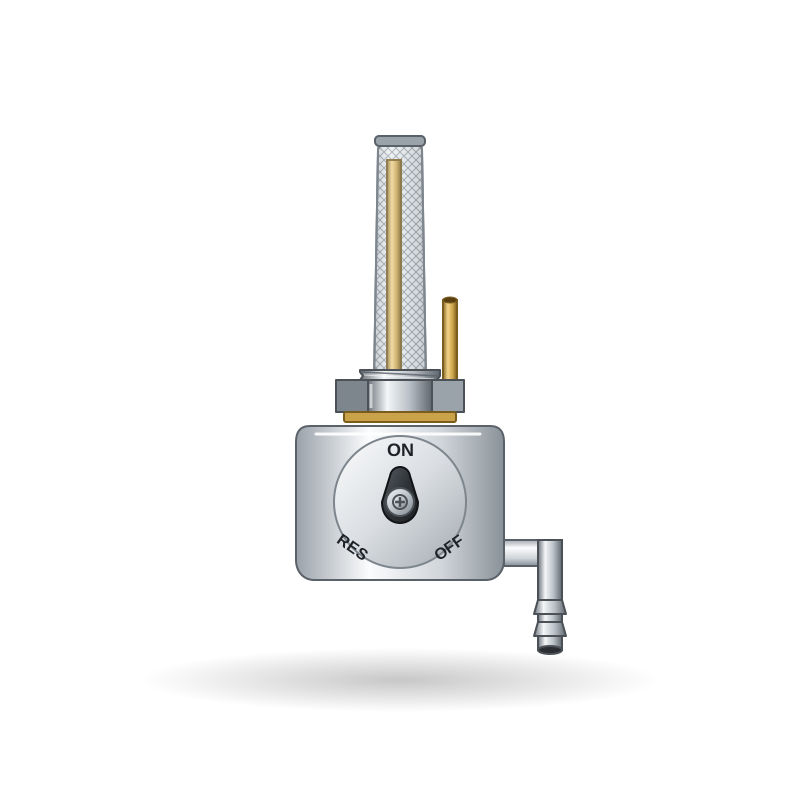
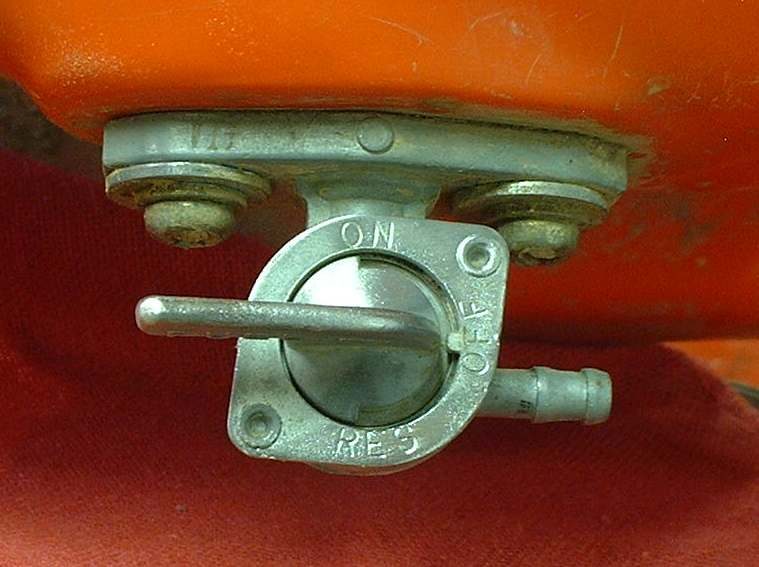
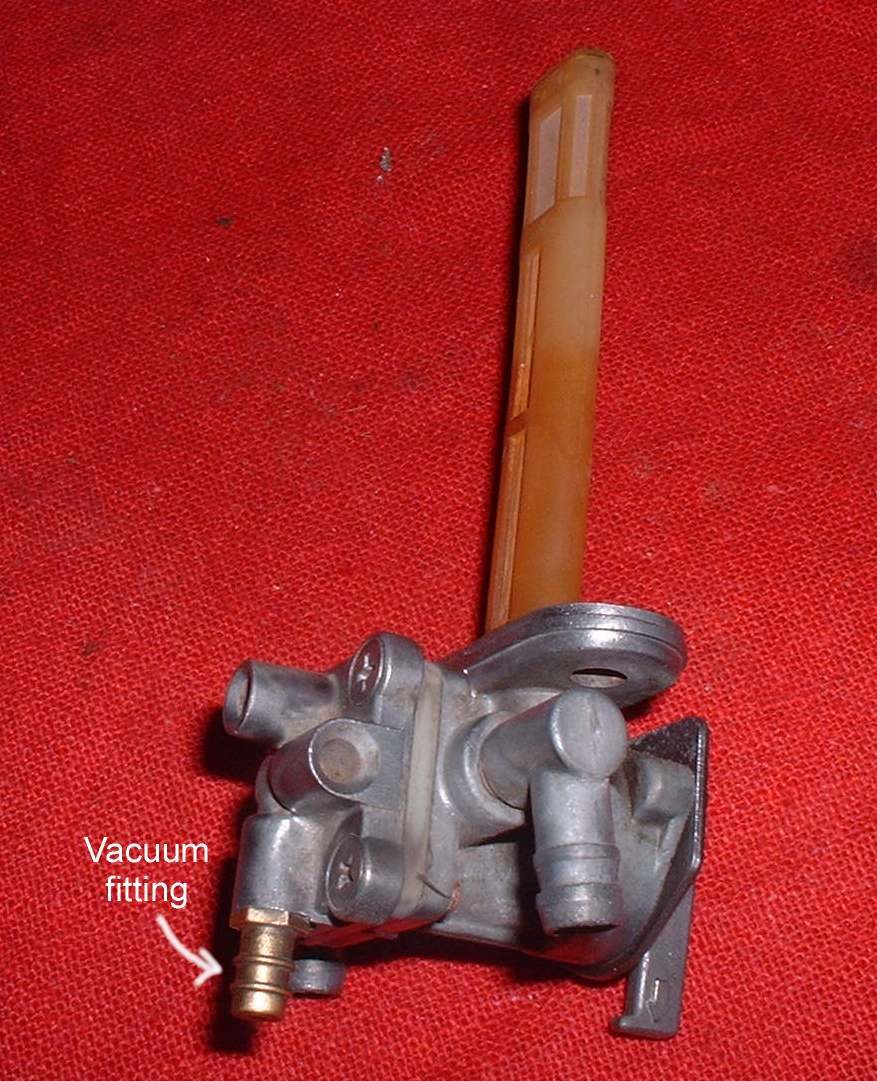
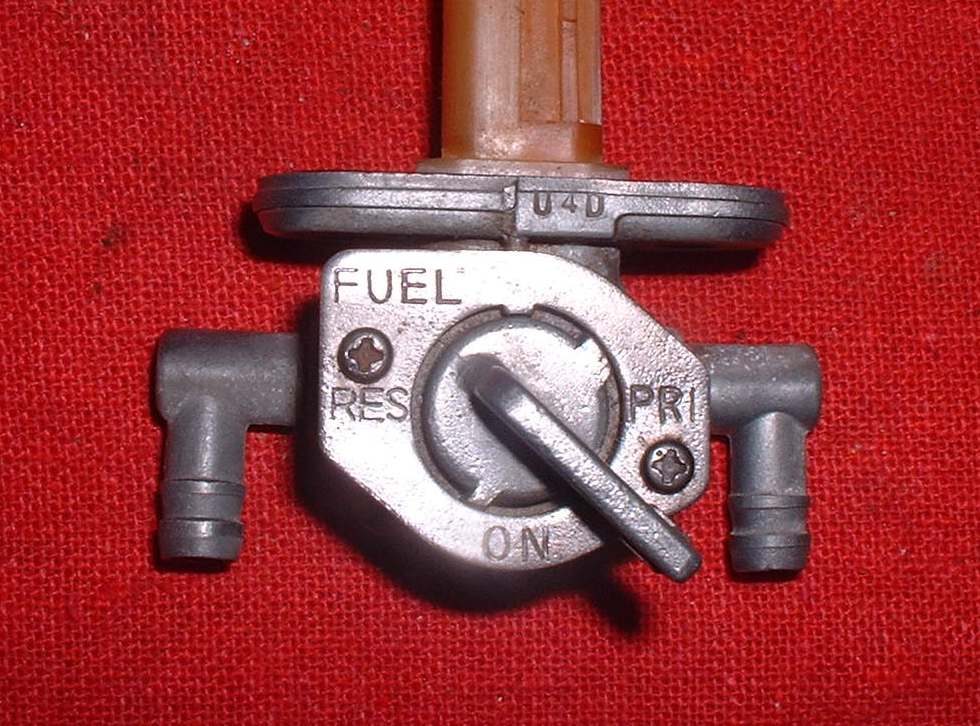
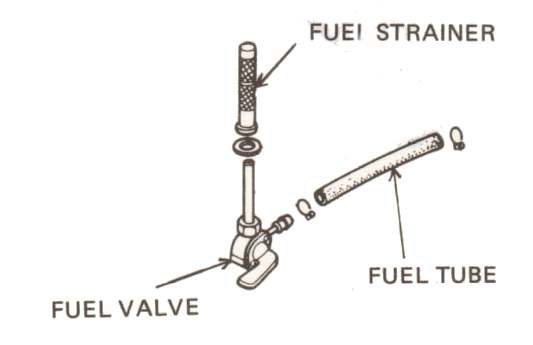
The fuel tap is a small valve under the tank of a carburettor bike, with a lever marked OFF, ON and RES (reserve). A vacuum tap has a small hose to the engine intake and opens only when the engine runs; some have a PRI (prime) position. Fuel-injected bikes have no tap; they use an in-tank fuel pump.
What it does
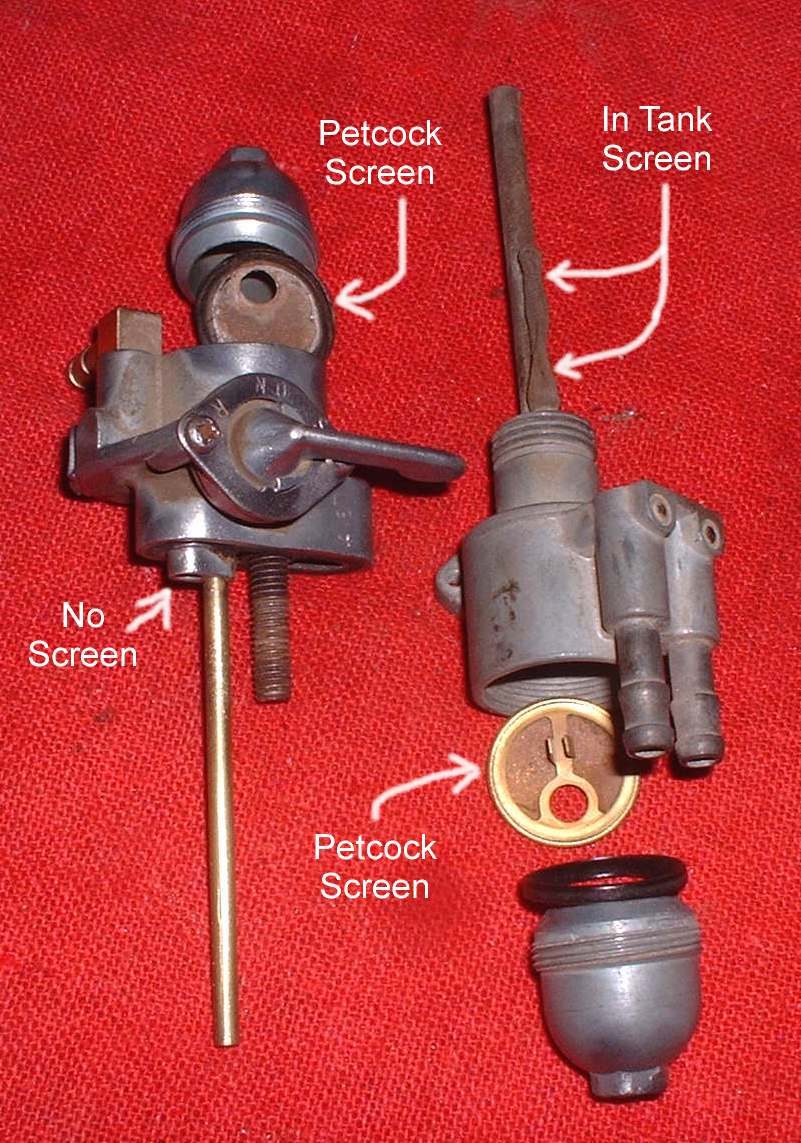
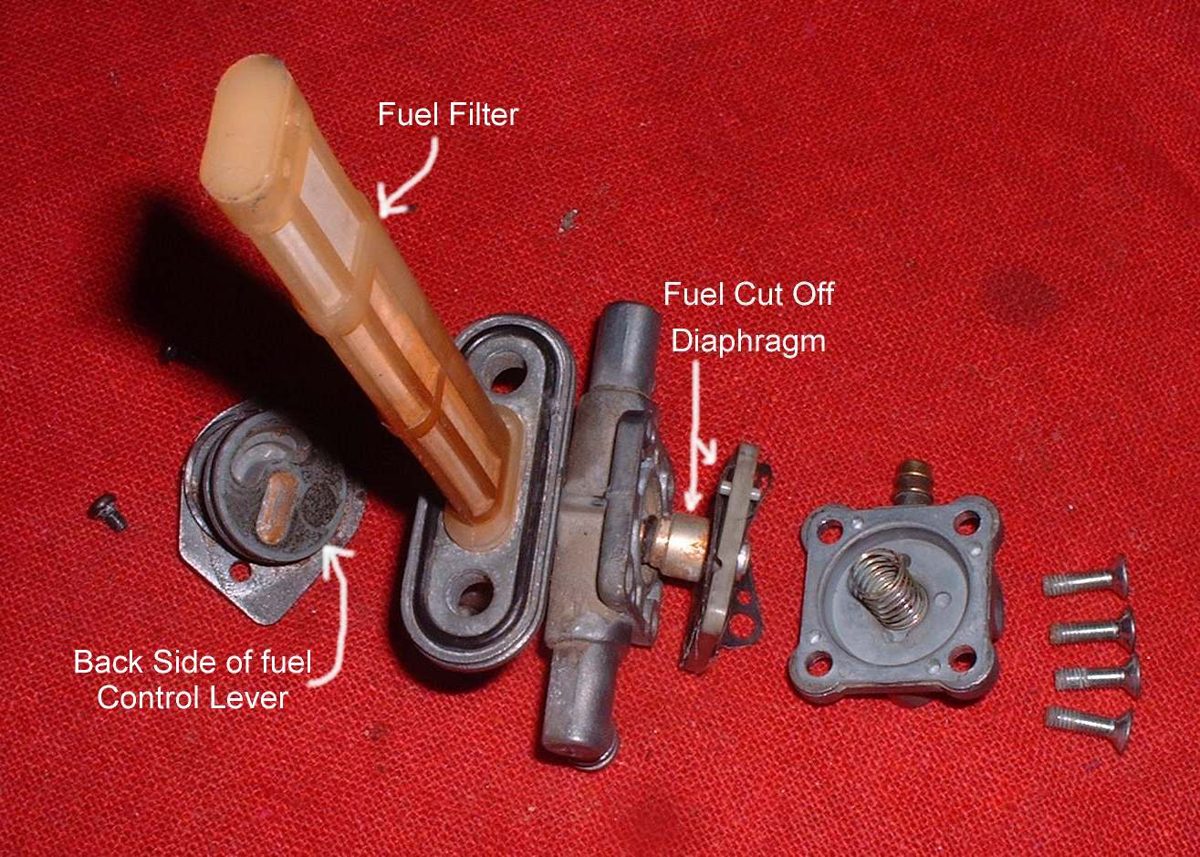
The tap lets fuel flow to the carburettor and stops it when the bike is parked. Two pickup tubes give a main supply and a lower reserve, so when the bike starts to stutter on ON, turning to RES gives a little more fuel. A strainer on the pickup and a sediment bowl catch dirt. Seals harden, strainers block, and vacuum diaphragms split.
Signs it is worn or failing
- No fuel reaching the carburettor.
- Engine stops and only runs on reserve or after a rest.
- Fuel leaking at the lever or tank joint.
- Carb overflowing when parked on a vacuum tap that no longer shuts.
When to replace it
When it leaks, will not shut, or still flows badly after the strainer is cleaned. Vacuum taps can sometimes be rebuilt with a diaphragm kit.
What to match when buying
- Match tank fixing (two bolts, plate or threaded nut), outlet position and outlet size.
- Match type: manual or vacuum. Fitting a manual tap where a vacuum tap was fitted means you must turn it off every time.
- Check the reserve tube length is similar to the old one, or reserve will start too early or too late.
- Buy a new tank seal or O-ring with the tap.
Fitting notes
- Home job: Check the fuel tap, lines and flow.
- Drain the tank first, outside, away from flames. Do not overtighten into the tank.
- After fitting, check flow in ON and RES into a container before connecting the hose.
- Standard taps have ON, OFF and RES. Vacuum taps have ON, RES and PRI. Racing taps have ON and OFF only.
- Some taps are held with small screws and can be opened. Others are riveted and can only be replaced. See Vacuum fuel tap check and Inline shut-off valve.