
The engine cranks but will not start, or stops and will not restart, and you suspect it is not getting fuel. On a carburettor bike, fuel flows by gravity from the tank, through the tap and hose, into the float bowl. A simple test tells you whether the fault is before the carburettor (tank, tap, hose, filter) or inside it (float needle stuck shut, blocked inlet). Do this test before taking anything apart.
Is it safe to ride?
The engine will not run properly without fuel, so do not try to ride. Work outdoors with the engine cool and no flames nearby.
Quick checks first
- Look into the tank with a torch: is there really fuel?
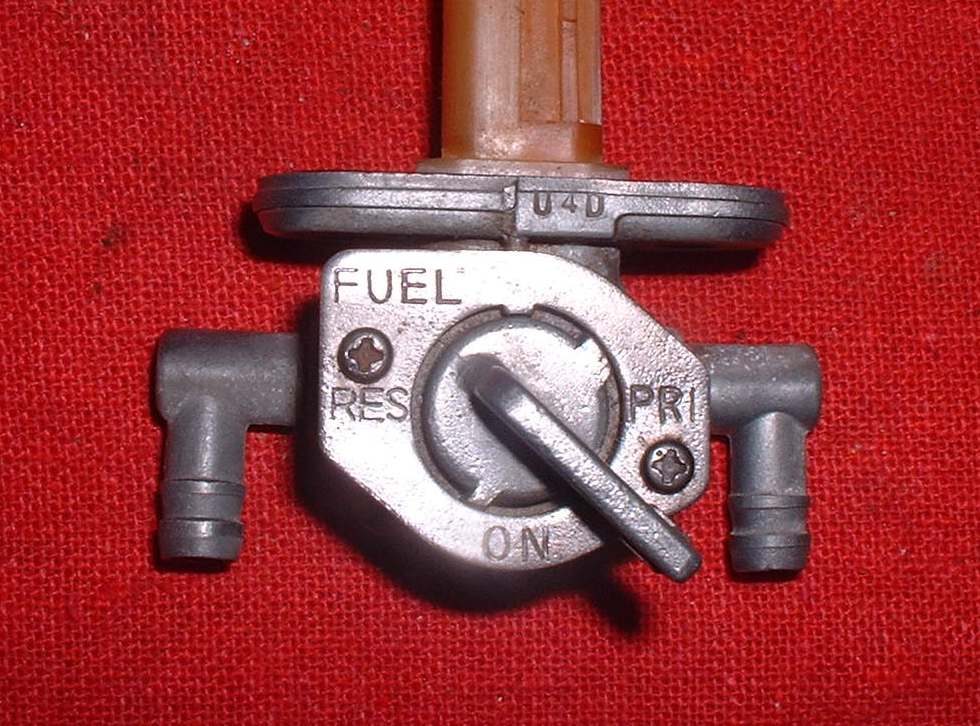
- Is the tap on ON or RES? A vacuum tap needs PRI to flow with the engine stopped.
- Is the fuel hose pinched, kinked or blocked?
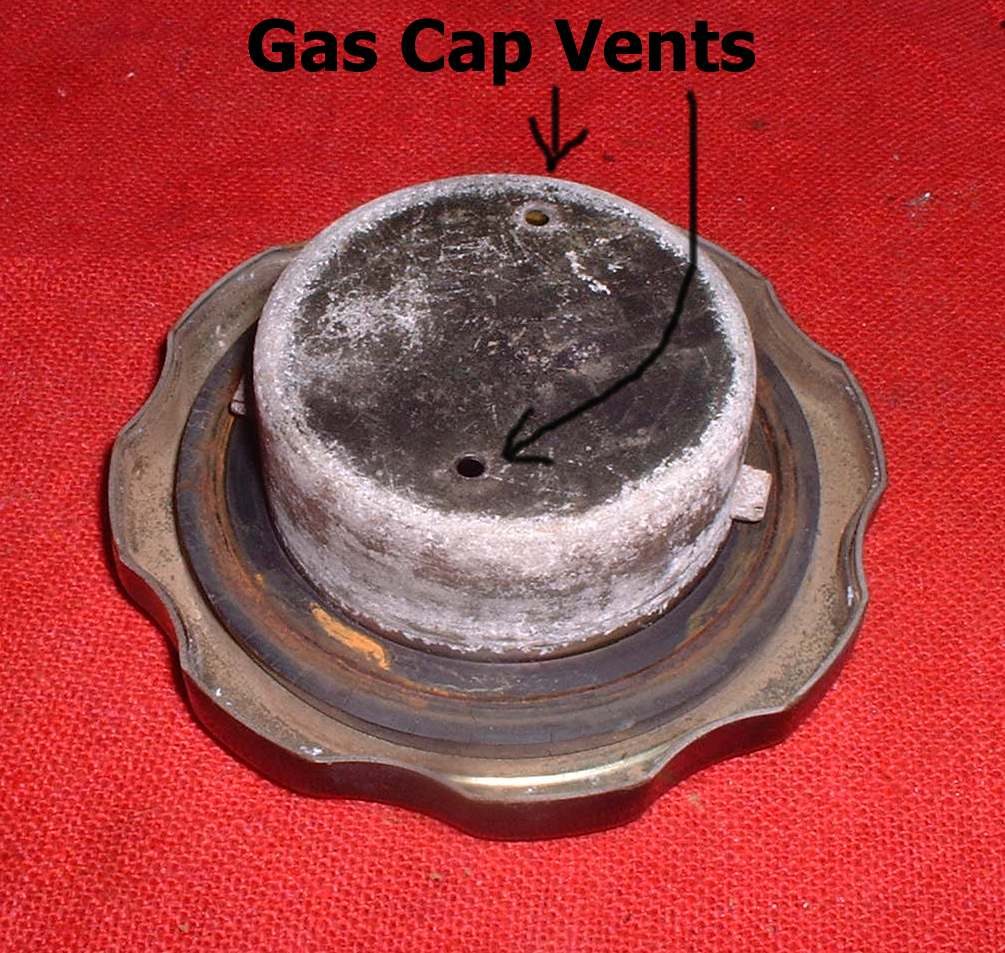
- Does opening the fuel cap make a hiss?
- Has the bike stood for weeks or months?
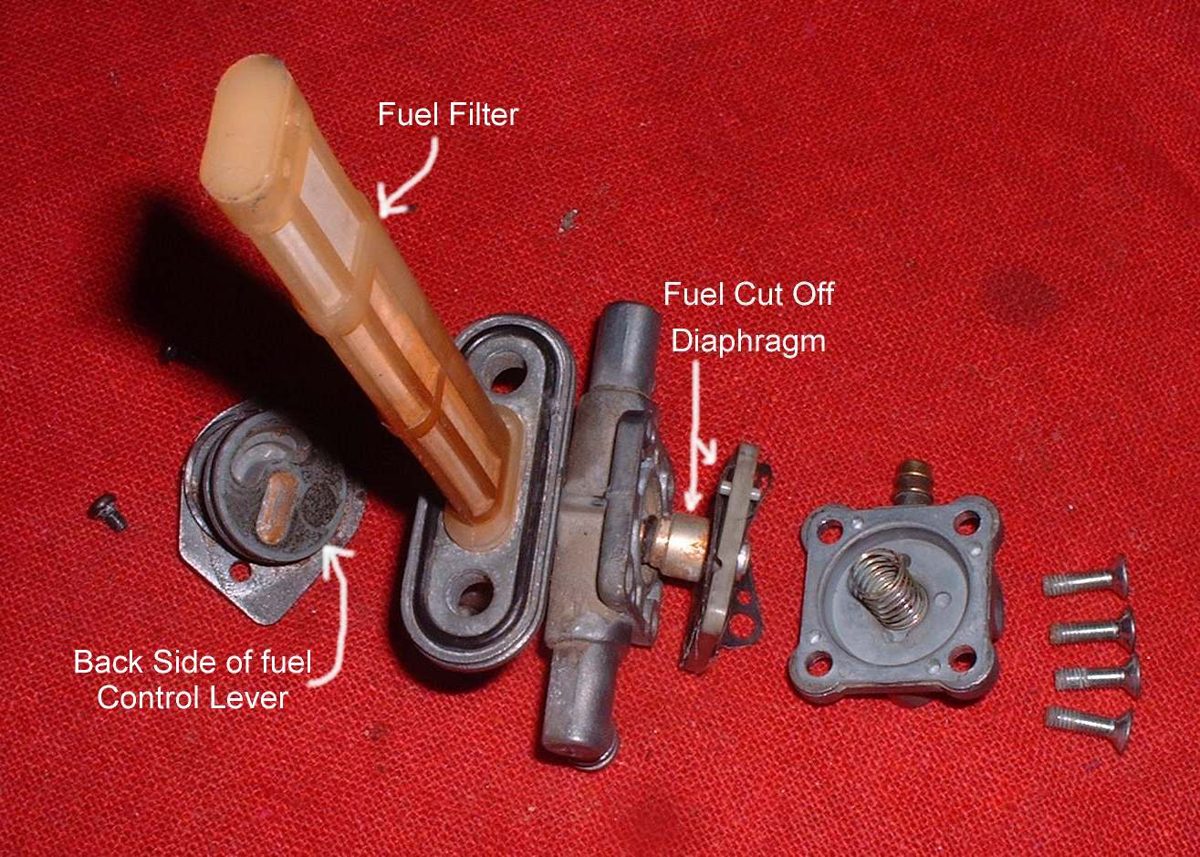
- A standard tap has ON, OFF and RES. ON draws fuel from a tube a little above the tank bottom. When the level falls below it, the carburettor runs dry until the lever is moved to RES.
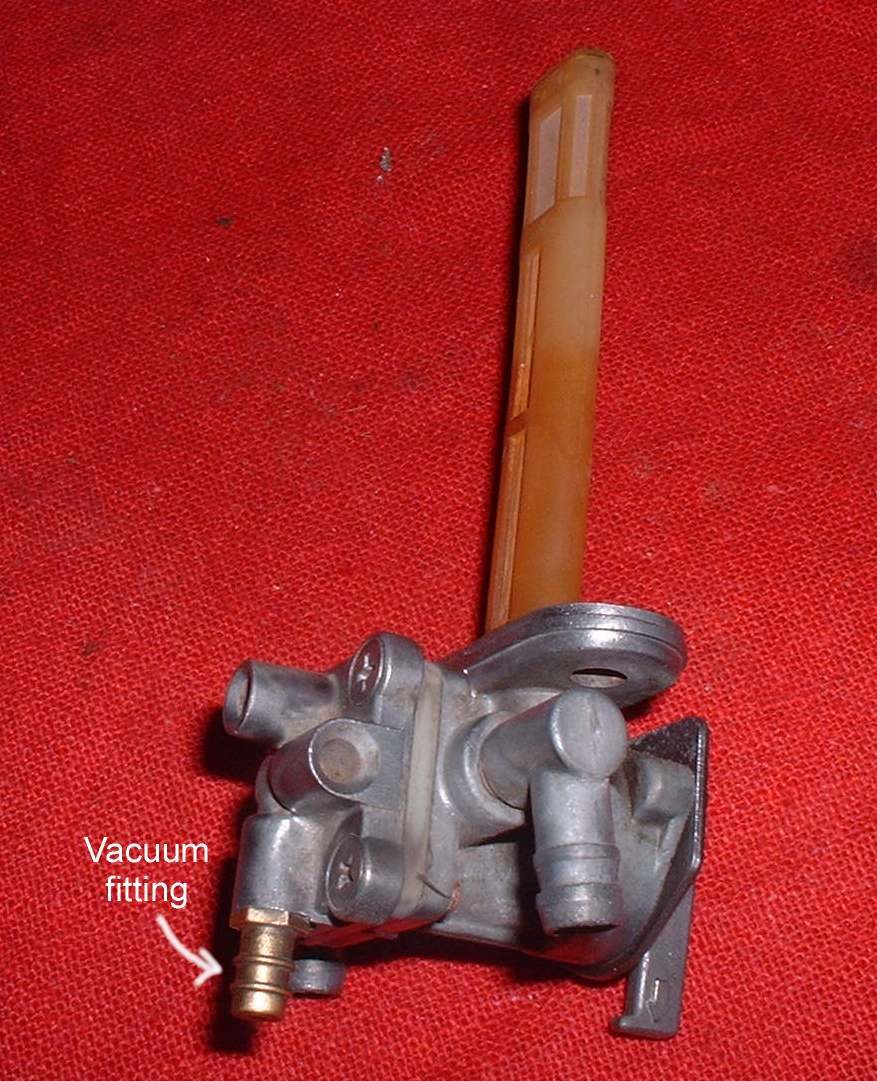
- A vacuum tap opens only with engine vacuum and has ON, RES and PRI. PRI by-passes the diaphragm. See Check a vacuum fuel tap and use the prime position.
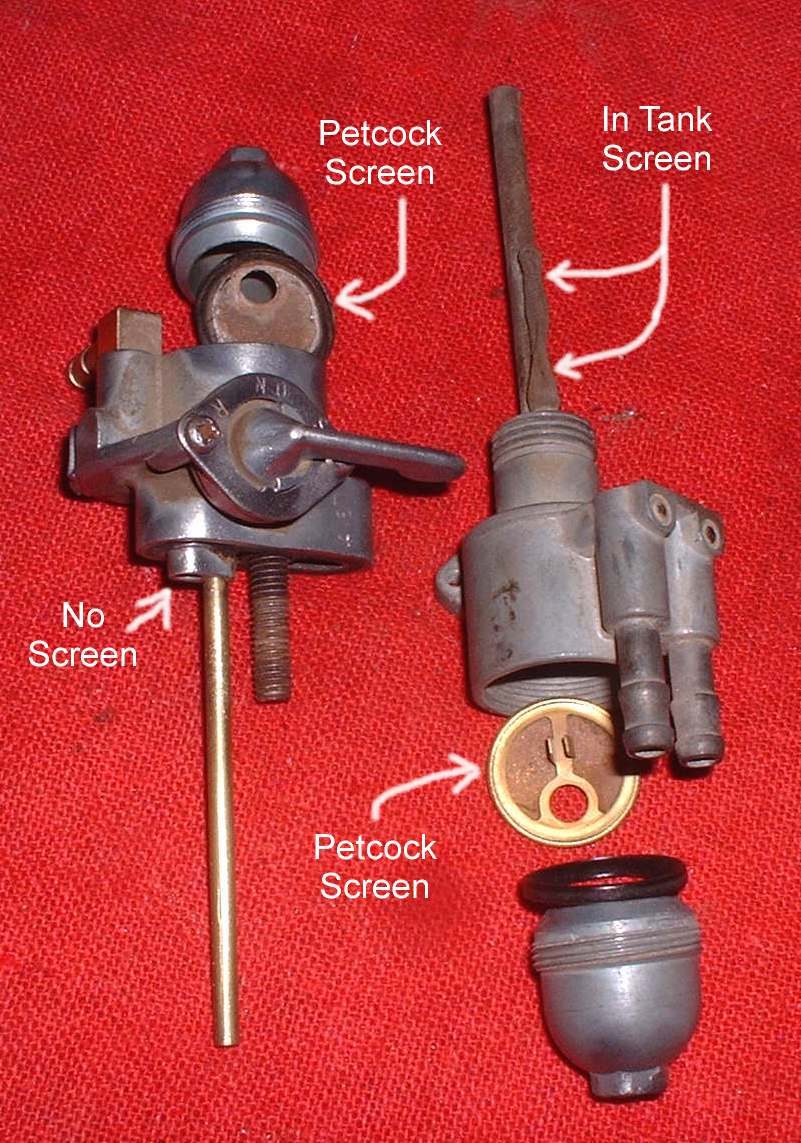
- Most taps have one or more fine screens, in the tank, in the tap and on the reserve tube. Any of them can block.
Diagnose it step by step
1Is there at least a litre or two of fuel in the tank, and the tap on ON (or PRI)?
- No: add fresh fuel and set the tap. Try to start. If it starts, that was the problem.
- Yes: go to step 2.
2Put a container under the carburettor and open the float bowl drain screw a few turns. Does fuel run out?
- Yes, fuel is in the bowl: the delivery is fine. The fault is inside the carburettor (blocked jets) or elsewhere. Clean the carburettor and check the spark with Engine turns over but will not start.
- No, or only a few drops: go to step 3.
3Pull the hose off the carburettor and hold it in a jar. Does fuel flow strongly on ON and on RES?
- Strong flow: fuel reaches the carburettor but does not enter the bowl. The float needle is stuck shut or its inlet is blocked with dirt or old fuel gum. Check the float and needle valve.
- Weak or no flow: go to step 4.
4Remove the fuel cap and test again. Does the flow improve?
- Yes: the tank vent is blocked. Check the fuel tank vent.
- No: go to step 5.
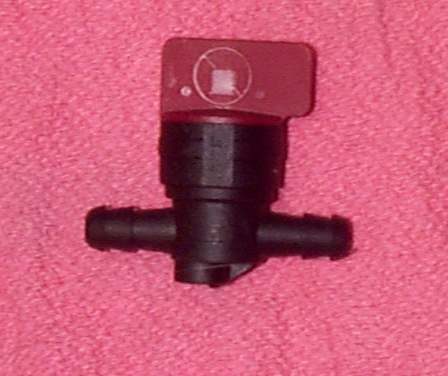
5Is there an inline filter, and is it dark or blocked?
- Yes: Replace the fuel filter.
- No, or still no flow: the tap strainer is blocked, or a vacuum tap has failed. Drain the tank and clean or replace the tap: Check the fuel tap, lines and flow. Rust flakes in the strainer: see Rust or flakes inside the fuel tank.
6. Was the bike stored with fuel in it? Old fuel gums the needle, jets and tap. Drain old fuel, refill and see Old or stale fuel.
Causes, most likely first
| Cause | How to confirm | Fix |
|---|---|---|
| Tank empty or tap OFF | Look in tank, check tap | Fill up, set tap |
| Vacuum tap not on PRI for the test | No flow until PRI | Use PRI or test running |
| Blocked tank vent | Flow improves with cap off | Tank vent |
| Blocked filter or tap strainer | Weak flow | Fuel filter |
| Float needle stuck shut | Good flow at hose, empty bowl | Float check |
| Gummed fuel after storage | Sour smell, varnish | Drain fuel |