
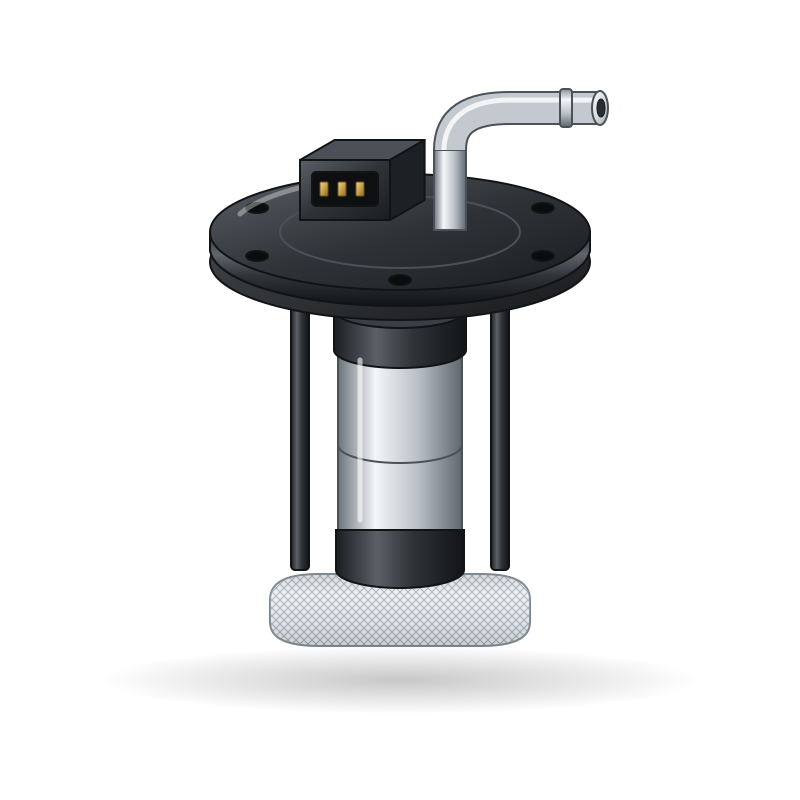
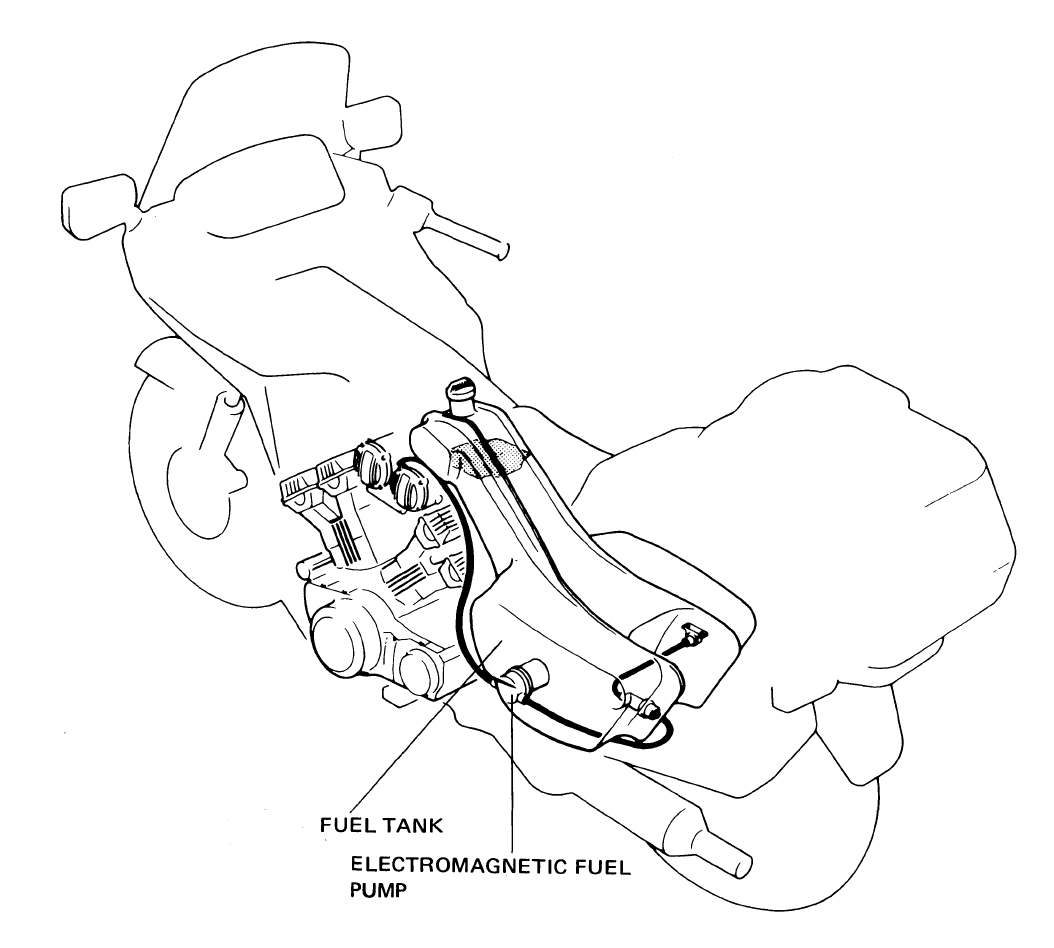
On a fuel-injected bike the fuel pump is an electric pump inside the tank, built into a unit with a strainer and a pressure regulator. It bolts into the bottom or top of the tank. Some carburettor bikes and scooters have a small vacuum-driven pump instead; that is a different part.
What it does
When you turn the key on, the ECU runs the pump for about three seconds to build pressure. It then runs whenever the engine turns. The pump pushes fuel through the hose to the injector at a steady pressure set by the regulator. Running the tank very low makes the pump suck air and run hot, and dirt or rust wears it and blocks its strainer.
Signs it is worn or failing
- No buzz from the fuel pump at key on.
- Fuel pump whines loudly or runs all the time.
- Engine turns over but will not start or starts then dies.
- Sudden power loss or fuel starvation at speed.
- Engine warning light with a pump circuit code.
When to replace it
When it has power and earth at its plug but does not run, or a workshop pressure test shows low pressure with a clean filter and no leaks. Check the fuse, relay and wiring first. Follow your bike's manual.
What to match when buying
- Match the pump unit part number or the exact make, model and year. Pump units differ in shape, plug, outlet and pressure.
- Some sellers offer a bare pump to fit into your old housing. It only works if flow and pressure match; buy a complete unit if unsure.
- Buy a new tank seal. Copies may have weak plastic, loose wires or a missing regulator.
Fitting notes
- Home job to check: Check the fuel pump. Pressure testing needs a gauge and the model procedure; leave it to a workshop.
- Fuel and sparks: work outside, battery negative off, tank drained. Release pressure before unplugging the hose.
- Fit the pump the right way round (on the K-Light, the regulator faces the rear) and tighten the bolts evenly in sequence.
- Bikes with a tank below the level of the carburettor, such as under-seat tanks, use an electric pump to lift the fuel.
Reference (K-Light 125)
| Item | Value | PDF page |
|---|---|---|
| Prime at key on | about 3 s | 266 |
| Supply at pump plug | 12 ± 2 V | 268 |
| Fuel pressure at idle (workshop gauge) | about 300 kPa; below 270 kPa is a fault | 269 |
| Pump bolts | 3 to 4 N·m, in sequence | 180 |