
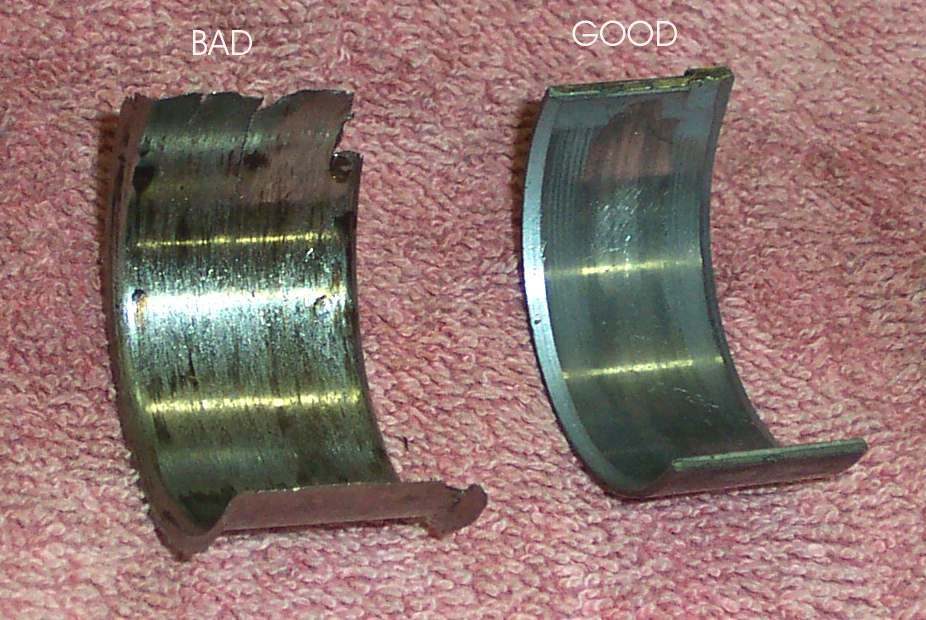
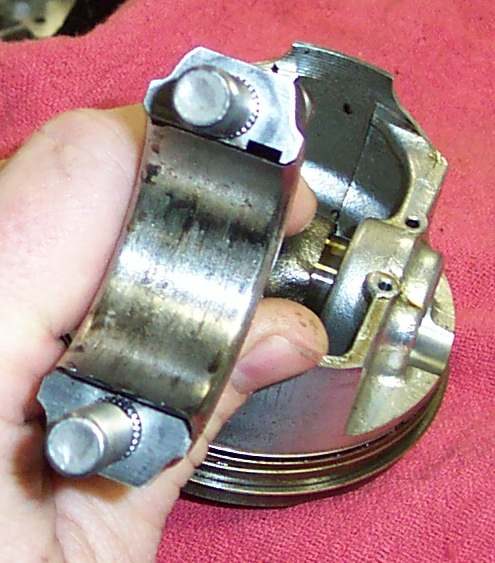
A deep, heavy knock from low in the engine that gets louder with load and revs usually means the con rod big-end bearing (where the rod joins the crankshaft) or a main bearing has worn or lost oil. It can also be a loose part inside the crankcase. The K-Light manual lists loose or broken parts inside as the cause of crankcase noise. This is serious: a failing big end can break the con rod, lock the engine and throw you off.
Is it safe to ride?
No. Stop as soon as it is safe, switch off and do not ride on. Push or carry the bike.
Quick checks first
- Oil level: is there oil on the dipstick at all?
- Oil warning light: did it come on?
- Is it really from inside the engine, or a loose engine mount, exhaust or chain guard?
- Did it start after riding with low oil, or after overheating?
Diagnose it step by step
1With the engine off, is the oil level very low or empty?
- Yes: the bearings have likely been damaged by lack of oil. Do not just top up and ride. Go to step 5.
- No: go to step 2.
2Does the knock come only over bumps or when the throttle is opened and closed, as if something big is moving?
- Yes: check the outside first with Check engine mounting bolts, the exhaust mounts and the chain. Fix anything loose and test carefully.
- No, it follows engine speed with the bike on the stand: go to step 3.
3Engine cold, plug out, top gear, gently rock the rear wheel back and forth. Do you feel a clunk or free play before the engine turns?
- Yes, clear free play: possible big-end or crank play (on a chain bike, first rule out chain slack and the cush drive rubbers in the rear hub). Go to step 5.
- No: go to step 4.
4Is it a rattle only under hard acceleration that goes when you ease off?
- Yes: likely pinking (detonation): go to Pinging or rattling sound when accelerating (pinking). Do not ride hard until fixed.
- No: go to step 5.
5Drain the oil and look at it and the strainer with Inspect drained oil for clues. Are there metal flakes, bronze or a grey paste?
- Yes: internal bearing damage is very likely. Go to Assess bottom end and internal engine damage.
- No: still ask a workshop to listen and check. A knock from inside the engine is never safe to ignore.
6. Workshop decision. The workshop measures big-end side and radial play and checks the oil pump. On most small engines the crankshaft is replaced as an assembly. Ask for a price against a replacement engine.
What happens if you keep riding: the bearing overheats, the rod can break, the engine locks and the rear wheel can skid. A broken rod can also smash the crankcase.
Causes, most likely first
| Cause | How to confirm | Fix |
|---|---|---|
| Low or no oil, worn big end | Dipstick dry, metal in oil | Assess bottom end and internal engine damage |
| Loose engine mount | Bolt turns, knock over bumps | Check engine mounting bolts |
| Pinking under load | Only when accelerating | Pinging or rattling sound when accelerating (pinking) |
| Worn main bearing | Rumble plus knock | Assess bottom end and internal engine damage |
| Broken part inside crankcase | Noise and debris | Assess bottom end and internal engine damage |
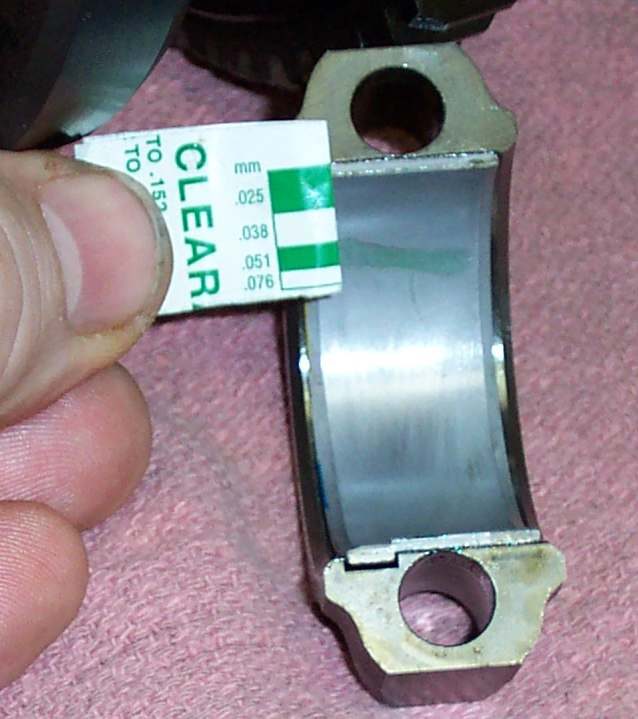
| Plain bearing shells run without oil pressure | Knock began after low or old oil, shells scored or spun | Check plain bearing clearance |
Reference values (K-Light 125)
| Item | Value | PDF page |
|---|---|---|
| Con rod big-end radial clearance limit (workshop) | 0.05 mm | 236 |
| Con rod big-end side clearance limit (workshop) | 0.55 mm | 236 |