
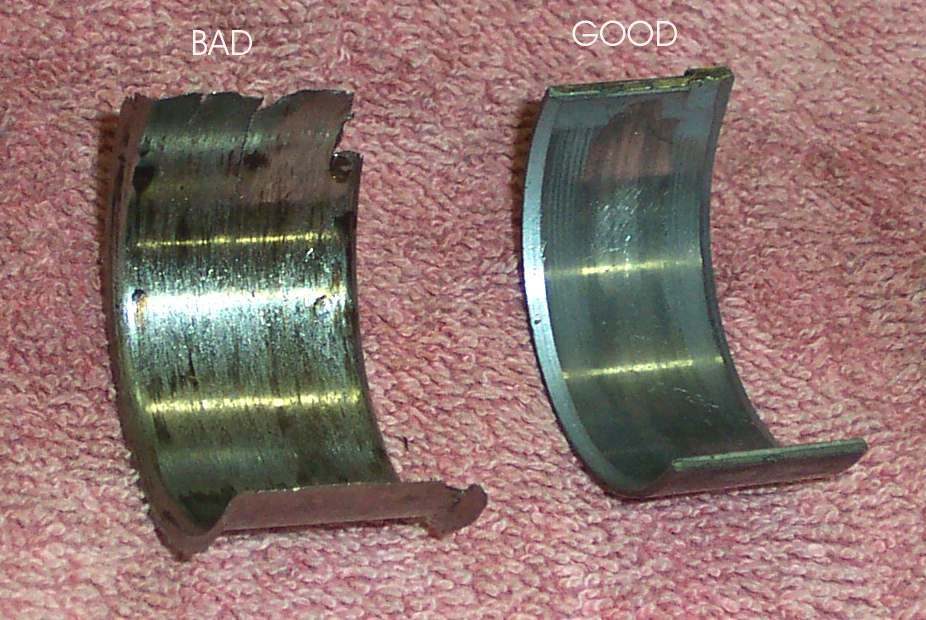
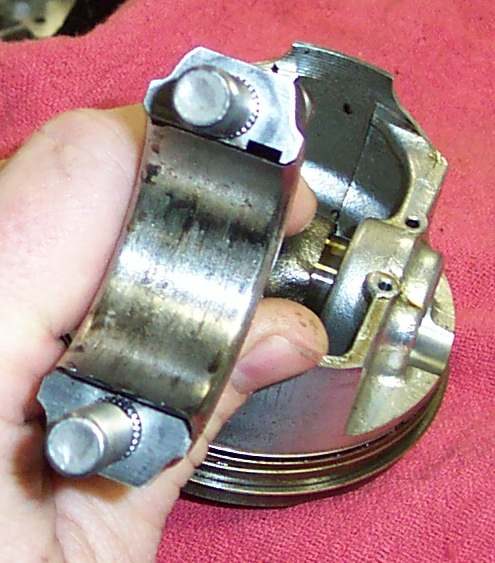
Bearing shells are thin half-round metal inserts that line the crankshaft main journals and the big end of the connecting rod. Engines with these have no ball or roller bearings at those points.
What it does
A film of pressurised oil between the shaft and the shell carries the load. The metal never touches while the oil pressure holds. The shell is a soft, replaceable surface that wears instead of the crankshaft.
Signs it is worn or failing
- A deep knock from the bottom of the engine that gets worse under load.
- Falling or low oil pressure, or an oil warning light at idle when hot.
- Metal glitter in the drained oil. See Metal in the oil.
- Shells with scoring, copper showing through, or a shell that has turned in its seat.
When to replace it
Replace shells when the clearance is over the limit in the manual, when the surface is scored, or whenever the engine is rebuilt after an oil failure. Wear is highest at start-up, before oil pressure builds, and when oil is old, thin or low.
What to match when buying
- Match the engine code and say main or big end. They are different parts.
- Shells come in standard size and thicker sizes for a ground crankshaft. Buy the size that gives the clearance in the manual.
- Ask whether undersize shells exist for your engine before the crankshaft is ground.
Fitting notes
- Workshop job on the opened crankcase or the connecting rod cap. See Check plain bearing clearance.
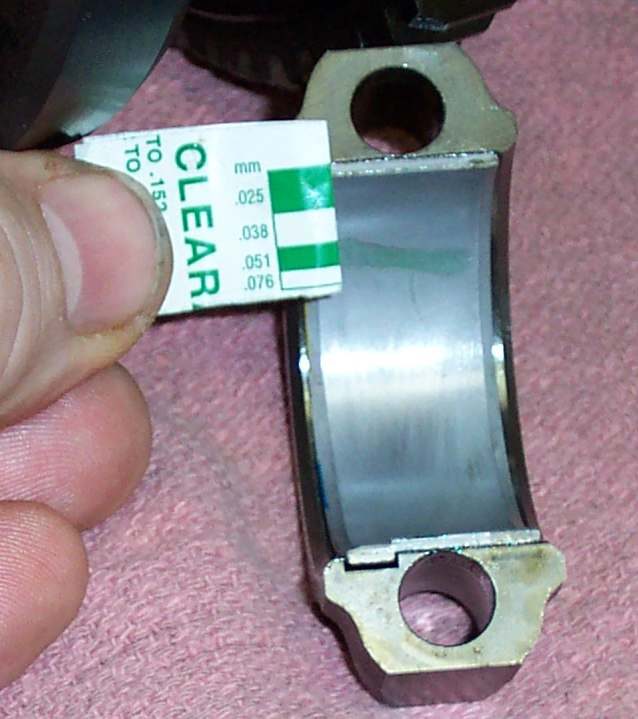
- Measure clearance with Plastigauge: lay a strip across the journal, fit the cap, tighten, remove the cap without turning the shaft, and compare the flat strip to the scale on the packet.
- Clean the shell and the cap seat. Fit the shell tab in its slot and keep every shell with its own cap.
- Use fresh oil on all surfaces at assembly. Change the oil and filter soon after a failure.