
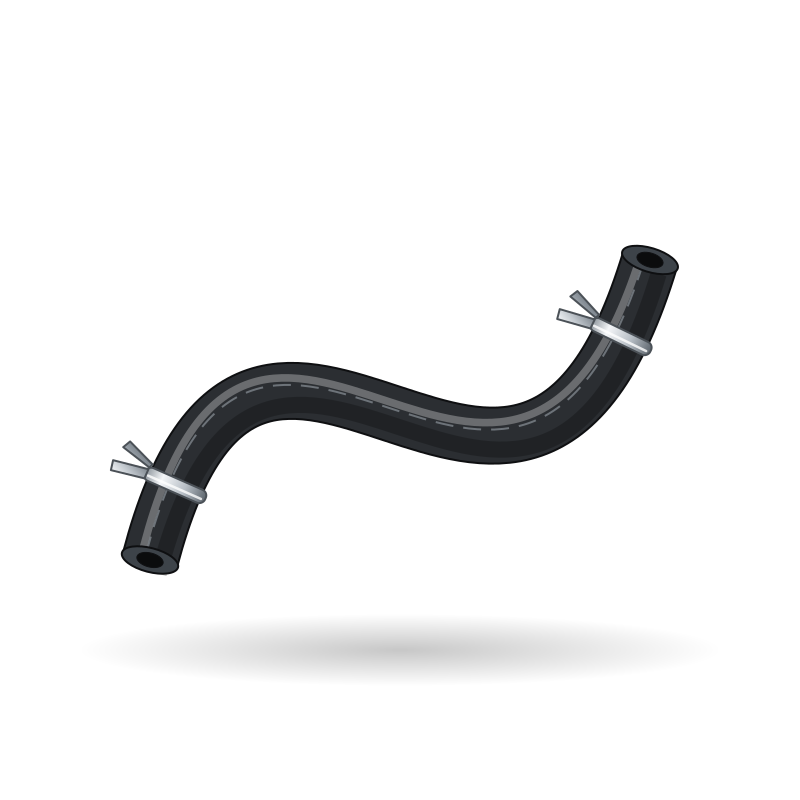
Fuel hoses carry petrol from the tank to the carburettor or injector. Carburettor bikes use a short, low-pressure rubber hose held by clips. Fuel-injected bikes use a reinforced high-pressure hose, often with a quick-release connector at the pump. Vapour and breather hoses also run to the canister on newer bikes.
What it does
The hose must carry fuel without leaking, kinking or melting near the engine. Rubber slowly hardens and cracks from heat and fuel, especially with ethanol blends. Inside, it can break down and shed rubber bits that block jets.
Signs it is worn or failing
- Fuel leaking or a strong fuel smell.
- No fuel reaching the carburettor from a kinked or collapsed hose.
- Fuel starvation at high speed.
- Hose that is hard, cracked when bent, swollen or soft and sticky.
When to replace it
When it shows any crack, hardness or swelling, and whenever it leaks. The K-Light schedule inspects the fuel line at every service. Leaking fuel near a hot engine can start a fire: do not ride.
What to match when buying
- Match the inside diameter to the spigot. Too large leaks; too small splits.
- Use hose rated for petrol (marked for fuel, ideally ethanol-resistant). On injection, use hose rated for fuel injection pressure, or the maker's hose assembly with its connectors.
- Avoid clear plastic tubing as a fuel hose: it hardens and cracks.
Fitting notes
- Home job, part of Check the fuel tap, lines and flow.
- Push the hose fully onto the spigot and fit a clip, as the K-Light manual advises. Route away from the exhaust and sharp edges, with no kinks.
- On injection, release pressure first and cover the quick connector with a cloth. Turn the key on and check for leaks before starting.