

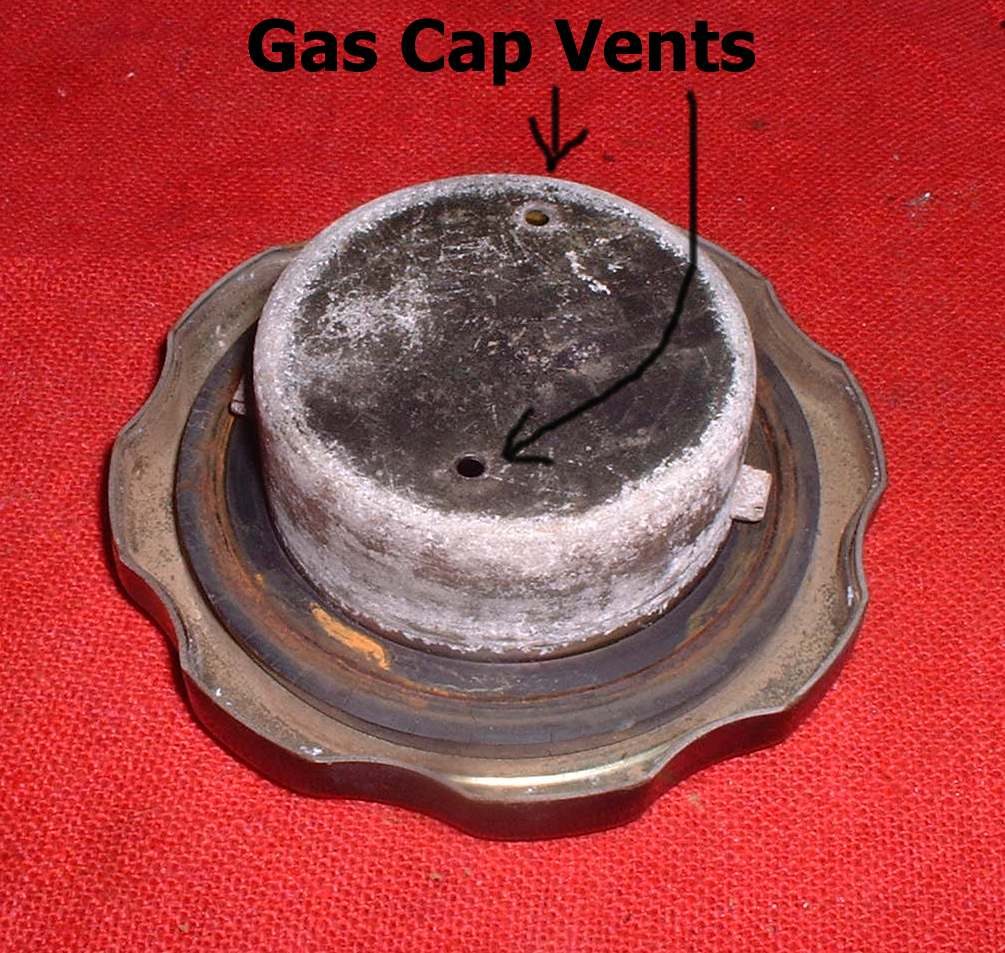
The fuel cap closes the filler opening on top of the tank. Most lock with the ignition key. Many have a small vent hole or valve; on bikes with an evaporative system (a charcoal canister) the cap is sealed and the tank vents through a pipe instead.
What it does
The cap keeps fuel in, keeps rain and dust out and, where vented, lets air in as fuel is used. A rubber seal under the cap stops leaks when the tank is full. The lock and hinge get stiff with dirt, and the vent can block with dust or paint, which stops fuel flowing.
Signs it is worn or failing
- Fuel cap is stuck, leaks or will not lock.
- Engine stops after a few kilometres and the cap hisses when opened.
- Water in the fuel after rain, from a hard or cracked seal.
- Fuel smell around the tank.
When to replace it
When the seal is cracked or flat, the lock is broken, or the vent cannot be cleared. A stiff lock can often be cleaned and lubricated first: Clean and lubricate the fuel cap.
What to match when buying
- Match make, model and year: bolt pattern, size and vent type (vented or sealed for a canister system).
- A cap may come with a new lock and key. Ask whether it can be keyed to your ignition key, or you will carry two keys.
- Check the new seal is soft and the vent path is open. Never block a vent to stop a leak.
Fitting notes
- Rider or home job. Check the vent: Check the fuel tank vent.
- Keep dirt out of the tank while the cap is off.
- Use only a light lubricant on the lock; do not let it drip into the fuel.
- The vent may be a hole in the cap, a one-way valve, or a tube from the tank. A blocked vent stops the flow of fuel. Match a new cap to the same vent type.