
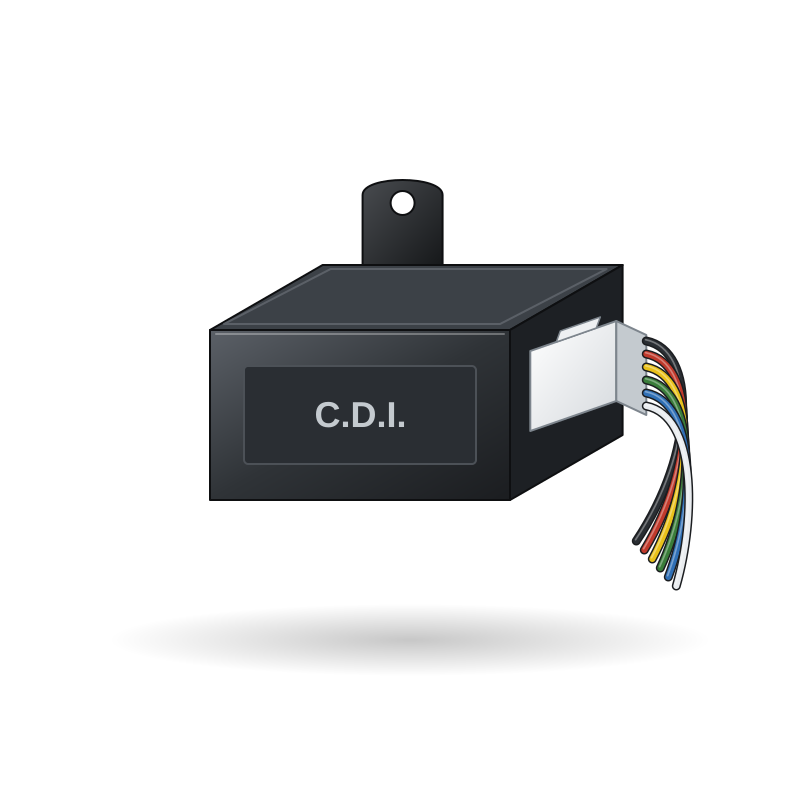
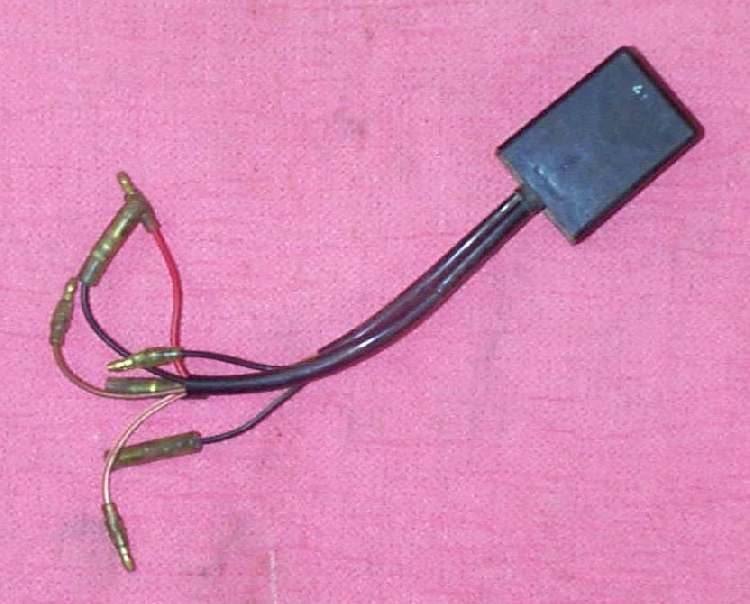
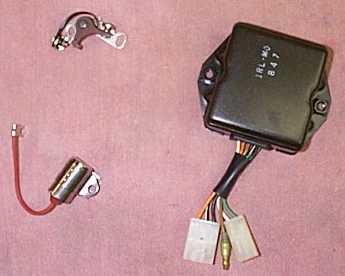
The CDI unit is a small sealed box, usually under the seat or side cover, with a multi-pin plug. Most carburettor commuter bikes and scooters use one. Fuel-injected bikes such as the K-Light 125 do not; their ECU does this job. Some CDIs run on AC from a coil in the stator (AC-CDI); others run on battery power (DC-CDI).
What it does
The CDI charges a capacitor to a few hundred volts. When the pick-up pulse arrives, it dumps that charge into the ignition coil, which makes the spark. It also sets the timing and moves it earlier as revs rise, and on many bikes sets a rev limit. CDIs fail from heat, water and vibration, but they are a less common cause of no spark than plugs, caps, wiring and switches.
Signs it is worn or failing
- No spark with good coil, pick-up, switches and wiring.
- Cuts out randomly or when hot.
- Misfires at high revs or will not rev past a point.
- CDI or ECU suspected faulty.
When to replace it
Only when every other part of the ignition has been checked good, ideally by trying a known-good CDI of the same part number. Swapping in a wrong unit can damage it or the engine.
What to match when buying
- Match the part number on the label, and AC or DC type. Plugs that fit are not proof of a match: the timing curve and rev limit differ.
- "Racing" or unlimited CDIs change timing and can cause pinking and engine damage.
- Cheap copies are common. Buy from a dealer or a known ignition maker, and keep the receipt in case it fails early.
- Magneto CDI (no battery) and battery-fed CDI are different units. A battery-fed one needs a well-charged battery for a good spark.
Fitting notes
- Workshop job to diagnose: Diagnose a suspected CDI or ECU fault.
- Key off before unplugging. Check the earth wire and plug pins first: Clean and seal electrical connectors.
- Mount it where it was, away from heat and water spray.
- Never unplug the CDI, coil or plug cap with the engine running. These systems make very high voltage and it can damage the ignition.