
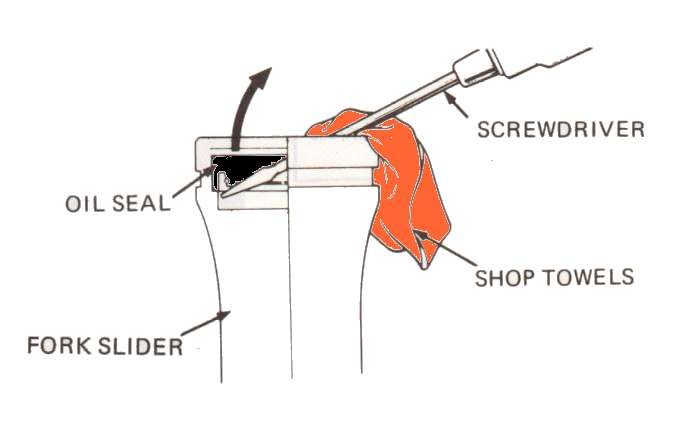
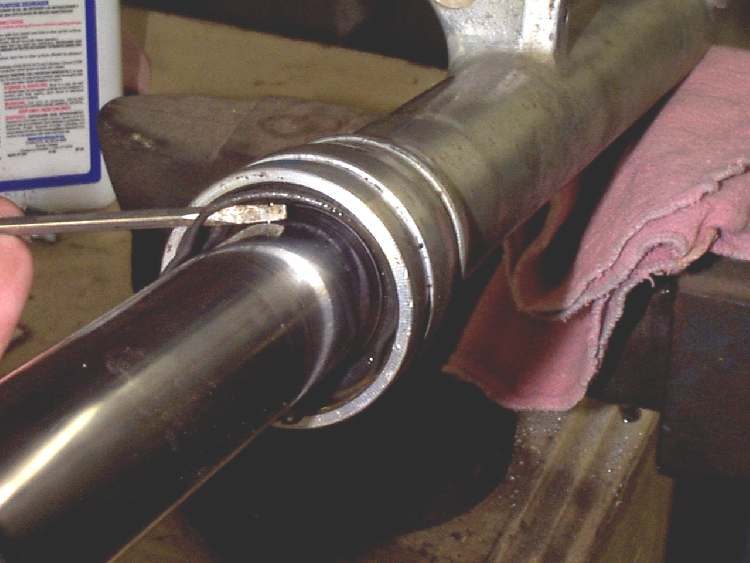
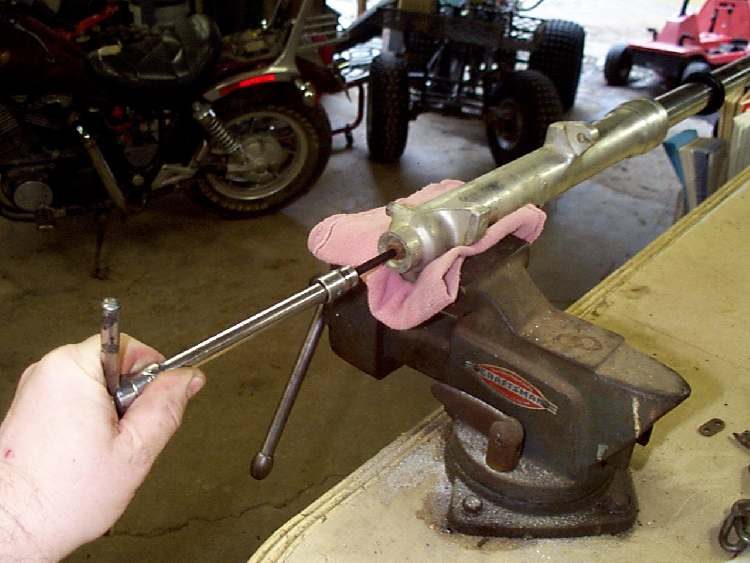
You see an oily ring on the shiny fork tube (stanchion) after riding, oil running down the outside of the fork leg, or oily dirt round the dust seal. The oil seal at the top of the outer leg is letting fork oil past. Common causes are grit under the seal lip, a worn or hardened seal, a pitted or scratched tube, or a bent tube. As oil escapes, the fork loses damping and starts to bounce and bottom out.
Is it safe to ride?
Ride with care if it is a light film and the brake is clean. If oil has reached the brake disc, pads or caliper, do not ride: the brake can stop working. Clean the disc and replace oily pads first.
Quick checks first
- Look at the brake disc and caliper on the leaking side: oily?
- Wipe the tubes clean, pump the forks with the brake on, and see which leg leaves a fresh oil ring.
- Look at the tube for rust spots, chips or scratches.
- Is the oil coming from the seal, or from the bottom bolt or the cap at the top?
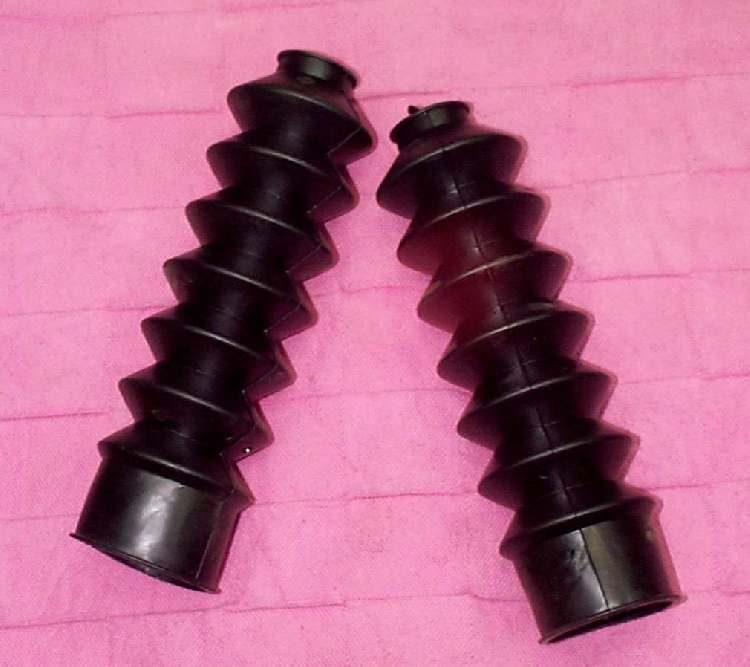
- Dents or rough patches on a fork tube wear out new seals. Gaiters over the tubes keep dirt off the seals.
Diagnose it step by step
1Is there oil on the brake disc, pads or caliper?
- Yes: do not ride. Clean the disc with brake cleaner and fit new pads with Replace disc brake pads, after fixing the leak.
- No: go to step 2.
2Where does the oil come from?
- From the seal at the top of the outer leg: go to step 3.
- From the bolt at the bottom of the leg: the sealing washer has failed. Workshop job, done with Replace fork oil and seals.
- From the top cap: a cap O-ring has failed or the cap is loose. Workshop.
3Is the tube pitted, chipped, scratched or bent where it passes through the seal?
- Yes: new seals will tear quickly. The tube must be replaced or repaired. Replace fork oil and seals.
- No: go to step 4.
4Is this a new leak on a tube in good condition?
- Yes: try Clean fork seals. Grit under the lip is a common cause.
- No (it has leaked for a long time or came back after cleaning): go to step 5.
5Has the fork lost a lot of oil (bottoms out, bouncy, one leg feels different)?
- Yes: both legs need new seals and fresh oil of the exact grade and amount. Replace fork oil and seals.
- No: the seal is worn. Same repair. Ask for both legs at once.
6Is the drained oil milky?
- Yes (the workshop will see this): water has got in past the seals. Replace seals and oil and check the dust seals.
Causes, most likely first
| Cause | How to confirm | Fix |
|---|---|---|
| Grit under seal lip | New leak, tube good | Clean fork seals |
| Worn or hard seal | Leak returns after cleaning | Replace fork oil and seals |
| Pitted or scratched tube | Rust spots, chips in seal area | Replace tube and seals |
| Torn dust seal letting dirt in | Split dust boot | Replace dust and oil seals |
| Bent tube | Tube not straight; legs stiff | Workshop |
| Bottom bolt washer or cap O-ring | Oil from bottom or top | Workshop |
Reference values (K-Light 125)
| Item | Value | Source |
|---|---|---|
| Fork oil seal size | 37 x 50 x 11 mm | K-Light 125 manual, PDF p. 151 |
| Fork oil per leg | 285 ± 2 ml, grade 46# | K-Light 125 manual, PDF p. 156 |