
Fork bushes are thin sleeves, often metal with a low-friction coating, that let the inner tube slide inside the outer leg. There is usually one on the tube and one in the leg, below the seal. They set how freely the leg moves and keep it from rocking sideways.
What it does
The bushes guide the tube so the fork moves smoothly and in a straight line. Oil lubricates them. A worn bush lets the tube wobble in the leg, which shows up as knocking, play at the front and uneven seal wear.
Signs it is worn or failing
- Knock or clunk from the front over bumps or when braking: Knocking or squeaking from the front forks, Clunk from the front when braking.
- Sideways play in the leg when the bike is held with the front brake on and pushed.
- Forks stick or feel notchy: Front forks feel sticky or stiff.
- Worn coating showing bare metal on the bush.
When to replace it
Replace bushes whenever the forks are apart for new seals if the coating is worn or the tube has play. Always replace both bushes in a leg, and do both legs together.
What to match when buying
- Bike model and fork tube diameter.
- Buy bushes and seals together, often sold as a fork rebuild kit.
- Check that the tube is not scored or pitted. New bushes and seals wear fast on a rough tube.
Fitting notes
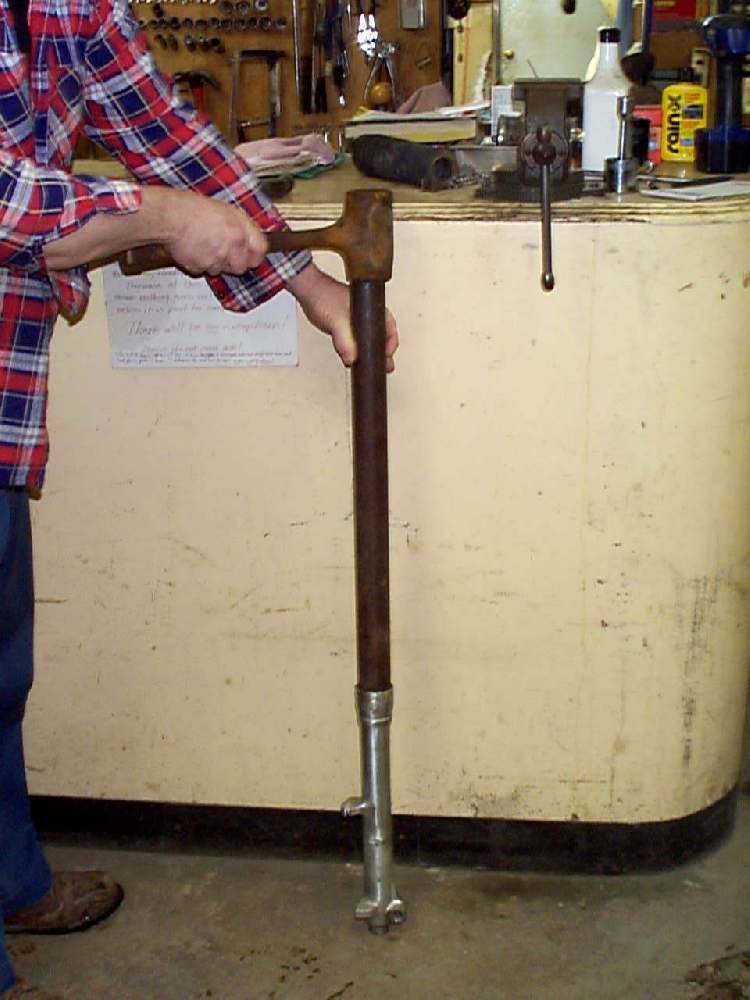
- A leg that will not come apart may be held by a bush under the seal. Push the leg in and pull it out sharply, several times, to work it free.
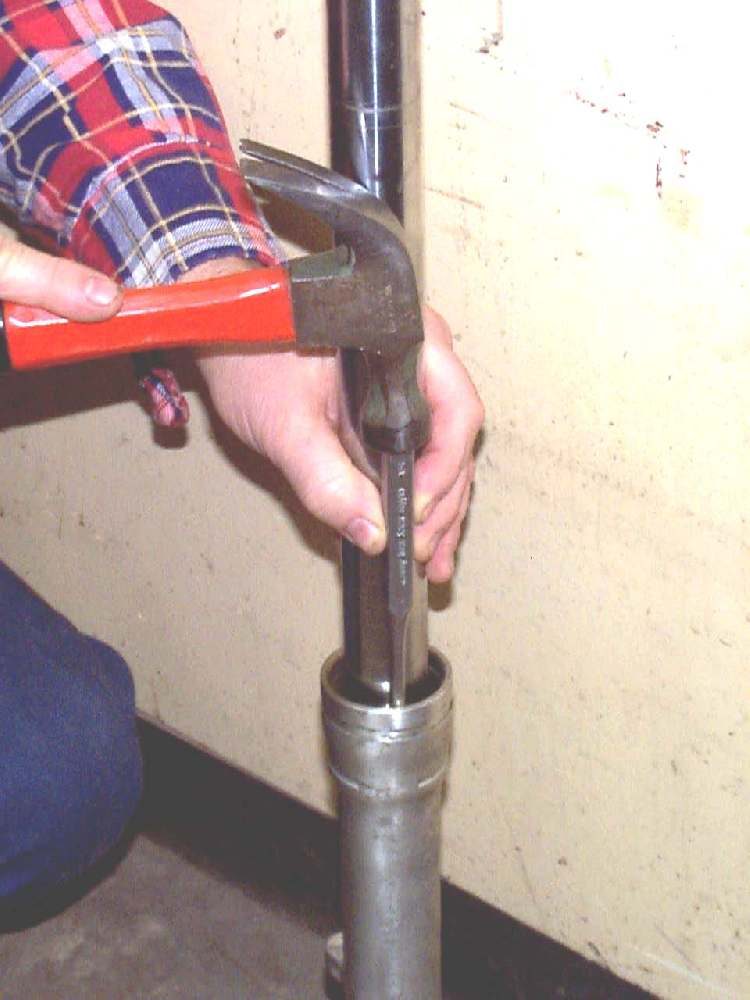
- Bushes are a semi-tight fit. Tap them in with a flat punch at one spot, then 180 degrees away, and work round. A length of tube of the right size can also drive a bush and seal home.
- Full job: Replace fork oil and seals and Drive in a fork seal.