
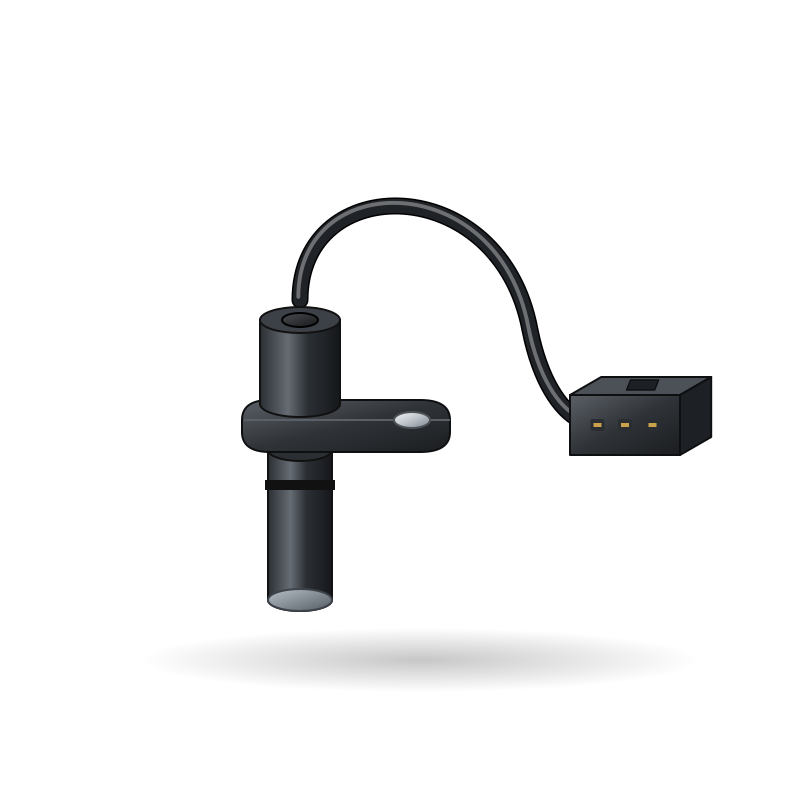
The speed sensor tells the electronic speedometer how fast the wheel or gearbox output is turning. It is usually a small sensor with a wire, mounted near the front wheel hub, the brake disc, or the front sprocket, reading a toothed ring or the sprocket teeth. Bikes with a mechanical speedometer use a gear drive in the front hub and a cable instead. Bikes with ABS have their own wheel speed sensors for the ABS unit.
What it does
As the teeth or magnets pass, the sensor sends pulses. The instruments count them to show speed and distance; on some bikes the ECU also uses the signal. Mud, metal dust, a bent ring, a damaged wire or a loose sensor stop the pulses.
Signs it is worn or failing
- Speedometer or odometer does not work.
- Speed reading jumps or drops to zero at times.
- On cable drives, speedometer cable is noisy or broken.
When to replace it
When it gives no signal with power, earth and a clean, correctly spaced ring, or its body or wire is damaged. Follow your bike's manual for its test.
What to match when buying
- Match the part number, plug and mounting. Sensors differ in type (two-wire or three-wire) and in the gap they need.
- For hub gear drives, match the drive gear and tangs.
Fitting notes
- Home job: Check the speed sensor.
- Clean metal dust off the sensor tip and ring. Keep any spacer or shim so the gap stays correct.
- When refitting a front wheel with a hub drive, the K-Light manual says to engage the drive tangs and spin the wheel to check the drive turns.