

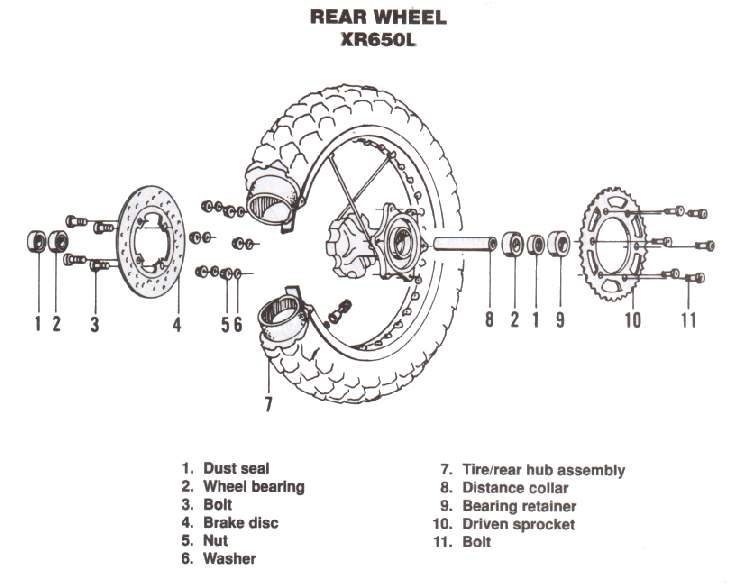
The rear sprocket is the large toothed wheel bolted to the left side of the rear wheel. On many bikes it sits on a carrier with rubber dampers (the cush drive).
What it does
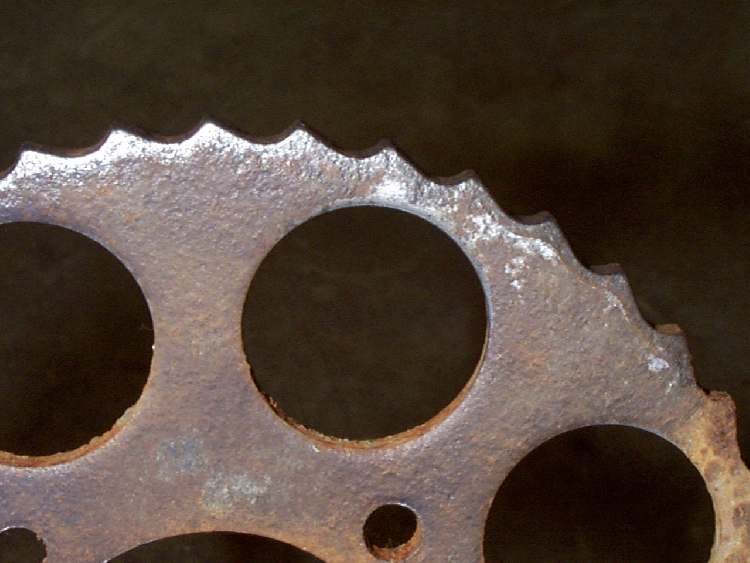
The chain pulls the rear sprocket round, and the sprocket turns the wheel. The ratio between front and rear tooth counts sets the gearing. As the chain stretches it rides higher on the teeth and wears them into a hooked shape, which then wears a new chain quickly.
Signs it is worn or failing
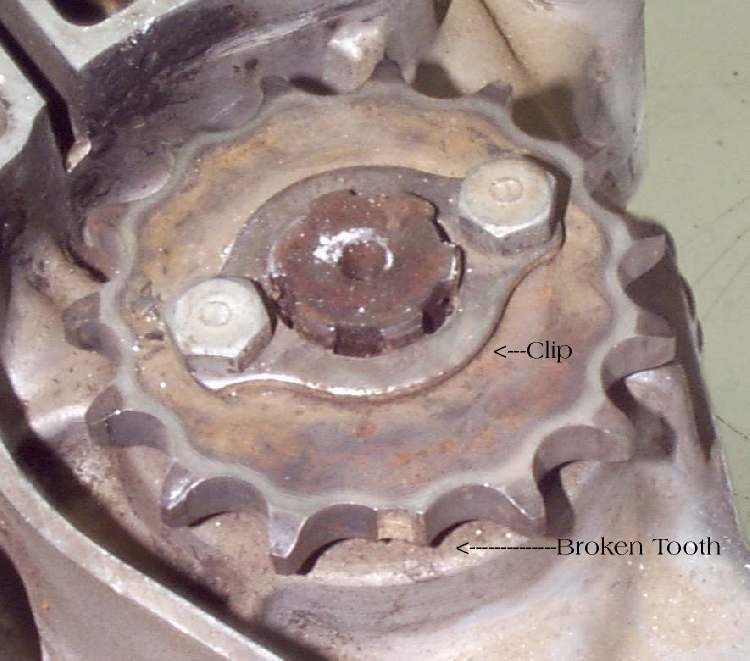
- Teeth hooked, sharp, uneven or broken: Sprocket teeth hooked or broken.
- Chain jumps or is noisy: Chain jumps, Chain noise.
- Tight spots in the chain can come from a bent sprocket or loose sprocket nuts: Chain tight spots.
- Clunk when opening and closing the throttle: check the Cush drive rubbers.
When to replace it
Replace when teeth are hooked or bent, or about a quarter of a tooth has worn away. Replace it with the chain and front sprocket as a set.
What to match when buying
- Chain size (for example 428) and tooth count, stamped on the face.
- Bolt circle, number of bolt holes and centre bore must match the hub or carrier.
- Thickness matters: a sprocket for a different chain width will not fit.
- Steel sprockets last longer than alloy ones on commuter bikes.
- Check the box names your bike model. Avoid sprockets with rough, uneven teeth or no markings.
Fitting notes
- Tighten sprocket nuts in a cross pattern in two or three passes.
- Check sprocket runout by spinning the wheel and watching the teeth.
- See Inspect sprockets and Replace the chain and sprockets (workshop).
- A dished sprocket must go on the right way round. Fitted backwards, it wears out quickly.
- Some rear sprockets bolt to a carrier that slides into rubber cushions in the hub. Keep the bolts, nuts and lock washers, which are often of a special length.
Reference (K-Light 125)
| Item | Value | PDF page |
|---|---|---|
| Rear sprocket | 41 teeth, for 428 chain | 158 |
| Sprocket nuts (M10×1.25) | 45 to 50 N·m, cross pattern, 2 to 3 passes | 158, 177 |
| Replace | About 1/4 tooth worn, or bent | 177 |