
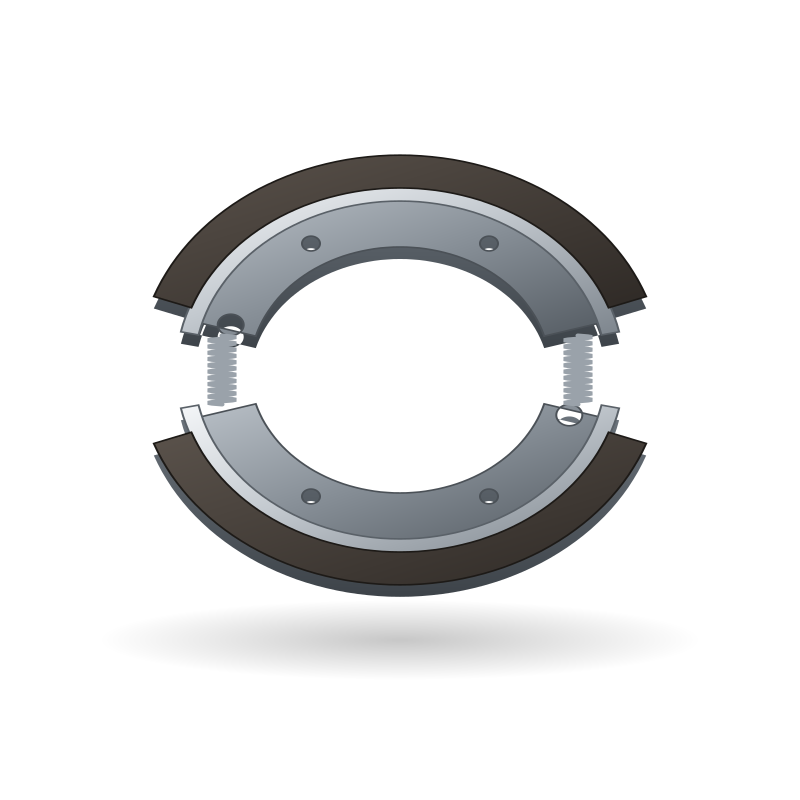
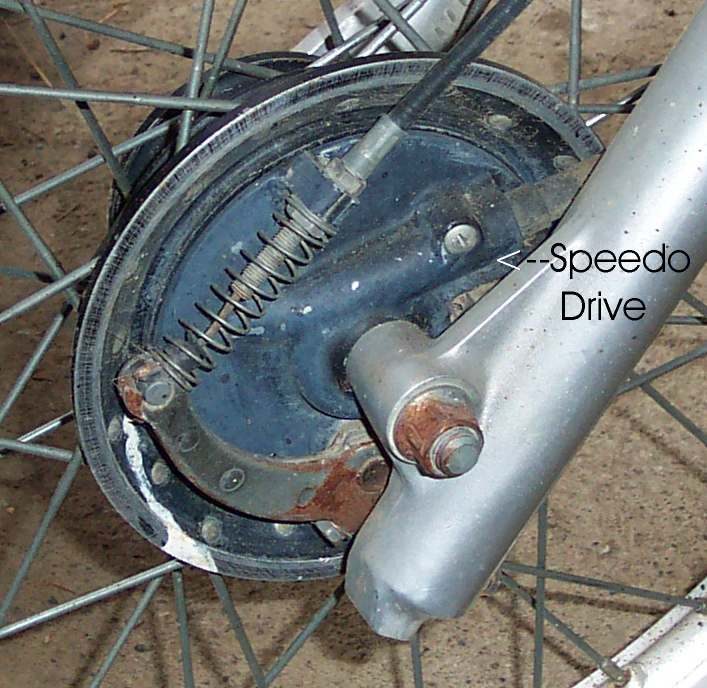
Drum brake shoes are two curved metal pieces with friction lining, fitted on a backing plate inside the wheel hub. A cam between them is turned by the brake arm outside the hub. Many commuter bikes use drum brakes at the rear, and some at the front too.
What it does
When you press the pedal or pull the lever, the rod or cable turns the cam. The cam spreads the shoes outward against the inside of the turning drum. Springs pull the shoes back when you release. The lining wears thinner, and as it does the brake arm has to turn further. Many backing plates have a wear pointer that shows when the shoes are worn out. Water, mud and oil in the drum make the brake weak.
Signs it is worn or failing
- Weak braking, arm turns a long way: Drum brake is weak.
- Squeak or grinding: Drum brake squeaks or grinds. Grinding can be metal on metal: stop riding.
- Pedal travels too far: Rear brake pedal travels too far.
- Brake does not release: Brake drag.
- Most drum brake failures come from neglect, not wear: the cam shaft rusts tight, or the glue under the lining lets go. Either one means taking the wheel and shoes off and cleaning the cam.
When to replace it
Replace when the wear pointer reaches the end of its mark, the lining is below the limit in your manual, or the lining is oily, cracked or loose. Replace both shoes and the springs together. Replace the drum (hub) if it is cracked or worn past its maximum diameter.
What to match when buying
- Make, model, year and front or rear. Shoe diameter and width must match the drum.
- Some shoes come with springs; check before ordering.
- Lining should be firmly bonded with no gaps. Old stock and some cheap shoes may contain asbestos; avoid unlabelled shoes.
- Fake shoes often have thin, crumbly lining. Buy branded shoes in a printed box.
Fitting notes
- Brake dust can be harmful. Clean with a damp cloth or brake cleaner, never blow it out with air.
- Grease the cam lightly with high temperature grease; keep grease off the lining.
- Home job: Service a drum brake, then Adjust a drum brake.
- The shoes lever off together, still joined by their springs. Move the springs across to the new shoes before refitting.
- If the lining is still thick and within the limit, rubbing the glaze off with sandpaper and refitting the same shoes can be enough. Sand the inside of the drum smooth as well, and do not breathe the dust.
- Before the final tightening of the axle, spin the wheel, press the brake on hard and hold it, then tighten the axle. This centres the shoes in the drum.
- Twin leading shoe brakes have a cam at each end of the shoe pair. They grip harder, but brake worse than a single cam type if the two cams are not set evenly.