
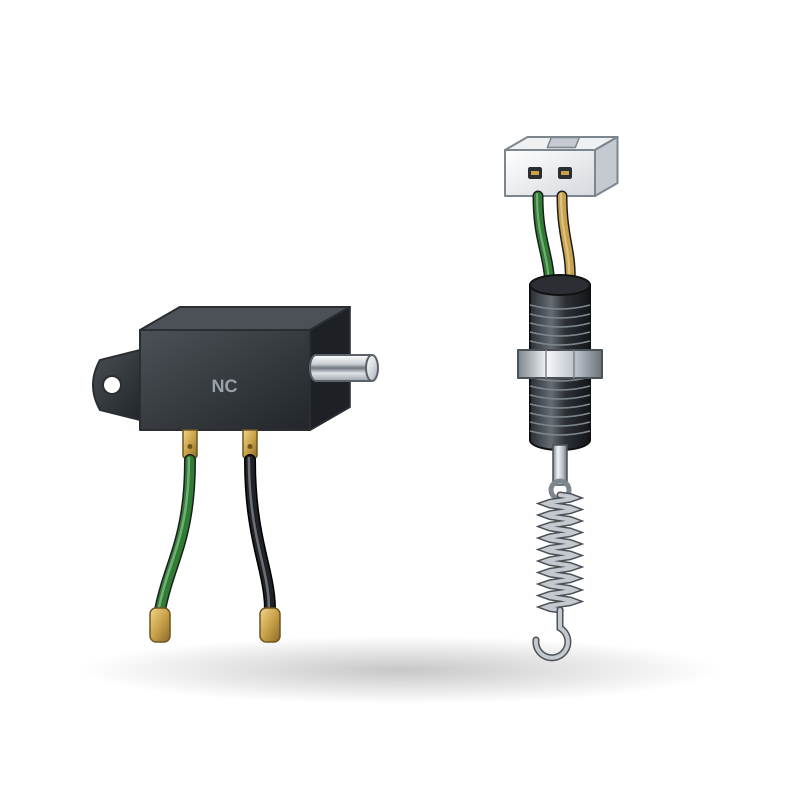
There are two brake light switches. The front one is a small push switch under the front brake lever. The rear one is usually a spring-pulled switch near the brake pedal, adjusted by a threaded body; on some bikes with hydraulic rear brakes it is a pressure switch in the brake line. On scooters, these switches also often feed the starter interlock.
What it does
When you pull the lever or press the pedal, the switch closes and the brake light comes on. The rear switch is adjusted so the light comes on just as the brake starts to bite. Switches get dirt and water inside, springs stretch, and the lever plunger sticks.
Signs it is worn or failing
- Brake light does not work with a good bulb.
- Brake light stays on, which also flattens the battery.
- Light comes on too late, after the brake has bitten.
- On scooters, starter does nothing with the brake pulled.
When to replace it
When it does not switch cleanly after cleaning and adjusting, or its body or plunger is broken.
What to match when buying
- Match make, model and year, and type: lever plunger, pedal pull switch, or hydraulic pressure switch with the right thread.
- Pressure switches are part of the brake system; a leak there is a brake failure. Buy from a dealer.
Fitting notes
- Home job: Test and adjust the brake light switches.
- Replacing a hydraulic pressure switch opens the brake system; it must be bled afterwards: Replace brake fluid and bleed the brakes. If unsure, use a workshop.
- After fitting, check the light with the ignition on, using each brake on its own.
Reference (K-Light 125)
| Item | Value | PDF page |
|---|---|---|
| Brake light on at front lever travel | about 15 mm | 67 |
| Front brake switch contacts | purple to red/white closed when applied | 105 |