
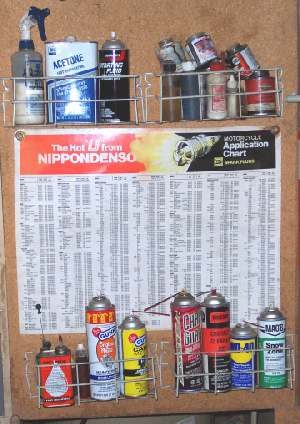
A small shelf of the right chemicals makes many jobs quicker. Any good brand will do. Read the label and check that it suits the part.
Safety
- Most are flammable or irritants. Use with good airflow, away from flames, with eye protection and gloves.
- Starting fluid: a very small amount only. Do not keep pouring it in. If the engine does not start, find out why.
Cleaning and loosening
- Penetrating oil: spray on rusted parts, wait, then work the part back and forth. It evaporates in a day or two, so oil the part afterwards. Vinegar and lemon juice can also dissolve rust.
- Light general oil: apply after penetrating oil. It stays where you put it.
- Contact cleaner: removes corrosion and moisture from electrical contacts and leaves no residue. Spray it, work the switch, spray again.
- Solvent or acetone: acetone leaves metal free of grease. See Clean engine parts safely with solvent.
- Brake cleaner: removes oil from brake pads and shoes.
- Carburettor cleaner: spray into a glass jar to soak small parts. Spray through jets and passages with eye protection. If you see the spray come out the other side, the passage is clear.
- Engine degreaser: makes oily dirt wash off with water.
Lubricants and sealers
- Chain oil: use one made for sealed (O-ring) chains.
- Graphite lubricant: flows into old cables with cracked outers, then the carrier dries, leaving the graphite.
- Anti-seize: put on exposed shafts, wheel nuts and spark plug threads. It makes later removal easy.
- Thread locker: use the standard type on bolts that loosen.
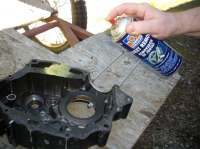
- Gasket remover: spray, wait an hour or two, then scrape. For bad gaskets wait overnight.
- Non-hardening gasket cement and liquid gasket: for gasketless faces, or to help a good old gasket seal. A new gasket is better.
Other
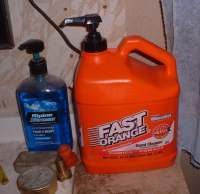
- Hand cleaner: mixes with oil so it washes off with water. In an emergency rub liquid soap on dry hands first.
Check your work
- Each chemical is labelled, closed, and stored away from heat.
If it did not fix the problem
- Stuck part: Free a stuck fastener.