
Gasket sealant is a paste or spray used on engine joints. A liquid gasket replaces a paper gasket on faces made to be sealed without one, such as crankcase halves. A non-hardening cement helps a good old gasket seal. Gasket remover softens a stuck gasket so it scrapes off.
What it does
It fills small gaps and gouges in the joint faces and stops oil from seeping out.
Signs it is worn or failing
- Oil seeping along a cover or crankcase joint: Oil leak trace.
- A hard, cracked or squashed gasket.
When to replace it
Replace the gasket if it is damaged. Sealant is a help for a gasket that is old and hard but still whole. It should not replace a gasket that should be renewed.
What to match when buying
- Use the type the manual names for the joint: liquid gasket where no gasket is fitted, non-hardening cement for paper gaskets.
- Check it is oil-resistant and suitable for the temperature.
- Gasket remover comes as a spray or a brush-on liquid. The spray works better on old gaskets.
Fitting notes
- Clean and degrease both faces. Remove all old gasket and sealant.
- Apply a thin even coat only. Too much squeezes into oil passages.
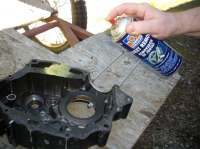
- To remove a stuck gasket, spray remover, wait an hour or two, then scrape. For very hard gaskets spray again and leave overnight.
- See Replace an engine cover gasket.