
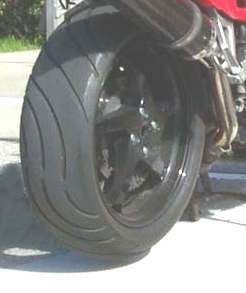
The back of the bike sits lower than it should, or lower than an identical bike. The rear may hit its stops with a passenger or load, the headlight may point up, the steering may feel light and vague, and the chain may rub on its guard. The causes are simple: preload set too low for the load, springs that have become tired over years of heavy loads, or the bike carrying more than it was built for.
Is it safe to ride?
Ride with care. A very low rear makes the bike less stable at speed and can let the tyre touch the mudguard. If the rear hits its stops on normal bumps, reduce the load before riding further.
Quick checks first
- What is the preload step on each shock? Same on both sides?
- How much load is on the bike: passenger, goods, top box?
- Look for oil on the shock bodies.
- Does the headlight beam point higher than usual?
Diagnose it step by step
1Twin shocks: are both on the same preload step?
- No: set them equal with Adjust rear spring preload.
- Yes: go to step 2.
2Is the preload on a low step while carrying a passenger or load?
- Yes: raise it one step at a time with Adjust rear spring preload.
- No, it is already high: go to step 3.
3Measure sag with Measure suspension sag. Is static sag (bike alone) much larger than your manual, the shock maker's figure, or an identical bike?
- Yes: the springs are tired. Replace the shocks (or springs, if sold separately). On twin shocks replace both. The K-Light 125 manual replaces the shock when the spring is fatigued.
- No: go to step 4.
4Does the rear also bounce, or is a shock leaking?
- Yes: Check the rear shock absorbers and see Rear bounces after bumps.
- No: go to step 5.
5Is the bike regularly loaded beyond what the owner's manual allows?
- Yes: reduce the load. Heavier shocks may be available for load-carrying versions; buy only shocks listed for your model and length.
- No: check whether shorter shocks were fitted earlier. The eye-to-eye length must match the original.
After raising the rear, recheck chain slack (it changes with height) and headlight aim.
Causes, most likely first
| Cause | How to confirm | Fix |
|---|---|---|
| Preload too low for load | Low step; heavy load | Adjust rear spring preload |
| Unequal preload | Different steps | Adjust rear spring preload |
| Tired springs | Large sag at highest step | Replace shocks: Measure suspension sag |
| Overloading | Load beyond manual limit | Reduce load |
| Wrong or short shocks fitted | Length differs from original | Fit correct shocks |