
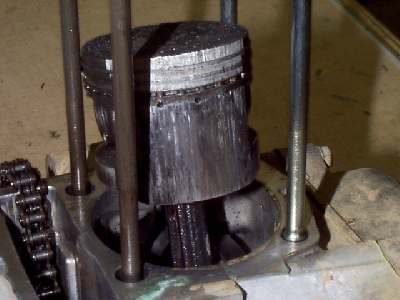
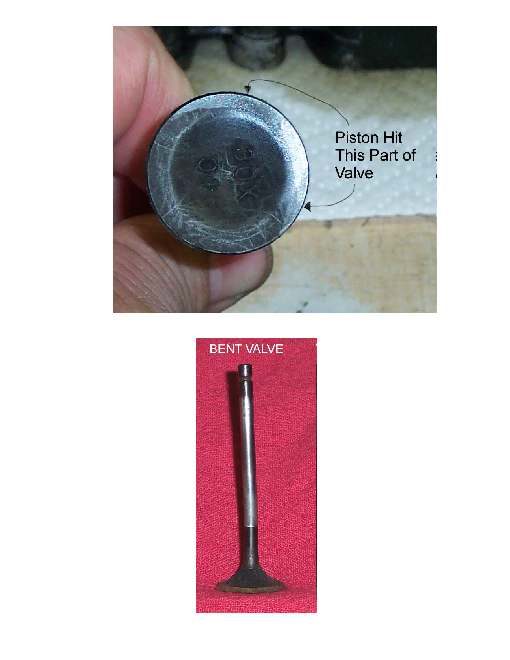
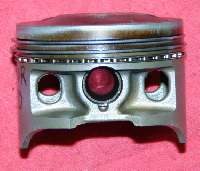
This is a finding after the head comes off, not a symptom on the road. The top of the piston is rough, pitted, melted or eaten away. The cause is usually either bits of metal passing through the combustion chamber or heat damage. Each cause needs a different repair, so find which one it is before ordering parts.
Is it safe to ride?
No. The engine has lost metal into the oil or the cylinder, or has run far too hot. Riding on risks a seizure and a broken connecting rod.
Quick checks first
- Look at the whole piston, not only the crown: skirt, ring lands and pin bosses.
- Look at the cylinder wall for scoring or smeared aluminium.
- Check the drained oil for bright metal flakes (Inspect drained oil for clues).
- Ask what the engine did before it failed: overheated, ran lean or was run hard.
Diagnose it step by step
1Does the crown look chewed, as if gnawed, with small pits and craters all over?
- Yes: bearing debris or bits of metal have been thrown into the chamber. This is common on two-strokes when the crank or rod bearings fail. Go to step 3.
- No: go to step 2.
2Is the crown melted, with holes, flowing metal, or aluminium smeared down the skirt and bore?
- Yes: the engine ran too hot, from a lean mixture, wrong ignition timing or lack of oil. See Engine runs hot and lean and Engine has seized or locked up.
- No: light pitting and a dull crown can be age. Go to step 4.
3Turn the crank by hand. Is there gritty or loose movement in the bottom end?
- Yes: the crank and rod bearings are failing. A new piston alone will be ruined again. The bottom end must be rebuilt. See Assess bottom end and internal engine damage.
- No: go to step 4.
4Is the bore scored, blue, or smoking after a past rebuild?
- Yes: the cylinder was overheated and the steel lost its temper. A new cylinder or liner is the fix. Check the head for flatness too.
- No: Inspect a piston and read its size marks and measure clearance.
Causes, most likely first
| Cause | How to confirm | Fix |
|---|---|---|
| Failing bottom end bearings | Chewed crown, metal in oil or crankcase, gritty crank | Rebuild the bottom end, then fit a new piston |
| Overheating from a lean mixture or timing | Melted crown, smeared aluminium, blue or burnt bore | New piston and a cylinder repair, then fix the cause |
| Loose or broken ring or circlip | Scoring at the pin ends, broken parts in the chamber | Inspect and replace parts, check the bore |
| Age and carbon | Even dull crown, no damage to the bore | Clean, measure, refit if within limits |
When to go to a workshop
Piston crown damage nearly always needs a workshop with a bore gauge and crank tools. Take the engine, and the damaged parts, to them.