
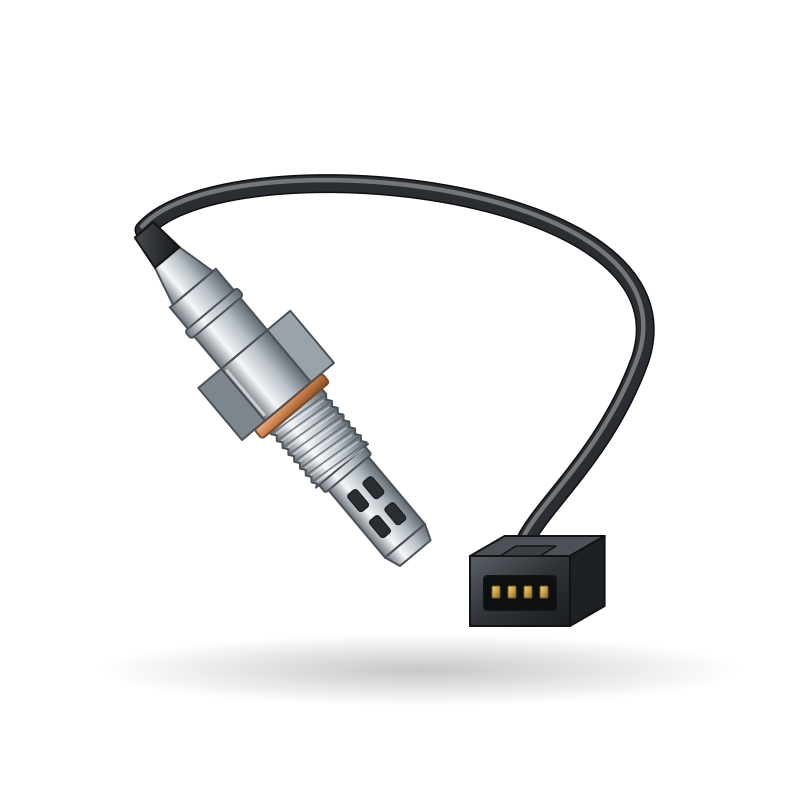
The oxygen sensor is a spark-plug-sized sensor screwed into the exhaust header pipe, near the engine, with a wire running to the loom. Most fuel-injected commuter bikes have one; carburettor bikes do not.
What it does
The sensor measures how much oxygen is left in the exhaust. High voltage means a rich mix (too much fuel), low voltage means lean. The ECU reads this and trims the fuel to keep the mix close to the ideal, which keeps the catalytic converter working and fuel use low. A heater inside gets it to working temperature quickly. Oil smoke, leaded fuel, silicone sealant and long rich running coat the tip and make it slow or dead.
Signs it is worn or failing
- Engine warning light with an O2 or heater code.
- High fuel use and runs rich.
- Surging at steady cruise.
- An exhaust leak before the sensor makes it read lean: Exhaust leak.
When to replace it
When it does not switch between rich and lean on a warm engine, or the heater is open circuit, after checking for exhaust leaks and wiring faults. Follow your bike's manual and diagnostic tool.
What to match when buying
- Match the part number, thread, number of wires (heated sensors have three or four) and plug.
- Wire length matters; do not cut and splice sensor wires unless the maker allows it.
- New sensors often come with anti-seize on the thread; do not let it touch the tip.
Fitting notes
- Workshop job: Check the oxygen sensor.
- Remove with the exhaust warm but not hot, using a slotted sensor socket. The header burns skin.
- Route the wire away from the pipe and do not twist it while tightening.
Reference (K-Light 125)
| Item | Value | PDF page |
|---|---|---|
| Signal | rich above 750 mV, lean below 120 mV | 264 |
| Heater resistance | 9.6 ± 1.5 Ω at 21 °C | 264 |