
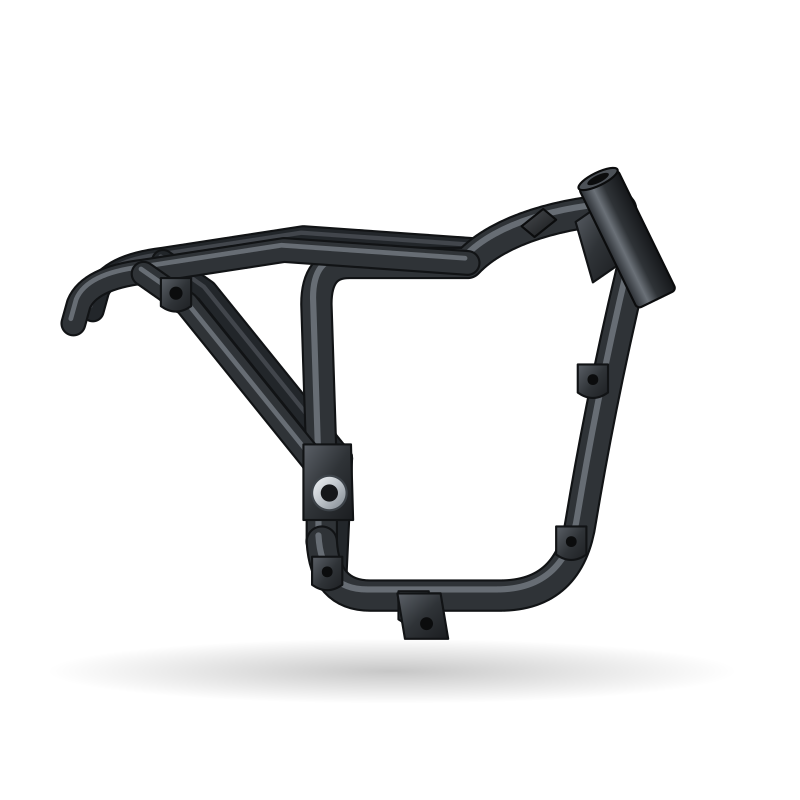
The frame is the steel skeleton of the bike. The steering head at the front holds the forks; the engine hangs from brackets underneath; the swingarm pivots at the back; and brackets carry the seat, tank, footpegs and stands. The frame (VIN) number is stamped on it, usually on the steering head.
What it does
The frame holds every part in the right place so the wheels stay in line and the bike steers straight. It also carries the engine as part of the structure on many bikes. Crashes, overloading and rough roads can bend it or crack welds and brackets. A bent frame makes the bike pull or weave even when everything else is correct.
Signs it is worn or failing
- Crack at a weld or bracket, rust holes: Crack in the frame or a bracket. Stop riding if a main tube or the steering head is cracked.
- After a fall or crash: The bike has been dropped or crashed.
- Bike pulls to one side with wheels in line: Bike pulls to one side.
- Weave or wobble: Bike weaves, Handlebars shake.
When to replace it
A bent or cracked main frame is assessed by a workshop with jigs and measurements. Small brackets can sometimes be repaired by a skilled welder. Welding near the steering head or swingarm pivot is not a roadside job. A new frame usually needs registration paperwork because it carries the VIN.
What to match when buying
- People usually buy bolts, Engine mounting bolts, Steering head bearings, Swingarm and bushes, brackets and rubber mounts rather than a frame.
- A complete frame must match make, model and year, and legally match the vehicle documents.
Fitting notes
- Check all frame fasteners regularly: Check chassis fasteners.
- After a crash: Inspect the frame after a crash (workshop).
Reference (K-Light 125)
| Item | Value | PDF page |
|---|---|---|
| VIN format | 17 characters between two "*" marks; 10th = model year | 11 |
| Engine mounts | Front 45 to 50, upper 22 to 29, rear 45 to 50 N·m | 191 |