
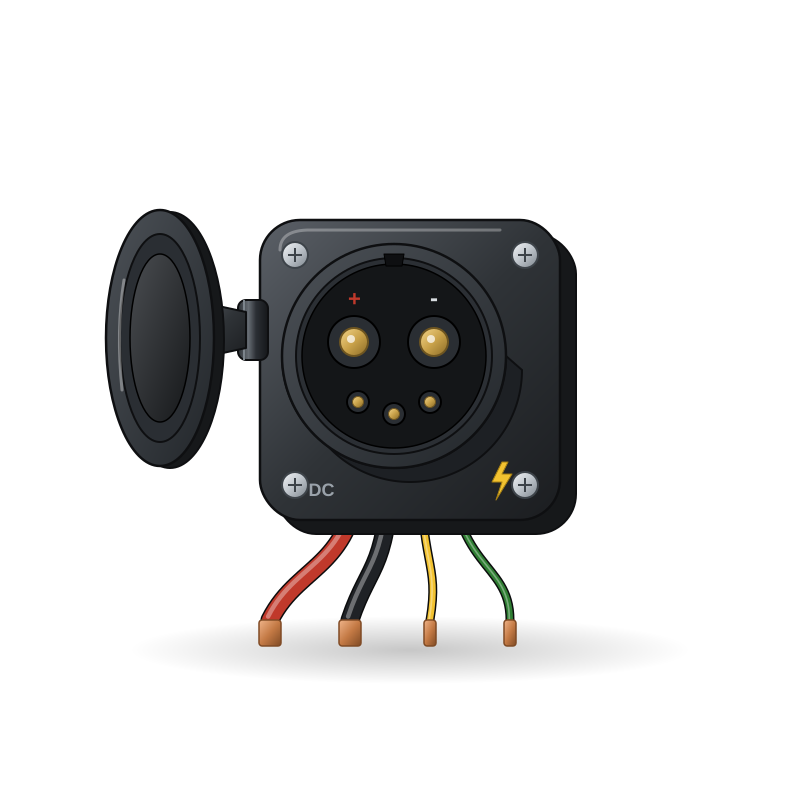
The charge port is the socket on the bike where the charger plugs in, usually under a rubber flap or a lockable cover. On some bikes the port is on the battery itself. Swap batteries have contact terminals instead.
What it does
The port carries charging current from the charger to the pack through metal pins. Many ports also have small signal pins that let the charger and BMS talk, and that stop charging if the plug is not fully in. A loose, dirty or corroded pin has higher resistance, so it gets hot under charging current. Heat then damages the plastic and makes the contact worse.
Signs it is worn or failing
- Plug or socket warm or hot to touch, brown marks, melted plastic: Charge plug or socket gets hot. Stop charging.
- Charging will not start or stops: Battery will not charge, Charging stops before full.
- Loose fit, bent pins, green corrosion or water in the socket.
- Swap pack not recognised: Swapped battery is not recognised.
When to replace it
Replace a port with melted or discoloured plastic, burnt or loose pins, or a cracked body. Replace the charger plug too if it is damaged, or the new port will be damaged as well.
What to match when buying
- Exact part for your bike: connector type, pin layout, current rating and wiring must match the charger.
- Do not fit a different connector to use another charger.
- Port replacement involves high-voltage wiring: buy and fit through a trained technician.
Fitting notes
- Keep the cover closed when not charging. Do not wash the port area with a pressure washer.
- Push the plug fully home every time; do not let the cable hang from it.
- Rider check: Inspect the charge port and plug. Swap contacts: Check swap battery contacts and latch.
- Replacement: workshop, after Make an electric motorcycle safe to work on.