
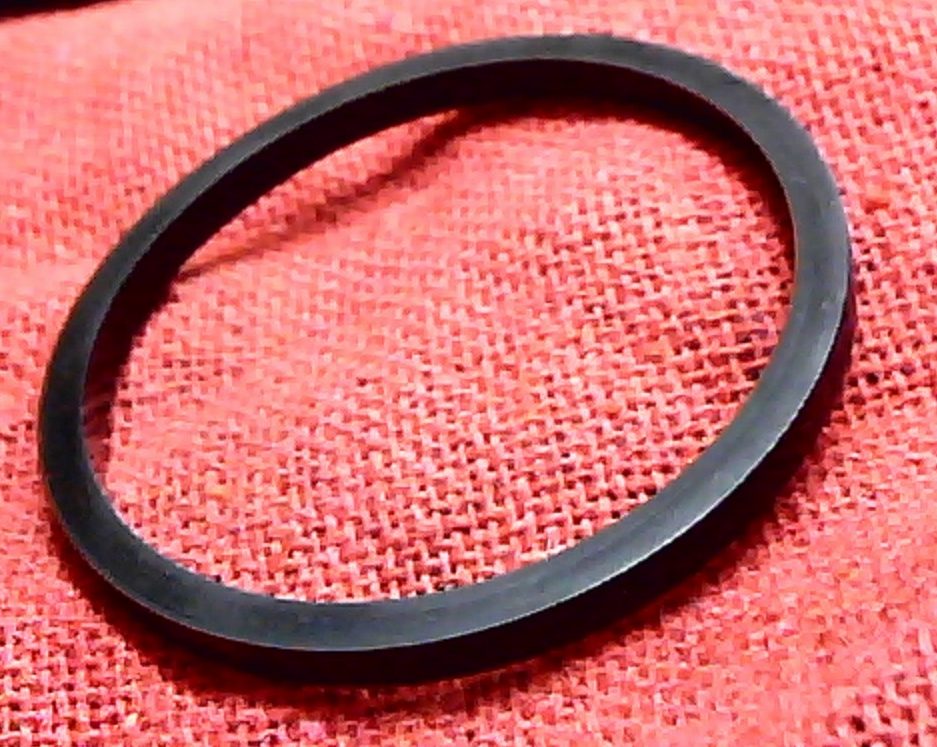
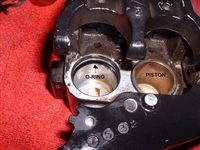
Each caliper piston has a square rubber seal in a groove in the caliper bore, and a dust seal outside it. They are small rubber rings, sold as a seal kit with the caliper.
What it does
The square seal keeps fluid in behind the piston. It also pulls the piston back a tiny amount when the lever is released, which is what keeps the pads from rubbing the disc. The dust seal keeps dirt and water out of the bore. Dirt and old fluid damage the bore and the seals.
Signs it is worn or failing
- Fluid wet on the caliper or piston: Brake fluid is leaking.
- Caliper sticks and the pads drag: Brake caliper sticks or is seized, Brake drags.
- Pads wear unevenly: Brake pads wear unevenly.
- Rust, pitting or dried fluid on the piston.
When to replace it
Replace the seals whenever the pistons are removed. Do not refit old seals that are hard, swollen, cut or flat on one side. If the piston or bore is pitted, replace the piston or the caliper.
What to match when buying
- The kit made for your caliper model, including the piston seals and dust seals.
- Brake fluid type marked on the reservoir cap: Brake fluid.
- Some calipers cannot be rebuilt and are replaced as a unit. Check before ordering.
Fitting notes
- Clean the groove and bore with brake fluid or brake cleaner. Do not use petrol or oil.
- Lubricate seals with fresh brake fluid of the correct type before fitting.
- Work with the other pistons held in place, and bleed the system afterwards: Replace brake fluid and bleed the brakes.
- Full job: Clean a brake caliper and free the pistons, Rebuild a brake caliper.