
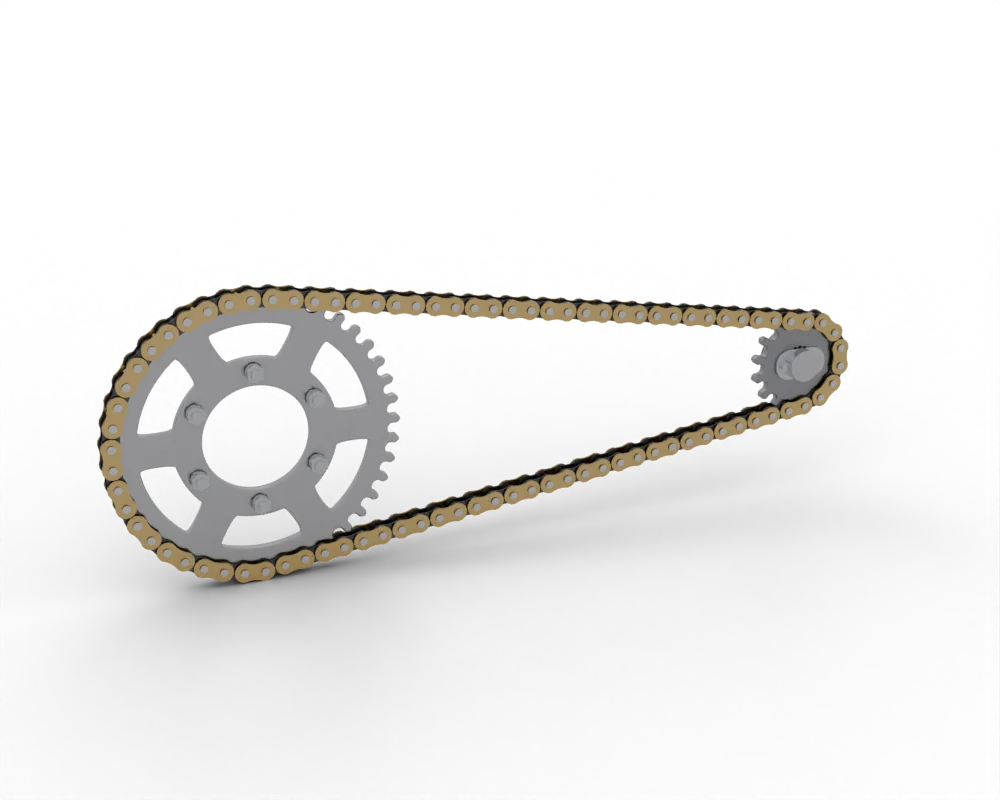
How a chain wears
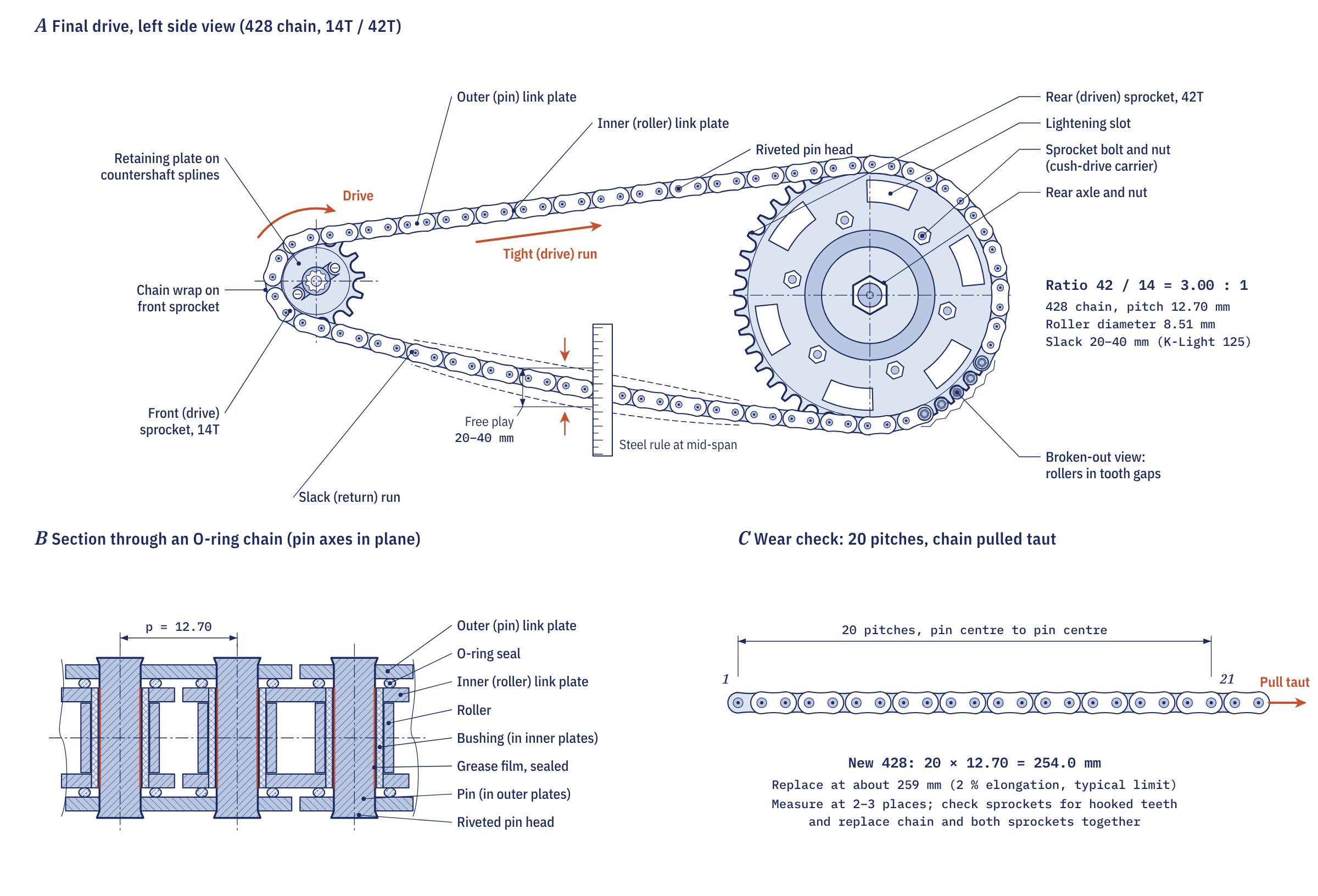
A roller chain is built from alternating inner links and outer links. Each inner link has two plates pressed onto two bushings, with a roller turning on each bushing. Each outer link has two plates pressed onto two pins that pass through those bushings. The joint between pin and bushing is where the wear happens: as it wears, every link lengthens slightly and the chain appears to stretch. A stretched chain rides higher on the sprocket teeth and wears them to match its own pitch, which is why chain and sprockets are replaced together.
A plain chain is lubricated only by what you spray on it. An O-ring chain traps factory grease in each joint behind rubber rings, and an X-ring chain uses a ring with four smaller sealing lips to reduce friction. Sealed chains typically last two to three times as long as plain chains on road machines.
Chain sizes
The three-digit code on the side plates gives the pitch and roller width. The first digit is the pitch in eighths of an inch, and the last two are the roller width in eightieths of an inch. A 428 chain has a 12.70 mm (half-inch) pitch and is used on most 100 to 200 cc commuters. A 520 chain has a 15.875 mm pitch and is common from 250 to 700 cc and on most off-road machines; 525 and 530 chains are used on larger road bikes. The K-Light 125 uses a 428 chain with 134 links.
Check the slack
- Switch off the engine, select neutral and stand the motorcycle upright on level ground. Many manuals, including the K-Light 125's, specify upright rather than on the side stand.
- Turn the rear wheel slowly by hand and find the tightest point of the chain, because chains and sprockets wear unevenly.
- At that point, push the lower run up and down at its midpoint and measure the total movement with a steel rule. The K-Light 125 specifies 20 to 40 mm; check the figure for your machine.
- Check the slack at several points around the chain. If it varies by more than about 10 mm, the chain or sprockets are unevenly worn and adjustment will not correct it.
Never turn the wheel by pulling the chain with the engine running, and keep fingers away from the sprockets. A chain draws fingers into the sprocket faster than you can let go.
Too little slack is as harmful as too much. As the rear suspension compresses, the distance between the sprockets changes, and a tight chain then overloads the gearbox output bearing and the chain itself. A loose chain whips, wears the chain guides and can jump the sprocket teeth.
Measure the wear
Slack tells you when to adjust; length tells you when to replace. Pull the chain taut and measure across 10 pitches, from the far side of one roller to the near side of the eleventh, or across 20 pitches. For a 12.70 mm pitch chain, the new 10-pitch length is 127.0 mm and the 20-pitch length is 254.0 mm. Most chain makers set the limit at about 1.5 to 2 per cent elongation, which is about 129 mm over 10 pitches or 258 to 259 mm over 20. Measure in two or three places and use the chain maker's own limit where you have it.
While you are there, look for stiff links that do not straighten as they leave the sprocket, cracked plates, missing rollers, rust and damaged O-rings. A chain with seized joints that cleaning and lubrication do not free needs replacing.
Read the sprockets
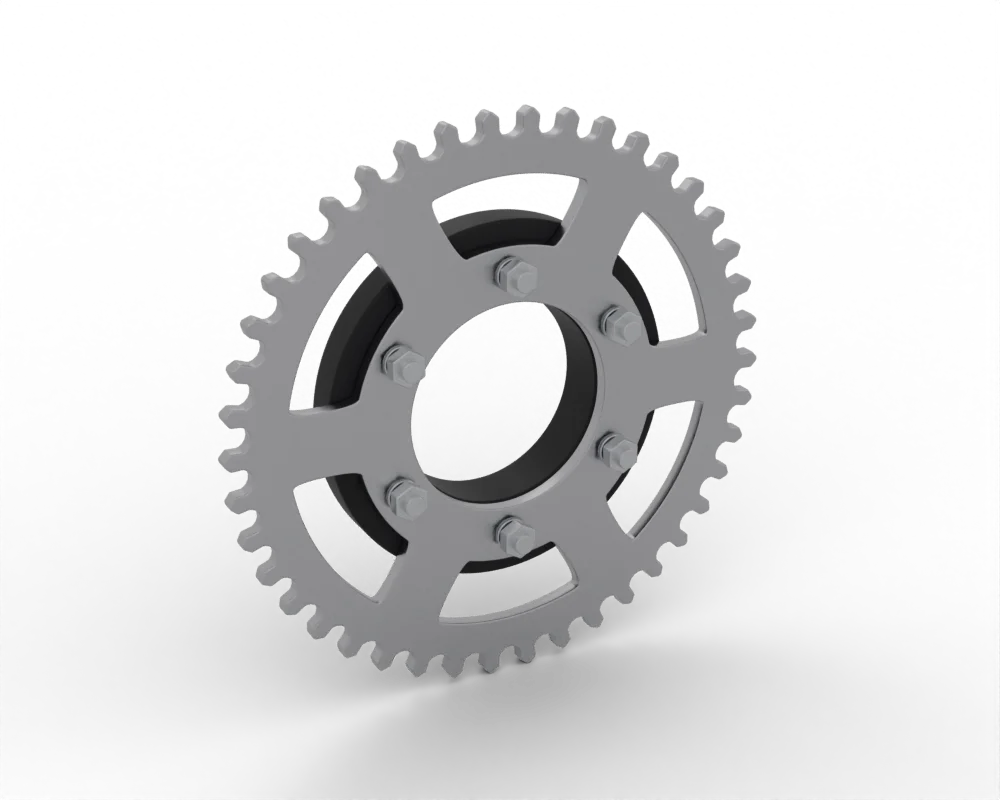
A worn rear sprocket shows hooked or pointed teeth leaning against the direction of rotation. The K-Light 125 manual calls for replacement when about a quarter of the tooth form has worn away. The small front sprocket wears fastest, because each of its teeth engages far more often. Check the rear sprocket nuts for tightness and the cush drive rubbers in the hub for cracks and free play.
Adjust the chain
- Loosen the rear axle nut and the locknuts on the chain adjusters.
- Turn both adjusters by the same amount until the slack is within the specified range at the tightest point.
- Check that the marks on both swingarm adjusters show the same position, and sight along the chain from behind the rear sprocket to confirm it runs straight. A misaligned wheel wears the chain and sprockets quickly and affects handling.
- Tighten the axle nut to the specified torque (100 to 113 N·m on the K-Light 125), then the locknuts, and check the slack again; it often changes slightly as the nut tightens.
- On a drum-braked machine, moving the axle changes the rear brake adjustment, so recheck pedal free play afterwards.
Clean and lubricate
Clean the chain with a neutral chain cleaner and a soft brush. Do not use steam, petrol or strong solvents on an O-ring chain, because they swell or dissolve the rings. Dry it, then apply chain lubricant to the inside of the lower run where the plates overlap, so that the chain's own movement carries it into the joints, and wipe off the excess. Lubricate when the chain is warm after a ride, every 500 to 800 km, and after riding in rain.
Chain drive is not the only option. Toothed belts, common on electric motorcycles and some cruisers, need no lubrication, and shaft drives are sealed but heavier. Chapter 4.3 of the course, Final drive and CVT, compares them and includes the full job sheet. The chain page in the Repair section collects chain and sprocket faults such as noise, jumping and tight spots.
Frequently asked questions
How much slack should a motorcycle chain have?
Use the figure in your owner's manual. Many commuter motorcycles, including the K-Light 125, specify 20 to 40 mm of total up-and-down movement at the midpoint of the lower run, measured at the tightest point.
How do I know when to replace my chain?
Measure the length over 10 or 20 pitches. For a 12.70 mm pitch chain, replace it when 10 pitches measure about 129 mm or 20 pitches about 258 to 259 mm, or at the chain maker's limit.
Should I replace the sprockets with the chain?
Yes. A worn chain wears the sprockets to its own pitch, and a new chain on worn sprockets wears out quickly. Replace the chain and both sprockets together.
How often should I lubricate my motorcycle chain?
Every 500 to 800 km and after riding in rain, ideally when the chain is warm after a ride.
Written by Transitions Lab for the Moto Zero open motorcycle course. Text and illustrations are licensed CC BY-SA 4.0. Figures and values come from the course modules; see sources and credits.