
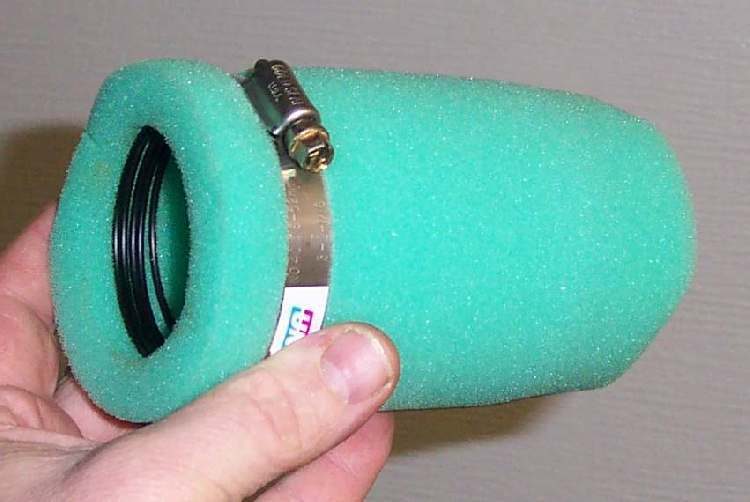
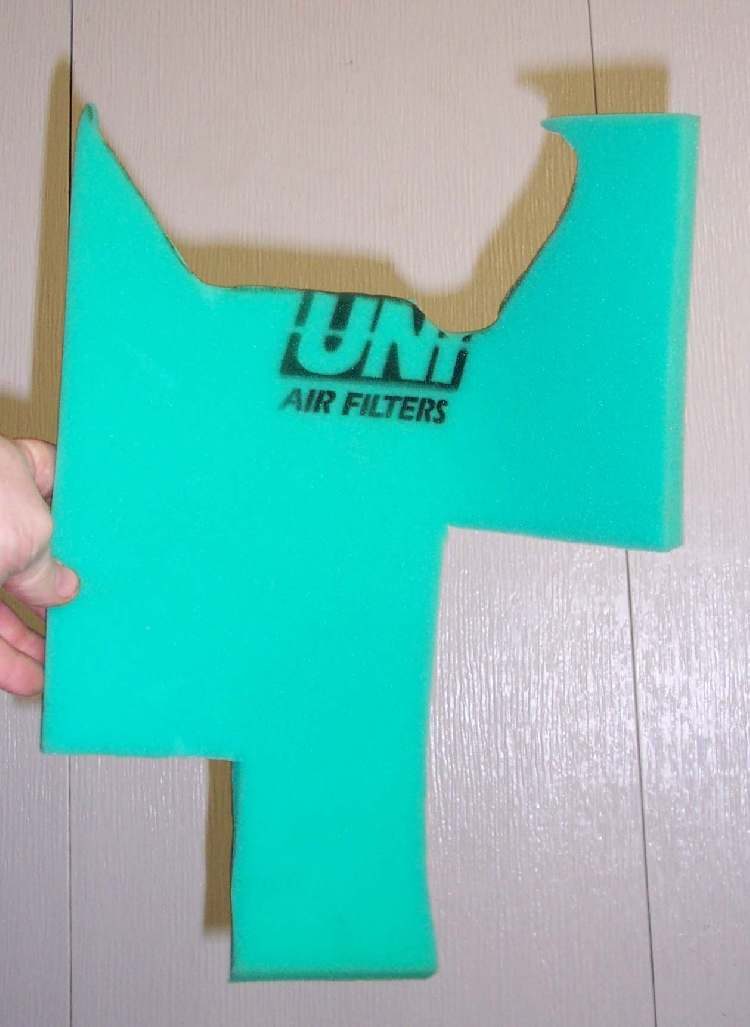
A foam air filter works because of its oil. The foam is only the support that holds the oil, like a skeleton. If the oil is missing, the filter does not stop dirt. Dirt that gets past the filter embeds in the soft aluminium of the piston and wears the engine like sandpaper. Never run the bike without its air filter.
Safety
- Solvent is flammable and harmful. Work outdoors, with gloves, and keep flame away.
- Dispose of used solvent and oil safely.
You need
- Solvent or detergent, a container, gloves and cloth.
- Special filter oil, or the engine oil or gear oil that your bike's manual allows.
Steps
- Take the filter out. Do not start the engine with the cover off.
- Rinse the foam in solvent several times until it comes out clean. Rub it firmly. If an outer coarse foam is fitted over the fine foam, clean that too.
- Check the foam. If it rips easily or falls apart, replace it. Foam ages and breaks down.
- Wring out the solvent and let the foam dry fully.
- Oil it. Drip a good amount of oil over the foam, inside, outside and on the edges, and work it in with your fingers until every part is coated. Add more where needed.
- Do not dip it and leave the extra in. The engine may run rich for a while as the extra oil is drawn into the engine.
- Refit with the seal flat all round. No gap should let air go around the filter.
Check your work
- The foam is evenly wet with oil, with no dry spots.
- No oil drips and the airbox seal is flat.
- The engine runs normally with no extra black smoke.
Good to know
- Clean more often in dust. Riders in dusty rural areas must service the filter more often than city riders.
- Fabric (cloth in a mesh) filters use the maker's special oil, are cleaned with soap and water, dried and re-oiled.
- A dirty filter may help for a while, then clogs and makes the engine rich.