
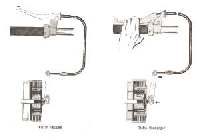
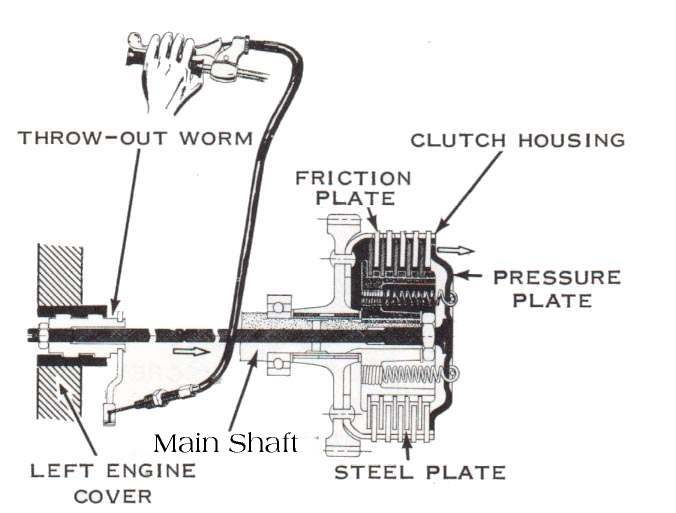
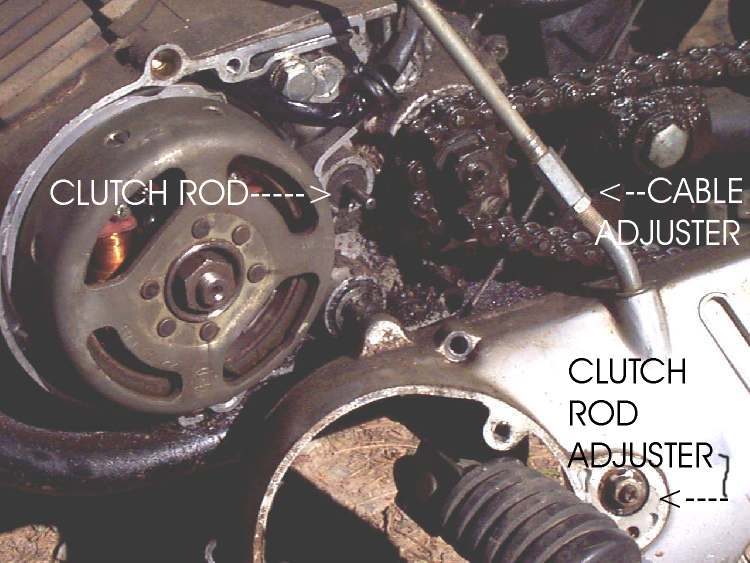
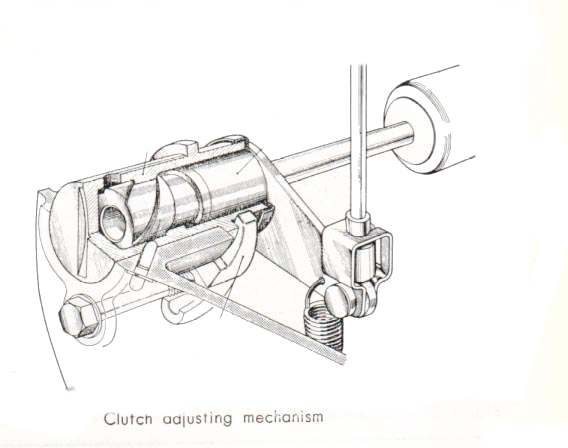
The lever flops to the handlebar with no pull, and the clutch does not release: the bike lurches or stalls when you select a gear. On a cable clutch, the cable has usually snapped (most often at the lever end) or slipped out of its holder. On a hydraulic clutch, fluid has leaked out or air has got in. Less often, the release arm on the engine has broken or come loose.
Is it safe to ride?
No. Without a clutch you cannot stop in gear without stalling and cannot pull away safely. Push the bike out of traffic. Do not try to ride home by starting in gear or changing gear without the clutch; the bike can jump forward unexpectedly.
Quick checks first
- Look at the lever: is the cable end (nipple) still in the lever, and is the cable in its bracket?
- Look at the engine end: is the cable still hooked on the release arm?
- Hydraulic clutch: look at the reservoir on the lever and for wet fluid at the engine end.
Diagnose it step by step
1Is the inner cable broken (you can see loose strands or the nipple has come off)?
- Yes: Replace the clutch cable. Check the lever's nipple seat for burrs that cut the new cable.
- No: go to step 2.
2Has the cable come out of the lever bracket, the adjuster, or the engine bracket, or has the adjuster unscrewed completely?
- Yes: refit it, check the nipples sit fully in their seats, then Adjust clutch lever free play.
- No: go to step 3.
3Is the lever itself broken or loose on its pivot?
- Yes: Brake or clutch lever is loose, bent or broken.
- No: go to step 4.
4Cable bikes: with the cable connected, pull the lever and watch the release arm. Does the arm move?
- No, the cable moves but the arm does not, or the arm is loose on its shaft or broken: this is inside or on the engine. Go to Inspect and replace clutch plates and springs for a workshop assessment of the release mechanism.
- Yes: recheck free play; if the clutch still does not release, see Clutch drags.
5Hydraulic clutch: is the reservoir low or empty, or is there fluid at the slave cylinder or hose?
- Low with no visible leak: top up with the fluid marked on the cap and Bleed a hydraulic clutch.
- Leaking: the seal or hose must be replaced in a workshop before bleeding. Brake fluid damages paint and skin; wipe it up and wash with water.
Why cables snap: they fray at the nipple when dry, when bent sharply, or when the lever seat has a burr. Lubricate the cable and check the ends at each service.
Causes, most likely first
| Cause | How to confirm | Fix |
|---|---|---|
| Snapped cable | Broken strands, loose nipple | Replace the clutch cable |
| Cable out of its holder | Nipple or outer out of place | Refit and Adjust clutch lever free play |
| Broken lever | Lever loose or cracked | Brake or clutch lever is loose, bent or broken |
| Hydraulic fluid loss or air | Low reservoir, wet slave cylinder | Bleed a hydraulic clutch, workshop for leaks |
| Broken or loose release arm | Cable moves, arm does not | Inspect and replace clutch plates and springs |