
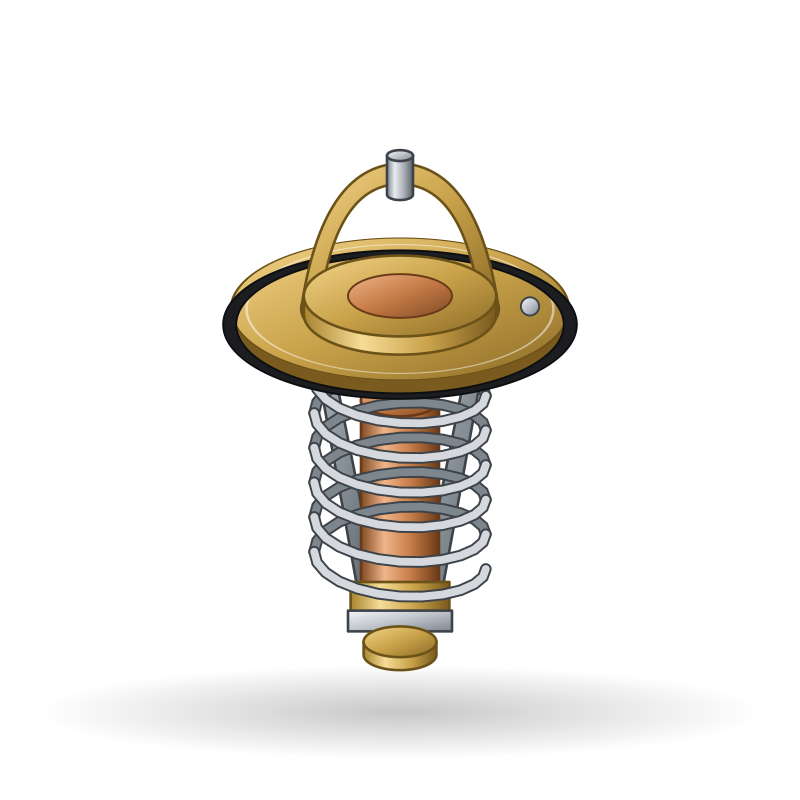
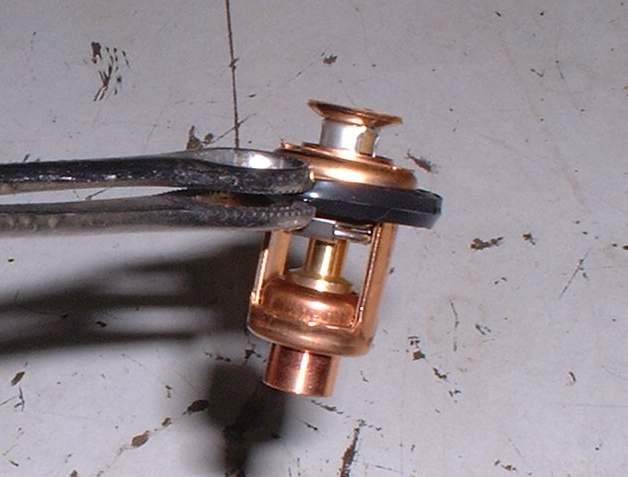
The thermostat is a small valve with a wax pellet, fitted in the coolant path between the engine and the radiator, usually in a housing on the cylinder head or near the top hose. Only liquid-cooled engines have one.
What it does
When the engine is cold, the thermostat stays closed so coolant circulates only inside the engine and it warms up quickly. As the coolant heats, the wax melts and expands, pushing the valve open so coolant flows to the radiator. A thermostat stuck shut makes the engine overheat fast. One stuck open makes the engine slow to warm, which raises fuel use and wear.
Signs it is worn or failing
- Liquid-cooled engine overheats while the radiator stays cool.
- Temperature gauge high soon after starting.
- Engine never reaches normal temperature, with high fuel use in cool weather.
- Leaks from the thermostat housing: Coolant is leaking.
When to replace it
When it does not open at its rated temperature in a test, or is stuck open when cold. Replace the housing seal at the same time. Follow your bike's manual for the opening temperature.
What to match when buying
- Match the part number or the opening temperature, size and shape. A thermostat with the wrong opening temperature changes how hot the engine runs.
- Check the small bleed hole or jiggle valve is in the same place as on the old one.
- Never run without a thermostat to "cure" overheating; find the real cause.
Fitting notes
- Workshop job: Check the thermostat. Work only on a cold engine.
- Fit it the right way round (the pellet faces the engine side), with a new seal.
- Refill and bleed the coolant afterwards: Replace the coolant.