
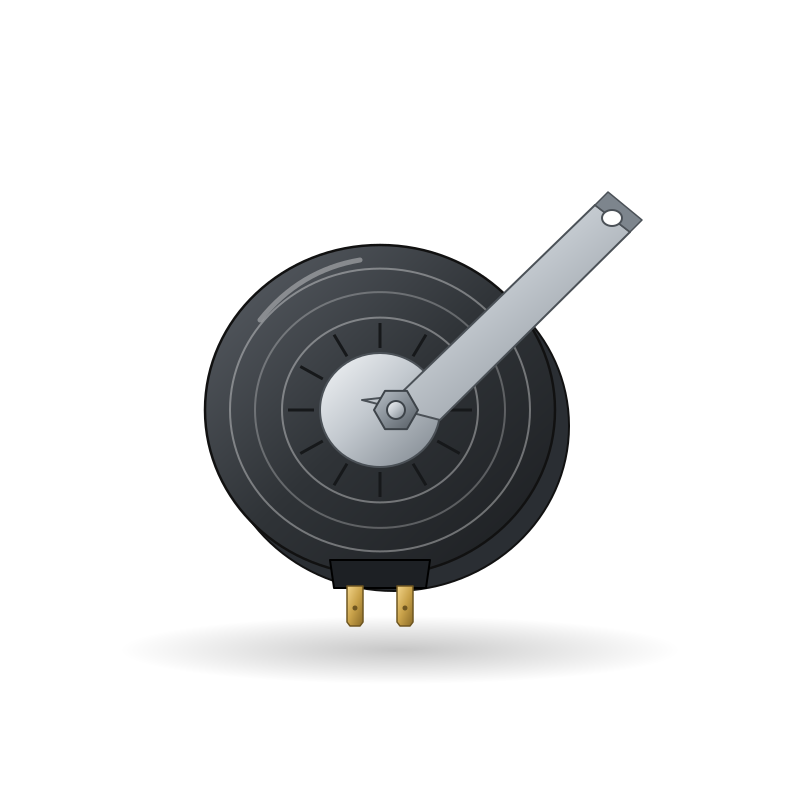
The horn is a round metal disc unit, usually mounted low at the front of the frame behind the front wheel. It has one or two spade terminals and is worked by the horn button on the left handlebar switch.
What it does
Pressing the button sends 12 V to the horn. An electromagnet inside pulls a steel diaphragm, which opens contacts and releases it, many times a second, making the sound. Its low front position means it takes water, mud and stones. Contacts burn, the tone screw moves, and terminals rust. A weak battery makes it croak.
Signs it is worn or failing
- Horn does not work.
- Horn is weak or croaky.
- Rusty terminals or a cracked body.
When to replace it
When it will not sound with 12 V fed straight from a good battery through a fused lead, or the sound stays weak after adjusting the tone screw (if it has one). Check the button, fuse and wiring first.
What to match when buying
- Match voltage (12 V), mounting bracket and terminal type. Most commuter horns are 12 V disc horns.
- Louder horns can draw more current than the button and wiring can carry; they then need a relay.
- Look for an approval mark on the horn. The K-Light horn carries one.
Fitting notes
- Home job: Test the horn.
- Mount it facing down or forward so water drains out.
- Clean the terminals and the earth path through the bracket.
Reference (K-Light 125)
| Item | Value | PDF page |
|---|---|---|
| Horn mounting bolt | 10 to 12 N·m | 103 |
| Horn approval | E4 000148 | 49 |