
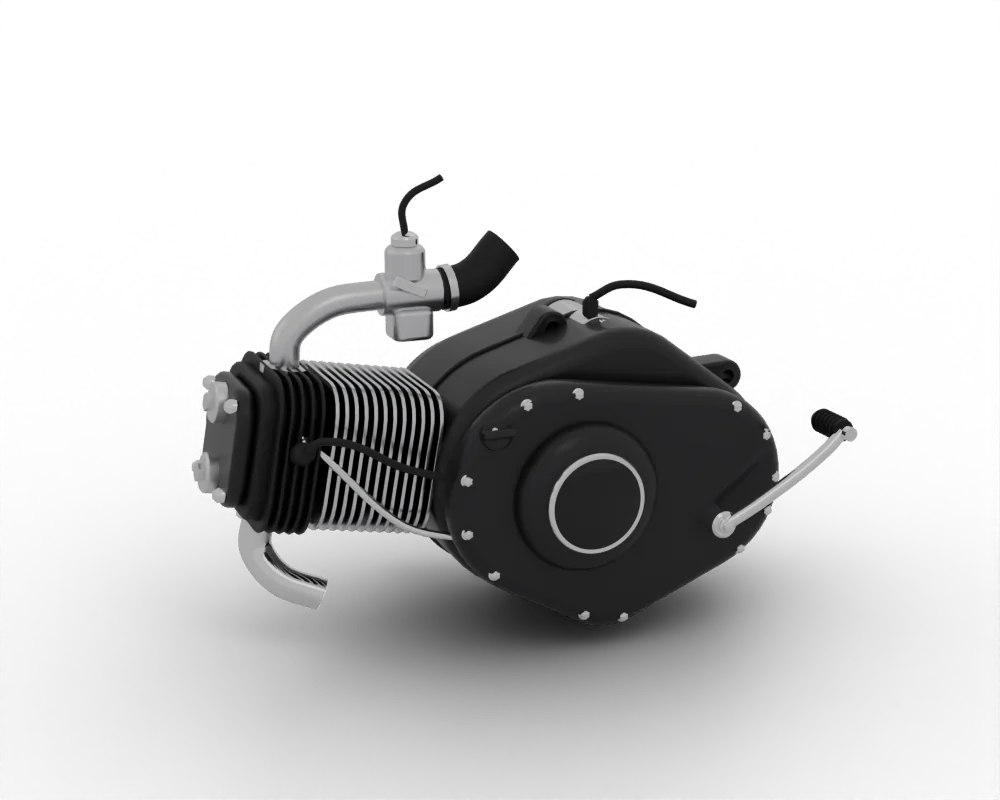
The rubber hoses carry coolant between the engine, the thermostat housing, the water pump and the radiator. A thin hose links the radiator filler neck to the reserve (overflow) tank. Each joint is held by a hose clip.
What it does
The hoses let the engine and the radiator move a little against each other while carrying hot coolant under pressure. The radiator cap holds this pressure; when it rises too far, coolant passes through the overflow hose into the reserve tank and is drawn back as the engine cools.
Signs it is worn or failing
- Wet patches, white or coloured crust at a hose end or clip: see Coolant is leaking.
- Hose feels hard and cracked, or soft and swollen, when the engine is cold.
- Coolant level falls but no leak is seen: check hoses under the tank and behind covers.
- Reserve tank does not refill the radiator: the overflow hose may be split or blocked.
- Engine overheats with a collapsed hose: see Engine overheats (liquid cooled).
When to replace it
Replace any hose that is cracked, swollen, soft or leaking. Many mechanics replace the hoses every few years with the coolant, even if they look fine, because rubber ages from the inside. Replace a rusted or weak clip with the hose.
What to match when buying
- Shaped hoses: buy the part for your model, so bends do not kink.
- Straight hoses: same inner diameter and a coolant-rated hose.
- Clips: the same type (spring or screw) and size.
Fitting notes
- Only work on a cold engine. Never open the radiator cap hot.
- Drain the coolant first: Drain and refill the coolant.
- Clean the pipe stubs; push the hose fully on and place the clip just behind the bead.
- Refill, run the engine to working temperature, let it cool and top up again. See Check the coolant level and Pressure test the cooling system for leaks.