
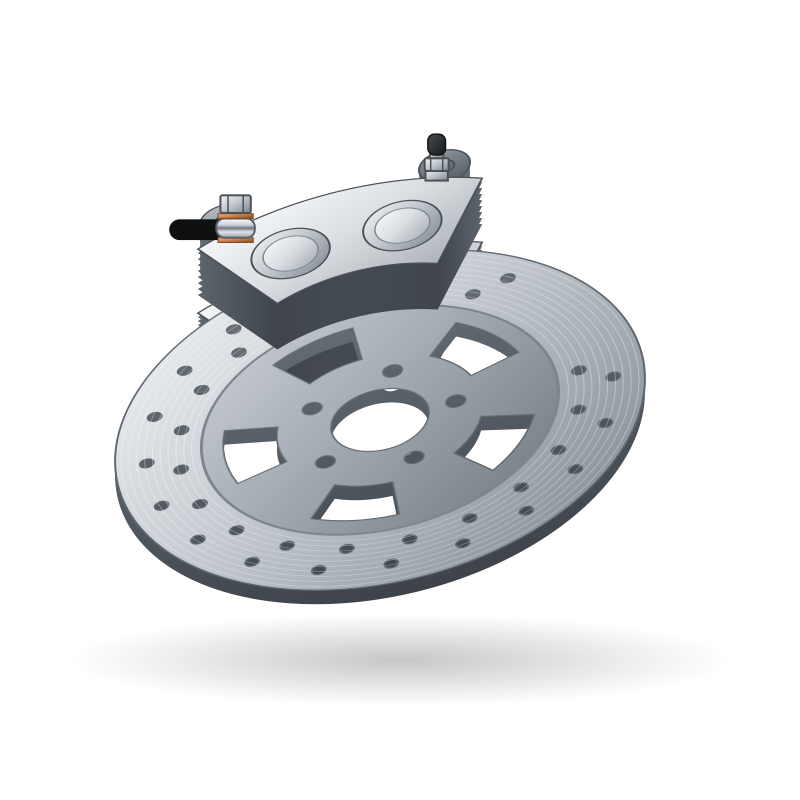
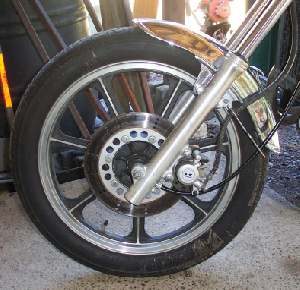
The front disc brake is the whole front braking system: the lever and master cylinder on the right handlebar, the brake hose, the caliper on the fork leg, the pads and the disc bolted to the wheel. It does most of your stopping.
What it does
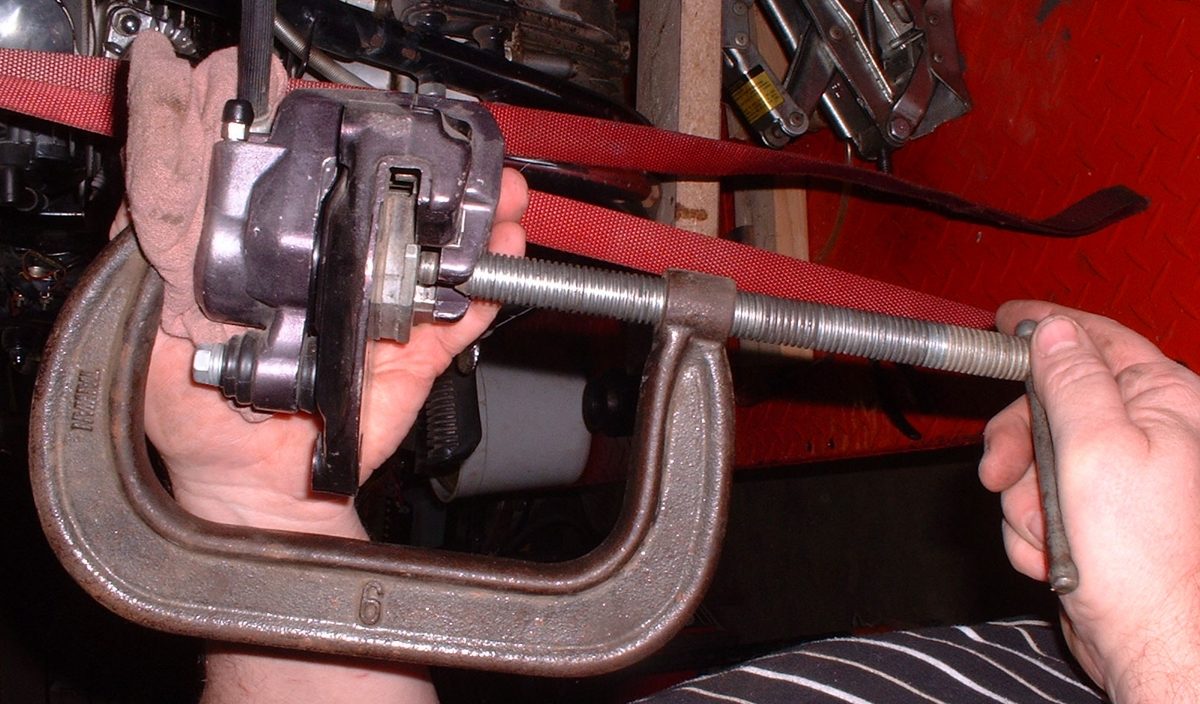
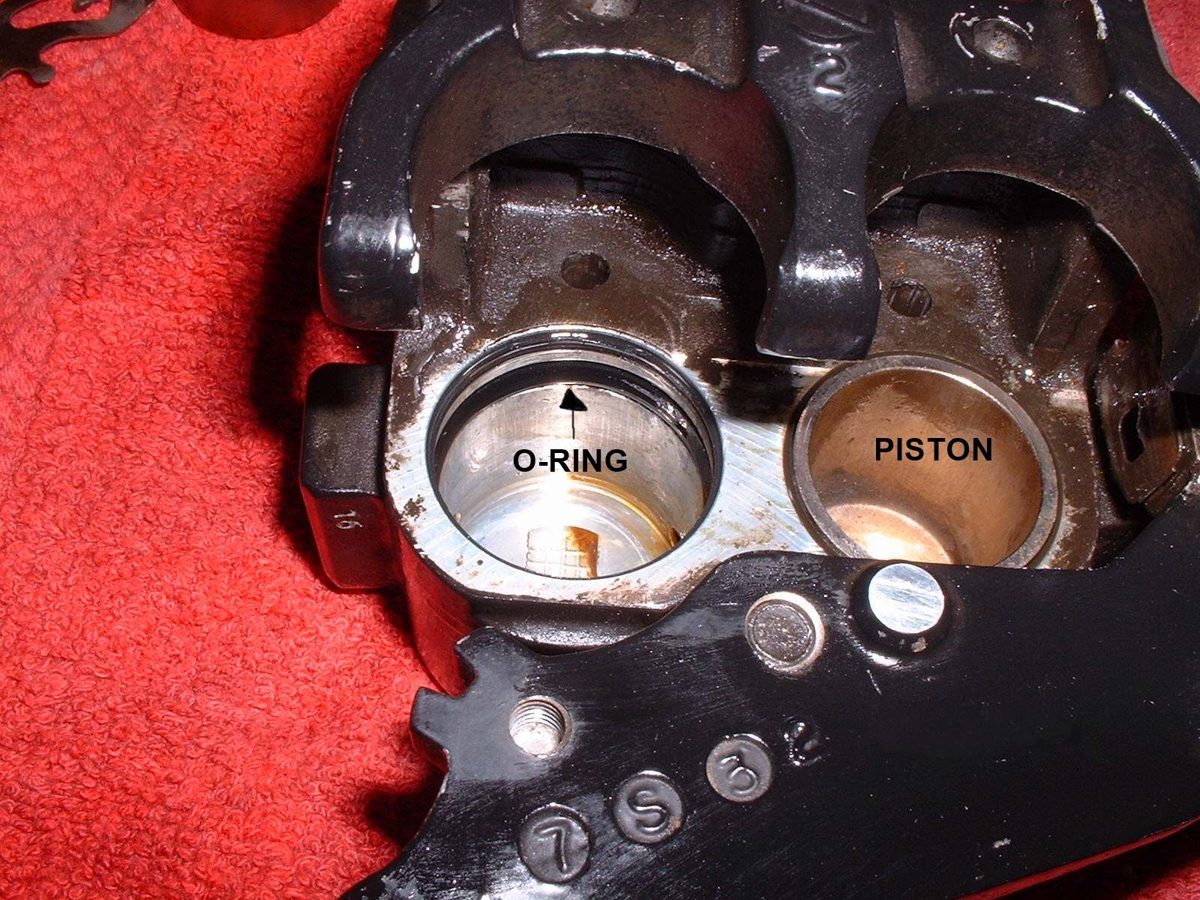
Squeezing the lever pushes a piston in the master cylinder. Brake fluid cannot be squashed, so it pushes the caliper pistons, which press the pads onto the spinning disc. Friction turns speed into heat. The caliper pistons are much bigger than the master cylinder piston, so a small hand force becomes a large clamping force. Air in the fluid, worn pads, a worn disc or sticking pistons all weaken the brake.
Signs it is worn or failing
- Spongy lever: Spongy brake. Lever reaches the bar: Lever to bar. Stop riding until fixed.
- Firm lever but poor stopping: Weak brakes, Brake fade.
- Noise or pulsing: Brakes squeal, Brakes grind, Brakes judder.
- Wheel drags: Brake drag. Fluid leak: Brake fluid leak.
When to replace it
You replace parts, not the whole brake. Pads and fluid are routine. Discs, hoses, seals and master cylinders are replaced when worn or damaged. See the part pages below.
What to match when buying
- Brake pads, Brake fluid, Brake disc, Brake hose, Brake caliper seal kits, Brake master cylinder kits.
- Bikes with linked brakes or ABS need parts for that exact system: CBS, ABS.
- Brake parts are where fake parts are most dangerous. Buy from a dealer or a trusted shop.
Fitting notes
- Rider checks: Check brake pad wear, Check brake fluid level and condition, Check brake hoses.
- After any brake work, pump the lever until firm and test at walking speed before riding.
Reference (K-Light 125)
| Item | Value | PDF page |
|---|---|---|
| Front disc diameter | 280 mm | 19, 109 |
| Front caliper | 3 pistons, 25 mm; lever feeds 2, CBS feeds 1 | 107 |
| Front master cylinder bore | 12.7 mm | 107 |
| Front lever free play | 10 to 20 mm at the tip | 61 |