
A short history of the motorcycle
Every part on a modern motorcycle answers a problem someone met along the way: an engine that could not idle, a front wheel that slid, exhaust that broke the emission rules. This timeline follows those problems from the steam velocipedes of 1868 to battery swapping.
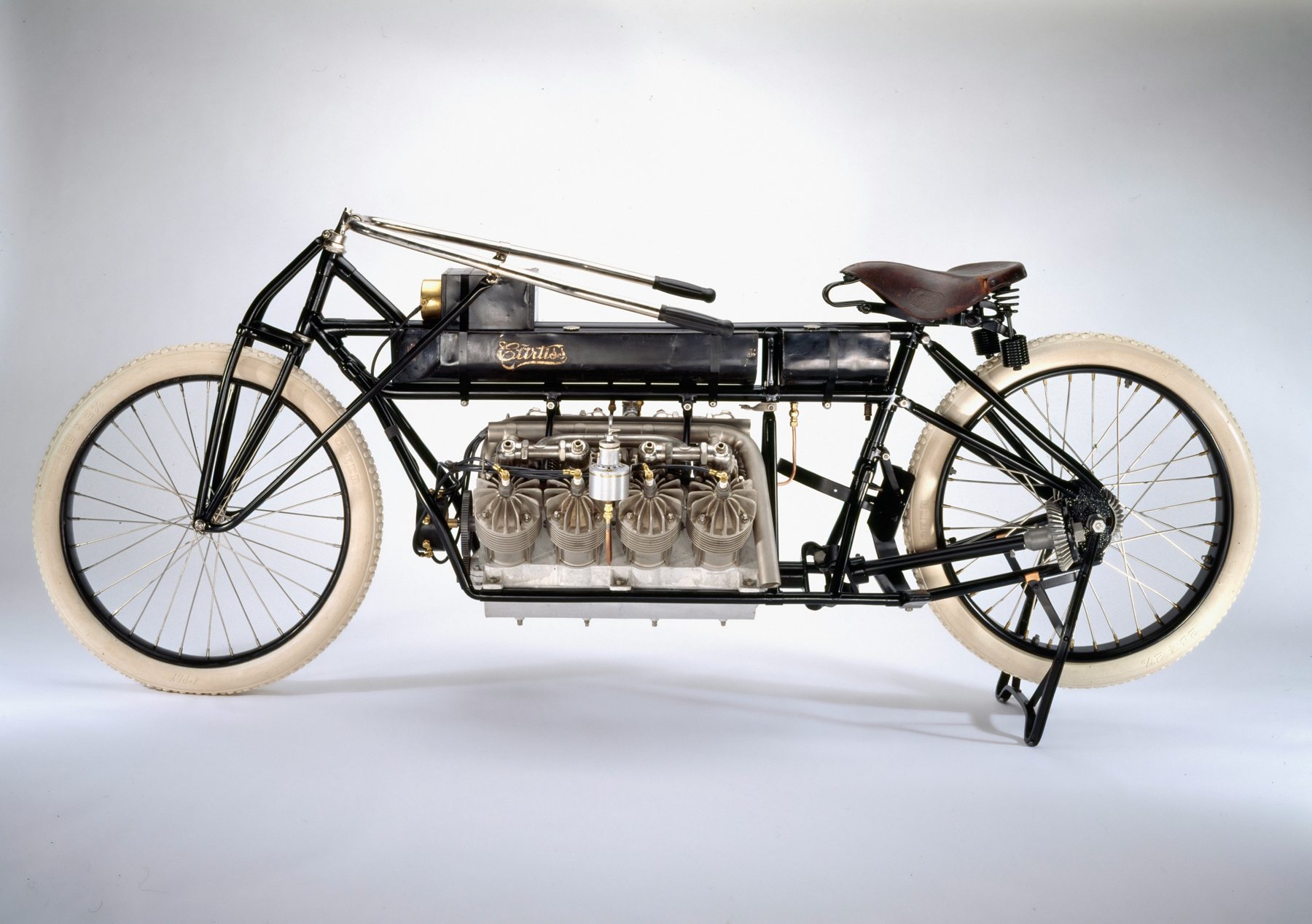
From steam velocipede to battery swapping
Six periods, each with the dates and machines that changed how motorcycles are built. Dates and facts come from chapter 1.1 of Module 01 and from the history notes in Modules 03 to 05.
Four inventions meet
A practical motorcycle needed a compact engine, the pneumatic tyre, the roller chain and a frame able to carry a rider and a power unit. All four arrived within about twenty years.
- 1867–69
Roper’s steam velocipede
Sylvester Roper builds a steam-powered two-wheeler in the United States, one of the first powered machines of its kind.
- 1868
Perreaux patents a small steam engine
Louis Guillaume Perreaux files his patent on 26 December 1868. By 1871 the engine is fitted to a Michaux iron-framed velocipede, with a pulley drive to the rear wheel.
- 1876
Otto runs a four-stroke engine
Nikolaus Otto runs a four-stroke engine: intake, compression, power, exhaust. Most combustion motorcycles still use this cycle.
- 1880
The bush roller chain
Renold’s bush roller chain gives a compact way to take drive to the rear wheel.
- 1885
The Daimler Reitwagen
Gottlieb Daimler and Wilhelm Maybach mount a small high-speed petrol engine in a wooden frame with outrigger wheels. It is an engine test bed, not a product.
- 1886
The Starley safety bicycle
Two wheels of similar size, a chain to the rear wheel and a diamond-shaped frame: the geometry the first motorcycles borrowed.
- 1888 and 1895
The pneumatic tyre
Dunlop’s pneumatic tyre of 1888, followed by Michelin’s in 1895, completes the set of four inventions.
Practical petrol engines
Dunlop, then Michelin
Renold bush roller chain
Starley safety bicycle
The first motorcycles
The first machines sold to the public showed what worked and what did not. Within ten years the basic layout was settled.
- 1894
Hildebrand & Wolfmüller
The first machine sold in series and called a “motorrad”: a water-cooled 1,489 cc twin whose connecting rods drove cranks on the rear wheel directly, with no flywheel or gearbox. About one thousand were built before the company failed in 1897.
- 1897
The Werner
The Werner carries its engine above the front wheel. The high centre of mass makes the front wheel prone to slide.
- 1901
The New Werner and Indian
The New Werner moves the engine down to the bottom-bracket position between the wheels. In the same year Indian is founded in the United States.
- 1903
The layout is settled; Harley-Davidson
By about 1903 the engine low and central with the tank above it is established practice. Harley-Davidson is founded; with Indian it is one of the two American makers to survive the 1930s.
What the first machines taught
The Hildebrand & Wolfmüller proved there was demand, but a direct drive with no flywheel could neither idle nor pull away cleanly. The Werner showed that engine position decides how a motorcycle handles. Both lessons are still visible on every machine in the workshop.
Two-strokes, twins and better forks
Between the wars motorcycles gained overhead valves, chain final drive and the engine layouts that would be copied for decades.
- 1912 and 1913
Scott two-strokes win the Senior TT
Alfred Scott’s water-cooled two-stroke twins win the Isle of Man Senior TT in two successive years.
- 1920s–30s
Overhead valves and chain final drive
The interwar years bring overhead valves and chain final drive into general use.
- 1937
The Triumph Speed Twin
Edward Turner’s Speed Twin sets the parallel-twin layout that other makers copy for half a century.
- After 1945
The DKW RT125 is copied worldwide
DKW’s loop-scavenged RT125 is copied as the BSA Bantam, the Harley-Davidson Hummer and Yamaha’s first product, the YA-1. It becomes the template for cheap motorised transport.
- Late 1940s
The telescopic fork
Just after the Second World War the hydraulically damped telescopic fork becomes general.
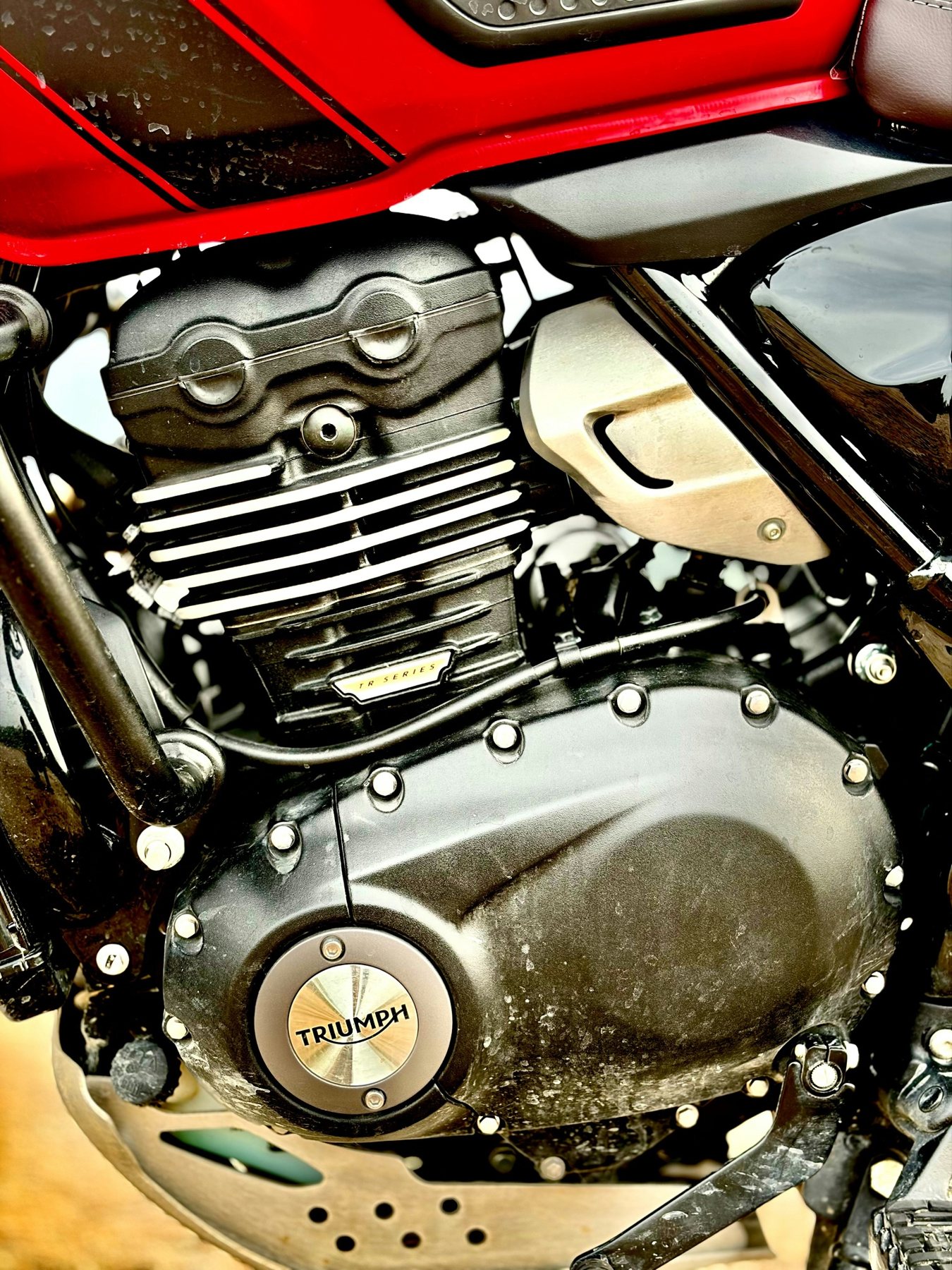
Mass production
From the late 1950s Japanese mass production changed the economics of the motorcycle, and two-stroke engines reached very high outputs.
- 1958
The Honda Super Cub
A step-through with a 49 cc overhead-valve four-stroke and an automatic centrifugal clutch. It is generally described as the most-produced motor vehicle in history.
- 1969
The Honda CB750
An overhead-camshaft inline-four and a front disc brake reach the mass market.
- 1960s–70s
Two-stroke development
Suzuki, Kawasaki and Yamaha add reed valves, exhaust power valves and expansion chambers. Specific outputs rise sharply, but a ported two-stroke loses part of its fresh charge into the exhaust and burns its lubricating oil.
- 1975
Linked brakes
Moto Guzzi fits linked “integral” brakes on the 850 T3, an early form of the combined braking later required on small motorcycles.
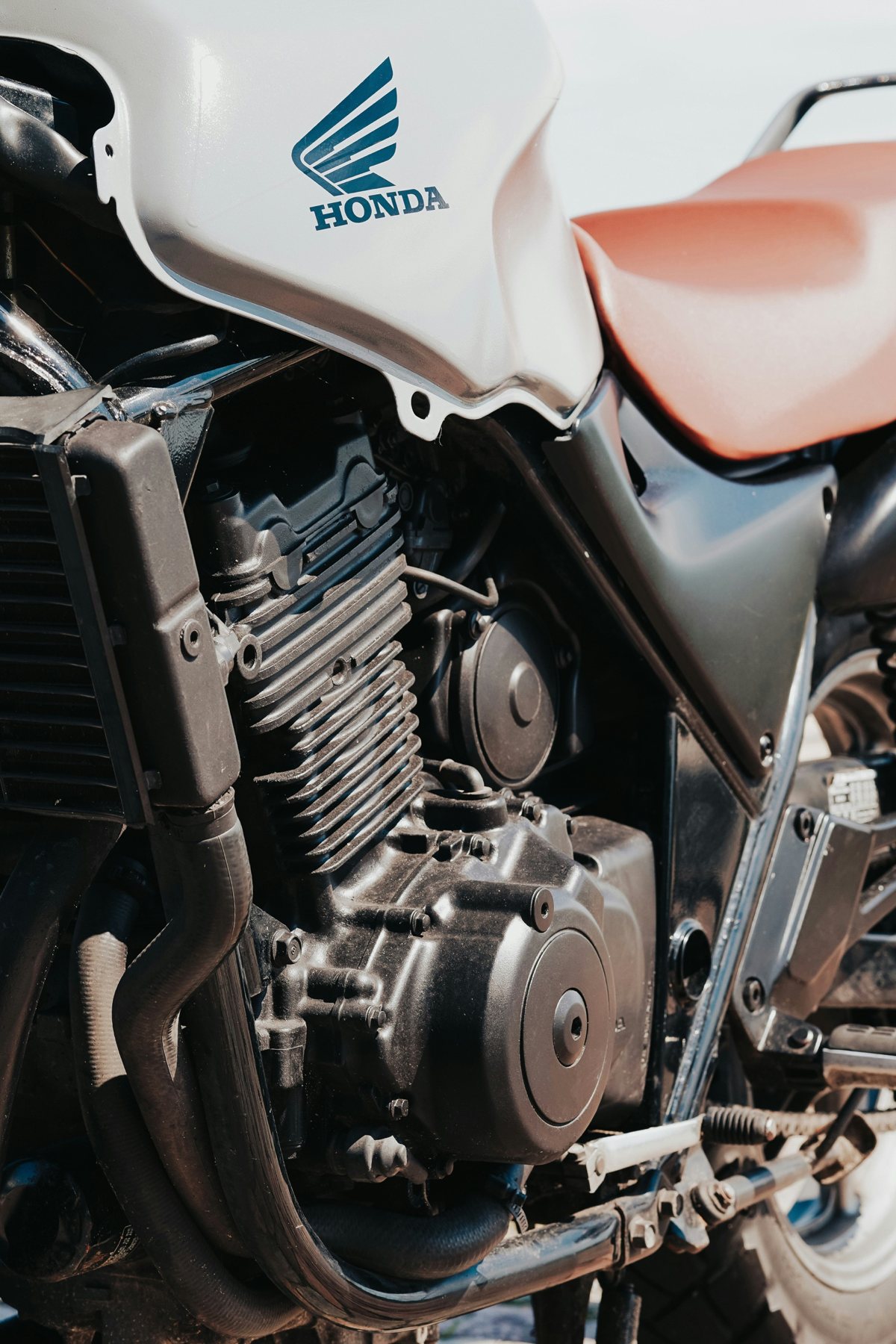
Rules shape the machine
Emission limits and braking rules, more than fashion, decided what a road motorcycle looks like today: fuel injection, a catalytic converter and ABS or CBS.
- Late 1970s
US emission rules
US EPA rules begin the pressure on two-stroke road machines, whose hydrocarbon emissions are many times those of a four-stroke.
- 1980
Toothed belt drive
Harley-Davidson starts using toothed belts with carbon or aramid cords for final drive. They are now common on electric motorcycles.
- 1988
The first production ABS
BMW offers the first production motorcycle ABS on the K100.
- 2005–10
Euro 3 and Bharat Stage II and III
Euro 3 (2006) in Europe and Bharat Stage II and III in India push road two-strokes out of most markets. They survive in off-road competition, some direct-injection designs and older fleets.
- 2013
Stability control at lean
Bosch Motorcycle Stability Control is first fitted on the KTM 1190 Adventure.
- 2016–17
Euro 4 and compulsory ABS in the EU
Euro 4 applies from 2016. Under Regulation (EU) No 168/2013 ABS becomes compulsory above 125 cc (new types from 2016, all new registrations from 2017), with ABS or CBS on the 125 cc class.
- 2017
One hundred million Super Cubs
The Super Cub passes 100 million units in October 2017.
- 2018–19
ABS and CBS in India
India requires ABS above 125 cc and CBS at or below 125 cc on new models from April 2018 and on all models from April 2019.
- 2020
Euro 5 and BS-VI: the end of the carburettor
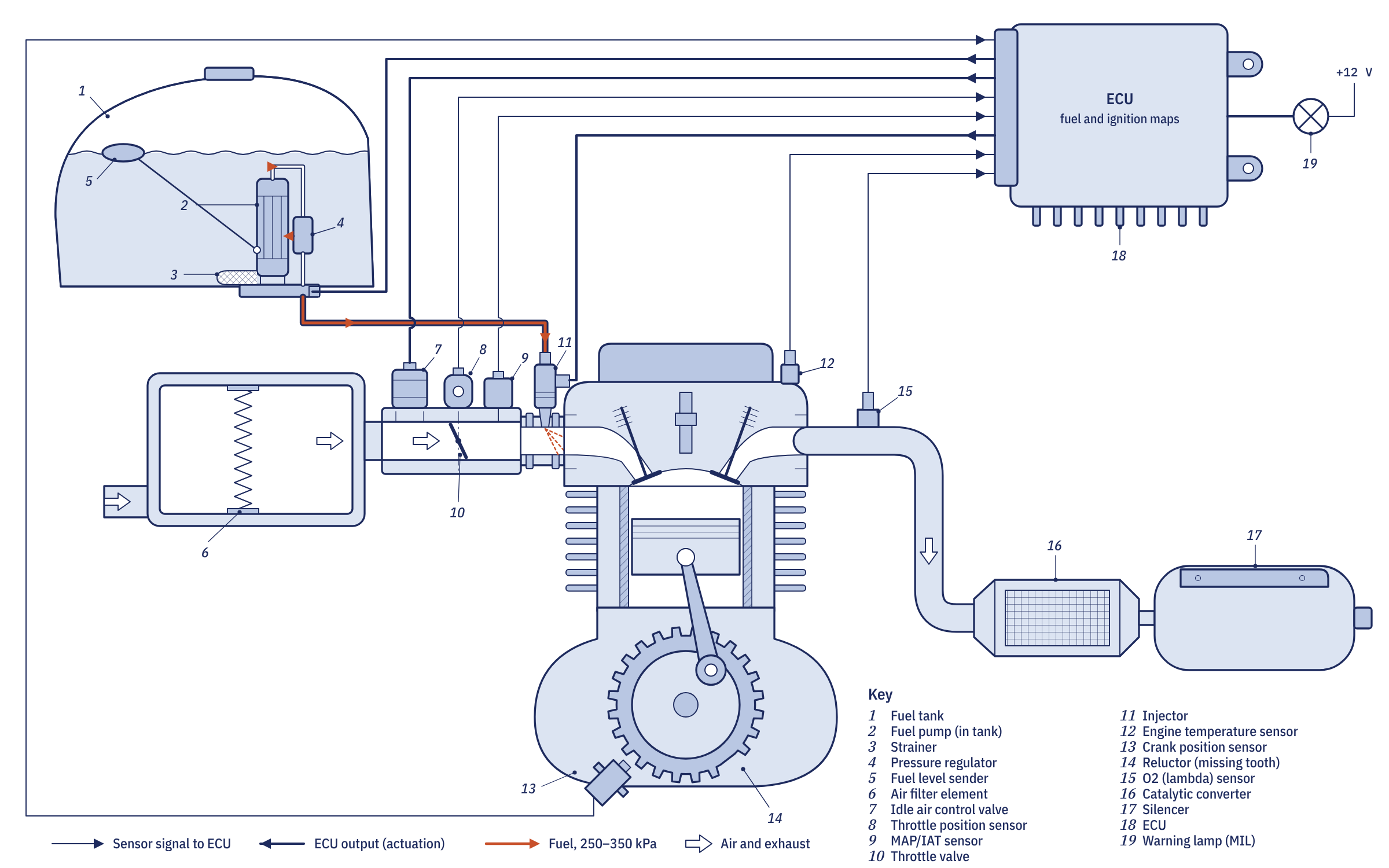
Euro 5 (new types from 1 January 2020) and India’s BS-VI (1 April 2020) require the mixture to be held at stoichiometric, 14.7:1 for petrol, so a three-way catalyst can work. In practice that means fuel injection with an oxygen sensor, even on 100–125 cc commuters such as the K-Light 125.
The electric transition
The current transition is electric, and it is happening fastest where small motorcycles and scooters carry most of the traffic.
- 2015
Gogoro battery swapping
Gogoro introduces its swap network in Taiwan. Automated stations release a charged pack in seconds; by 2020 Gogoro operates about 1,700 sites in Taiwan.
- 2019
A common Japanese battery
Honda, Kawasaki, Suzuki and Yamaha form the Swappable Batteries Motorcycle Consortium to agree common specifications for swappable batteries and stations.
- 2022
Gachaco
The four makers and the energy company ENEOS create Gachaco, a swap service in Tokyo using a shared pack of about 1.3 kWh.
- 2020s
China and India
China’s fleet of electric two-wheelers is commonly estimated at more than 300 million. India’s electric two-wheeler sales pass one million a year in the mid-2020s.
- 2020s
East Africa
Where motorcycle taxis (boda bodas in Kenya and Uganda, motos in Rwanda) carry a large share of urban trips, firms such as Roam, Spiro and Ampersand build or import electric motorcycles and run swapping networks. Spiro reports over 50,000 machines and over 1,000 swap stations in late 2025.
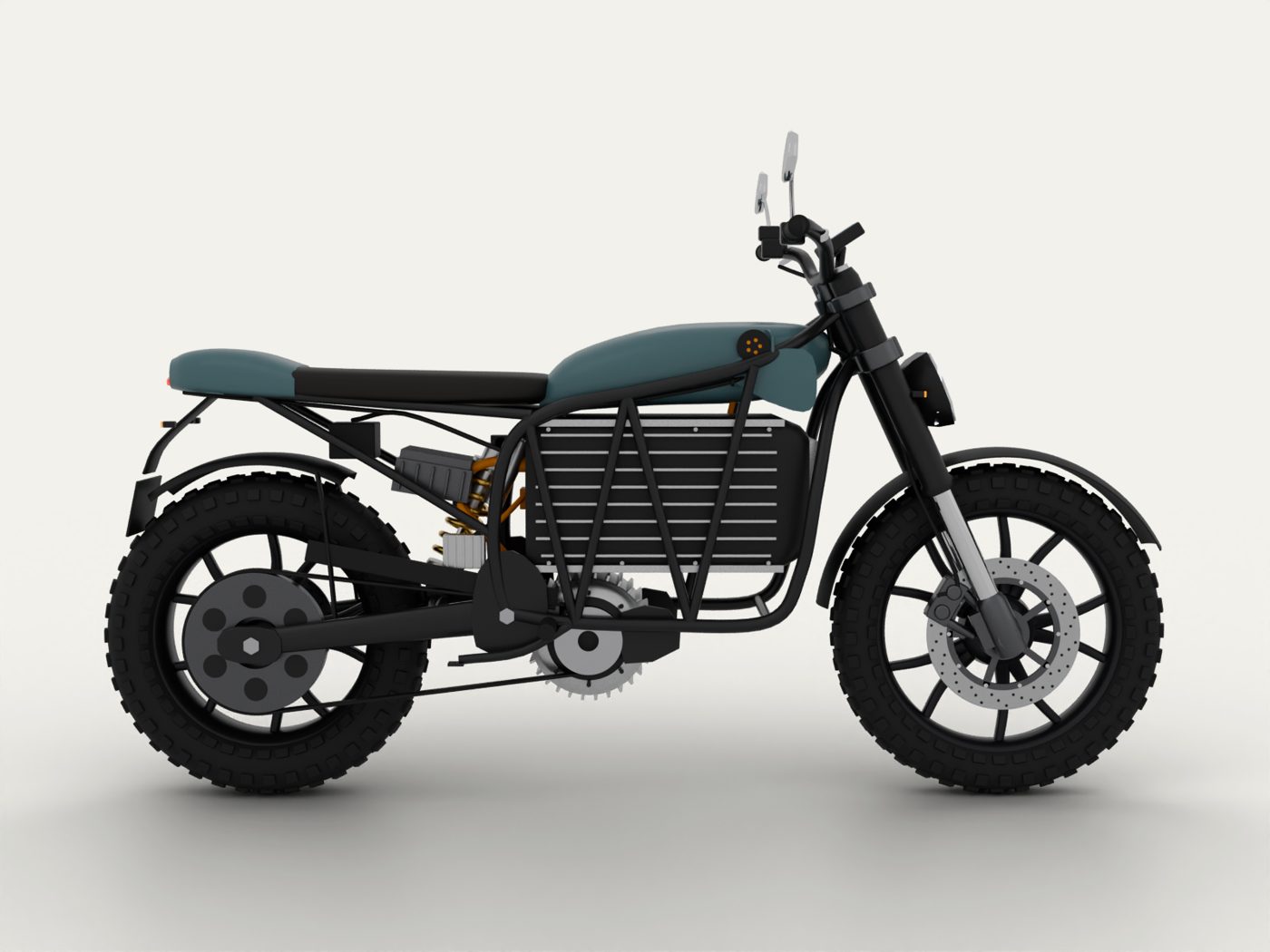
Three machines, three generations
The course uses three reference motorcycles that sum up the story so far: the air-cooled four-stroke that mass production made common, the two-stroke that emission rules pushed off the road, and the electric machine now replacing both in many cities.
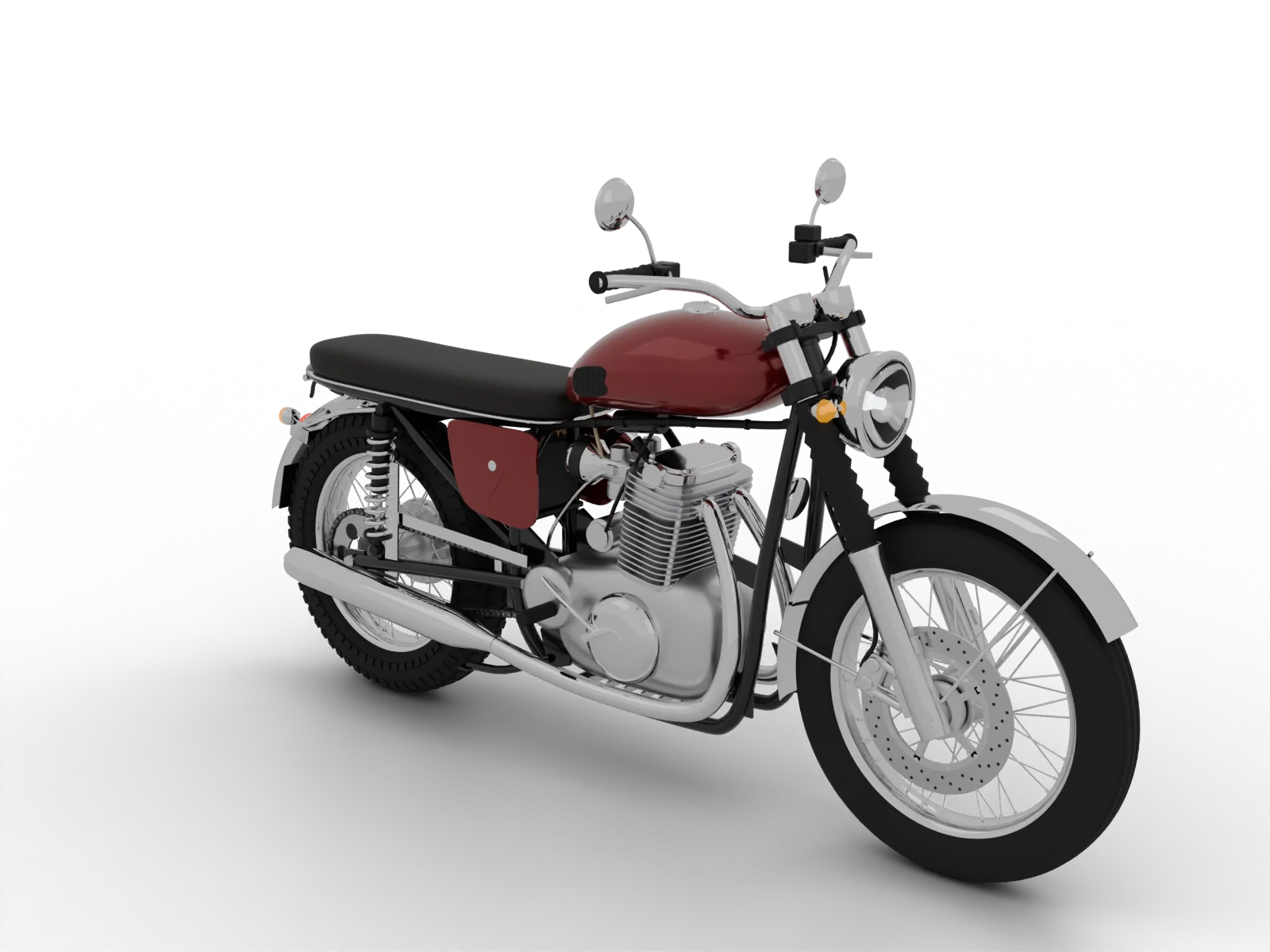 Four-stroke
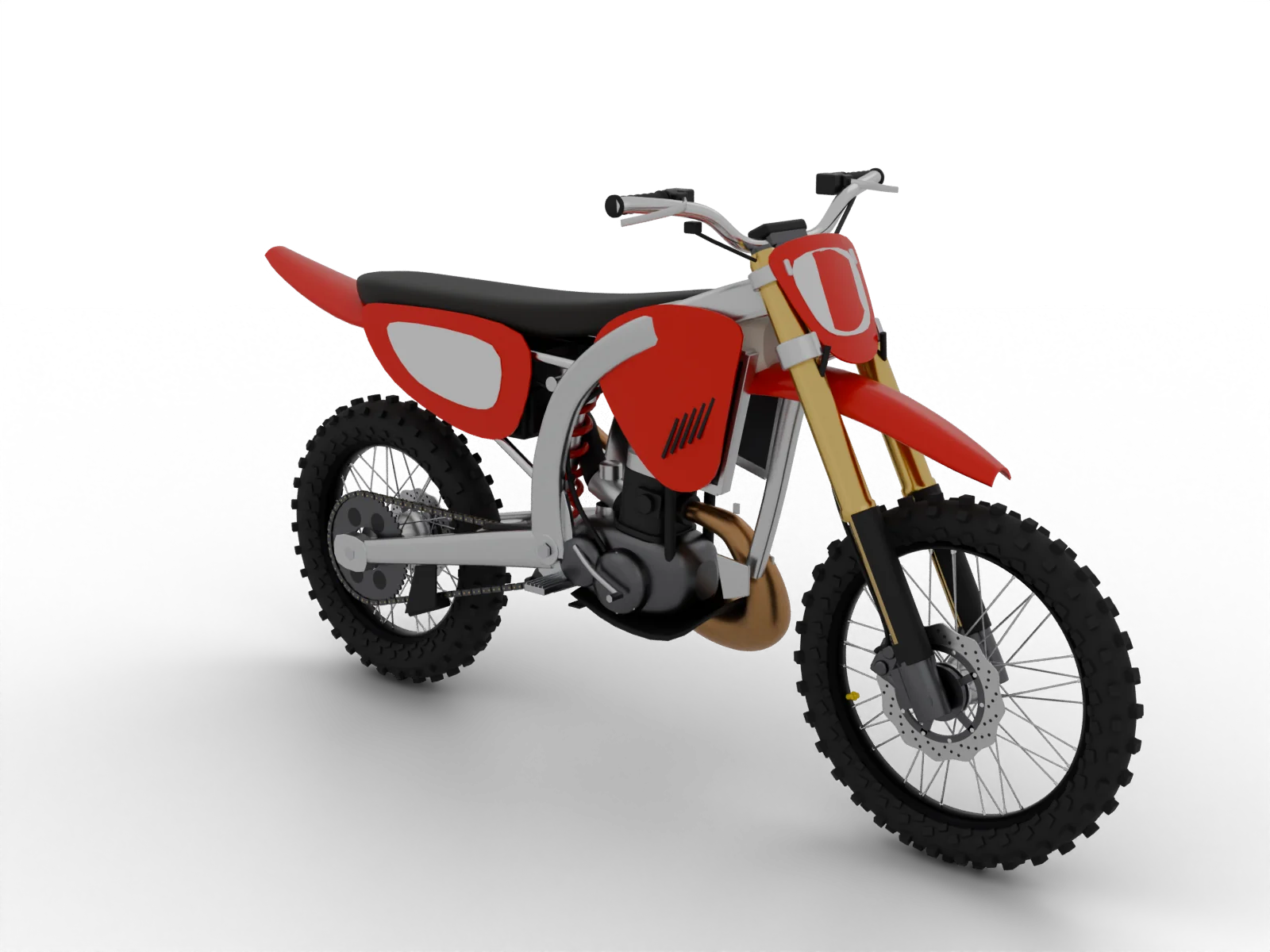 Two-stroke
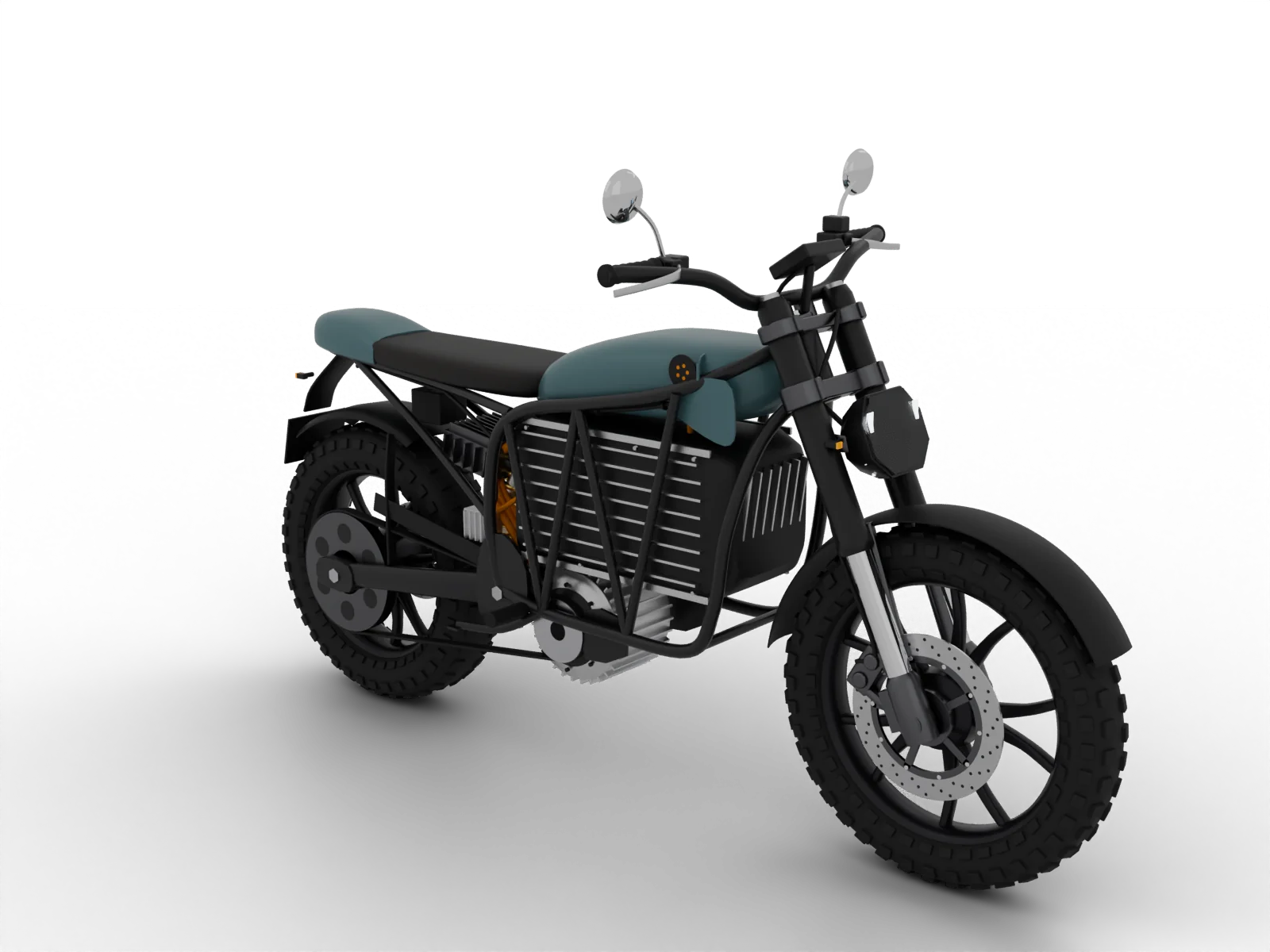 Electric
Where this history comes from
The early part of this history draws on Charles M. Falco’s essay on the technical evolution of the motorcycle in the Solomon R. Guggenheim Museum’s exhibition catalogue The Art of the Motorcycle (New York, 1998). Falco sets out the four inventions that had to meet and records the production figures for the Hildebrand & Wolfmüller. The regulatory dates come from the regulations cited in Modules 03 and 04, and the electric figures from Module 05.
Chapter 1.1 of Module 01 tells the same story in more depth and then shows how to read any motorcycle as a set of connected systems.