
A broken spoke is a warning. One spoke on a sound wheel may be replaced. Several, or a damaged hub or rim, may mean a new wheel or a full relace. This page helps choose and describes how a workshop does the job.
Is it safe to ride?
- One broken spoke: ride gently to the workshop. Wire or tape the loose end to a nearby spoke so it cannot flail round the wheel.
- Two broken spokes, not next to each other: ride with great care and fix soon.
- Three or more, or any two next to each other: do not ride. The wheel can fail suddenly.
Choose the repair
- Replace the spoke only. Works if the nipple turns and the wheel runs true.
- Relace the wheel with a new rim, hub or full set of spokes. Good for older wheels with a bent rim or many broken spokes, but nipples may be rusted tight to spokes and have to be cut off.
- New or used wheel. A used wheel from a breaker's yard can cost less. Check the spokes, the rim true and the bearings first, and plan to fit new bearings.
Match the spokes
- Same number of spokes as the rim and hub holes. Count them.
- Right length and thickness (gauge). Measure an old spoke.
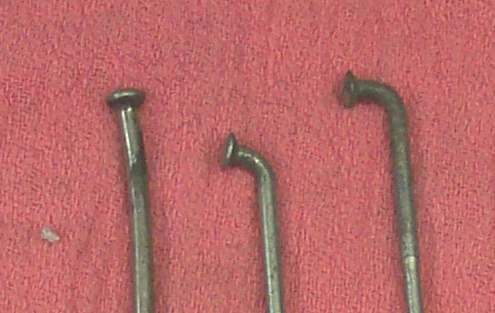
- Right head shape: straight, slightly bent or strongly bent. Straight heads are strongest.
- Some wheels take tubeless tyres. The spokes are set in the rim to keep it airtight. Do not swap these for ordinary spokes.
What the workshop does
- Takes off the tyre, tube and rim tape.
- Wires each pair of spokes (left and right) together so they are not mixed up.
- Works one pair at a time: takes off the nipples, swaps the old pair for the new pair, and rewires the next pair.
- Screws all nipples on the same amount, finger tight.
- Trues the wheel (True a spoked wheel by small spoke adjustments).
- Checks that no spoke end sticks through the nipple, then fits rim tape.
What to ask for
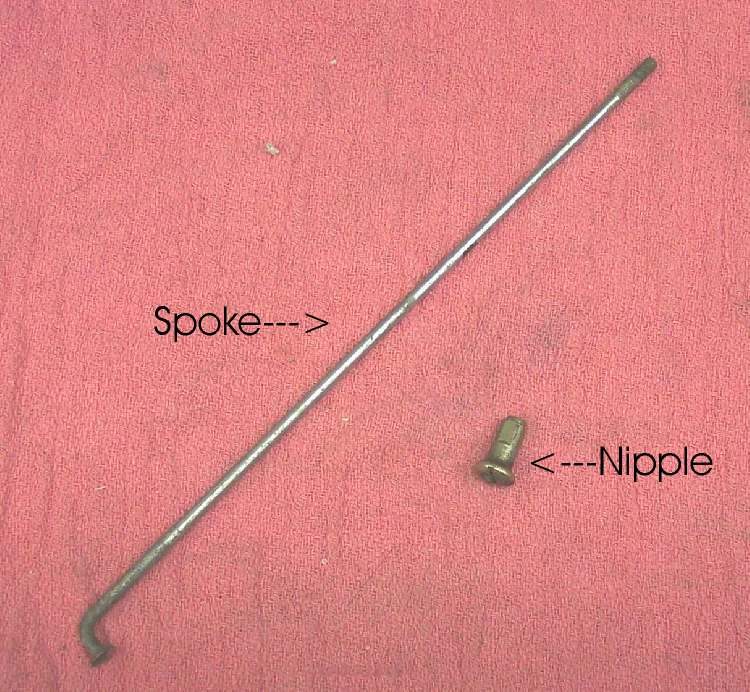
- New spokes and nipples that match the old ones.
- The wheel trued and the runout figure read back to you.
- New wheel bearings if they are old. See Replace wheel bearings.
Check your work
- No loose or broken spokes. All ring evenly when tapped.
- The wheel runs true and the tyre sits evenly.
If it did not fix the problem
- Still wobbling: Wheel is bent or buckled.
- Spokes loosen again: Spokes are loose or broken.