
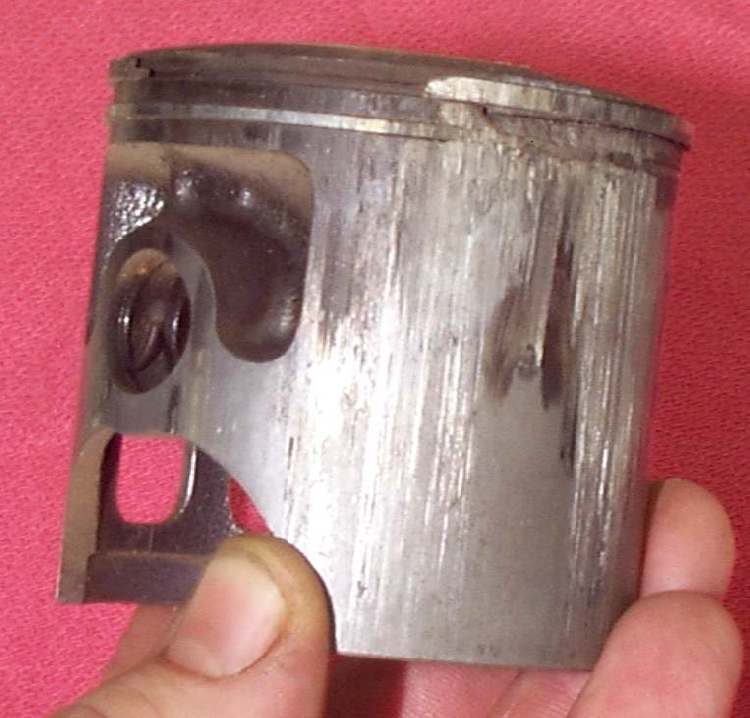
New moving parts must wear in against each other. Too much load makes heat, which can break down the oil and seize the piston. Too little load can glaze the cylinder wall so the rings never seat, and the engine never reaches full power. The answer is a middle way: short bursts of load with cooling time between.
Safety
- Never run a rebuilt engine hard or at a steady speed for long.
- Stop and let the engine cool if it gets very hot.
You need
- The break-in distance and oil advice in your bike's manual. Use that first.
- Fresh oil and a new filter for the early oil changes.
Steps
- Check oil level and, on a two-stroke, oil supply before every ride.
- For the first part of the break-in, ride gently with varied speed and throttle. Do not hold one throttle setting for long.
- On a straight, quiet road in second or third gear, accelerate firmly to a little below the maximum engine speed. Shut the throttle and let the engine slow in gear. Repeat several times, then ride easily to cool.
- Repeat that routine a few times during the break-in period.
- On a long steady stretch, shut and reopen the throttle now and then. This draws oil to the piston.
- Increase load slowly after the first stage. A very hard metal may take longer to seat.
- Change the oil and filter early after a rebuild or a new engine, then on the normal schedule. Use the intervals in your manual: Change engine oil and filter.
Check your work
- Oil level stays steady and no smoke comes from the exhaust after warm up.
- Power rises as the miles build.
If it did not fix the problem
- Smoke continues after the break-in: Engine still smokes after a rebuild.
- Engine feels weak: Engine feels weak.
- Engine locks up: Engine has seized.