
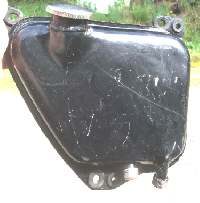
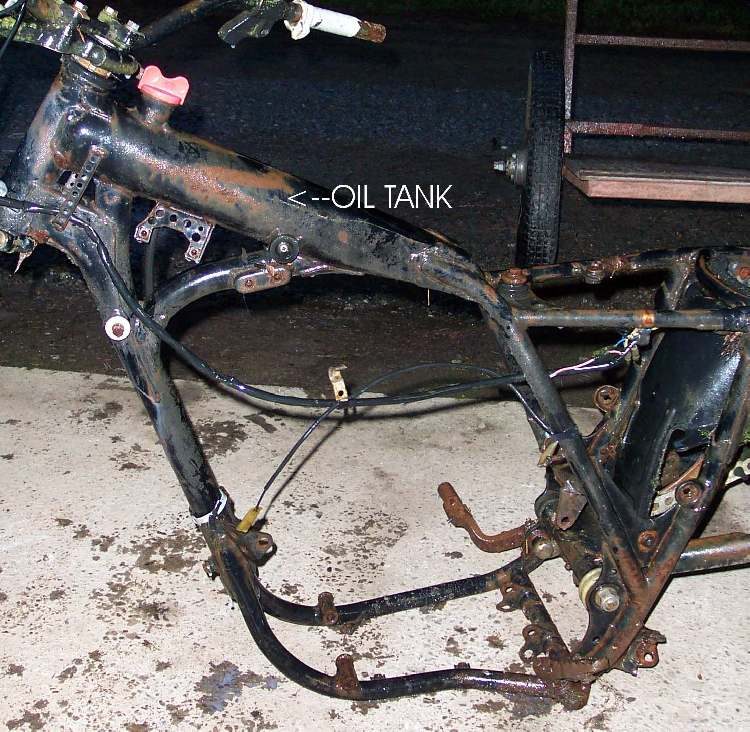
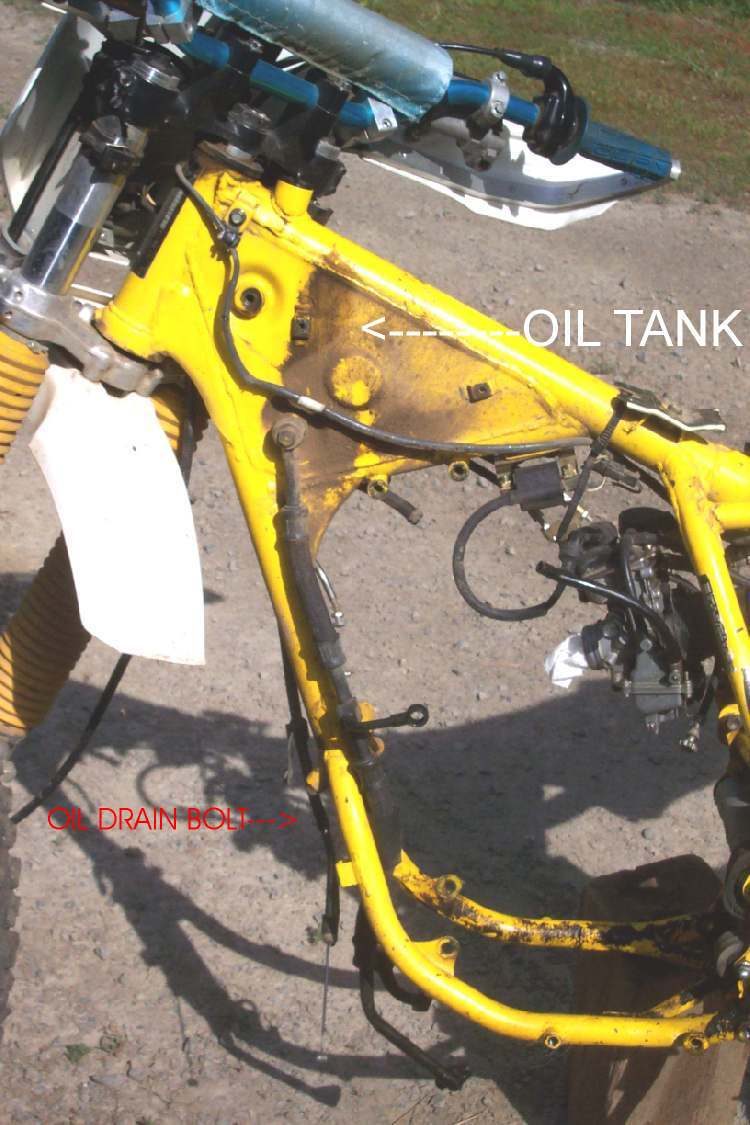
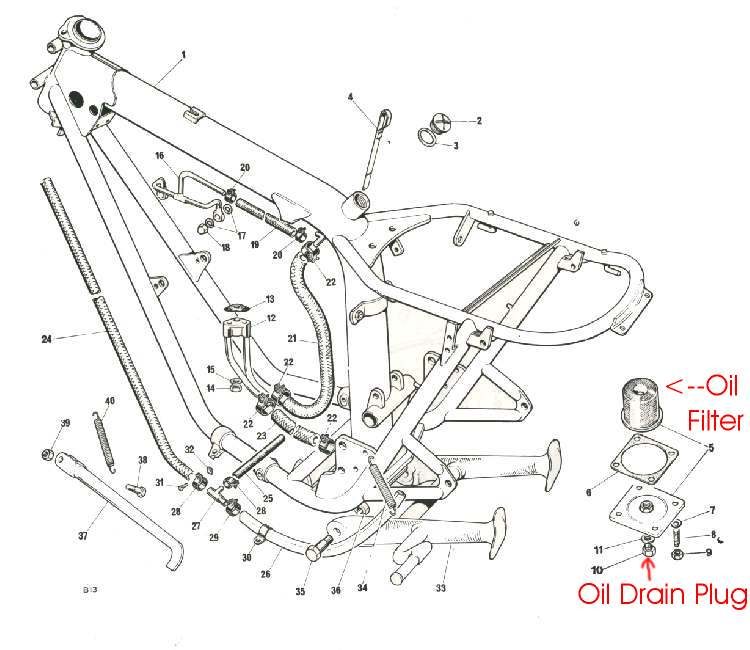
On a dry-sump engine the oil is carried in a tank, not in the crankcase. The tank is either a small separate tank fixed to the frame or part of the frame itself, such as the backbone and front downtube on many Japanese bikes, or the top tube and rear tube on some British bikes. Oil flows by gravity from the tank to the oil pump.
What it does
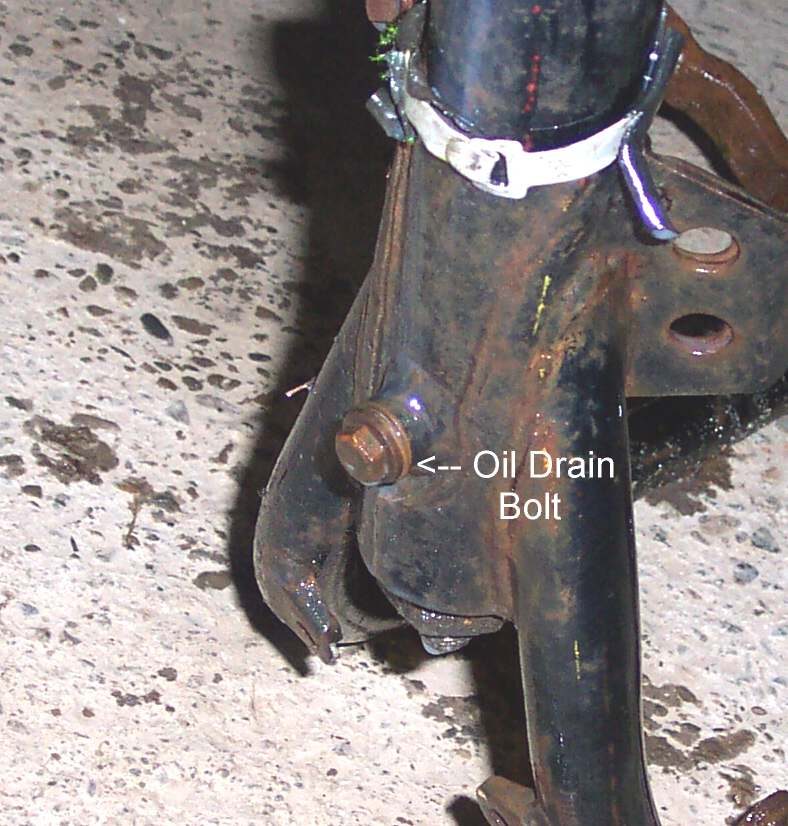
It stores the oil and gives it time to settle. A scavenge pump returns oil from the crankcase to the tank. The tank has a filler with a dipstick and a drain plug at the lowest point.
Signs it is worn or failing
- Oil weeping at the drain bolt, hose joints or seams: Oil leaking under the bike.
- Level that reads low after the bike has stood: normal until the engine has run. See Check the oil level on a dry-sump engine.
- Rust or cracks on a frame tank, or a blocked vent.
When to replace it
A cracked separate tank is replaced. A leaking frame tank is a frame repair and needs a workshop.
What to match when buying
- The exact model and year. Tanks differ in filler, hose outlets and mounting.
- The drain plug thread and washer: see Drain and refill a dry-sump or frame oil tank.