
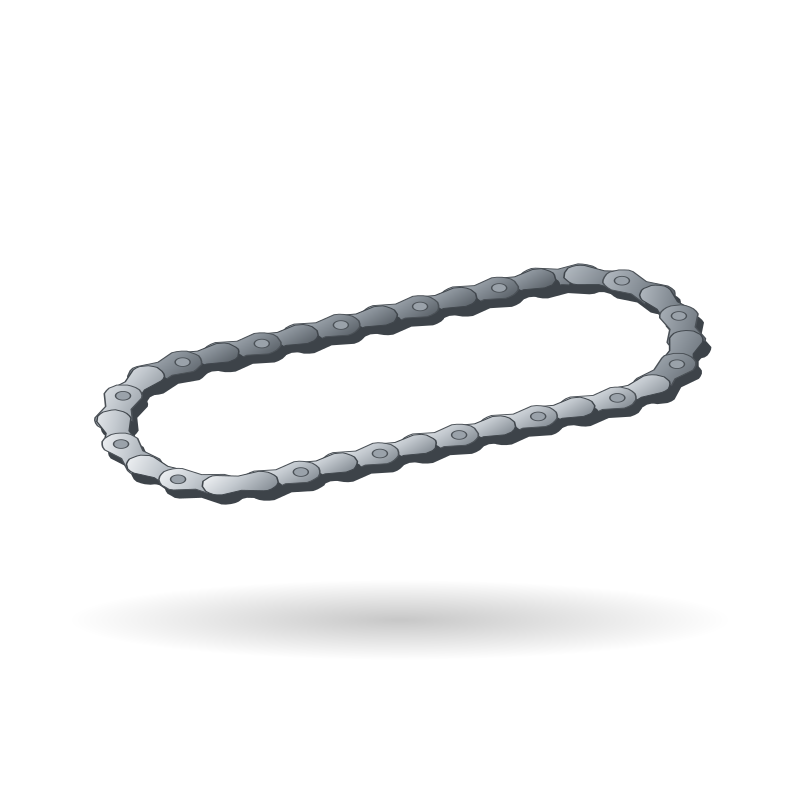
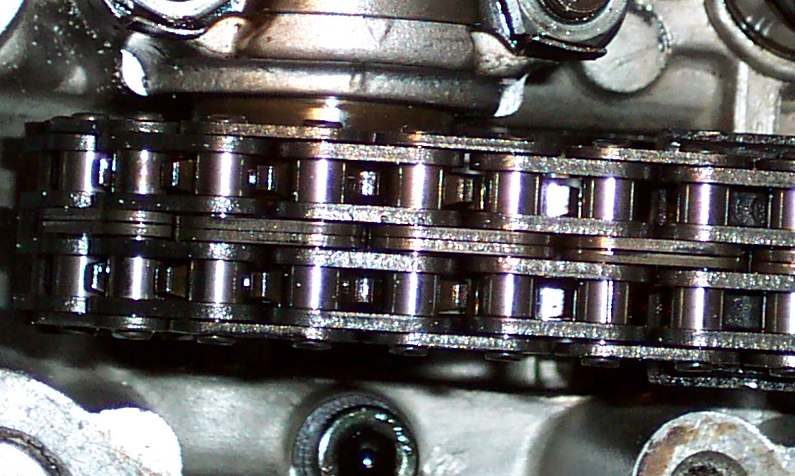
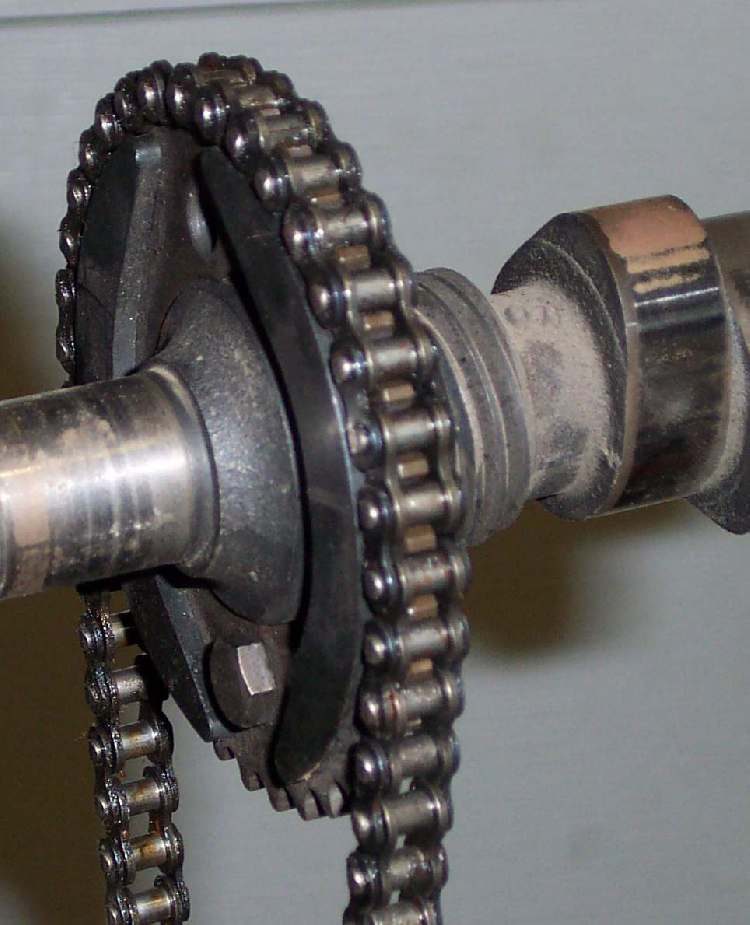
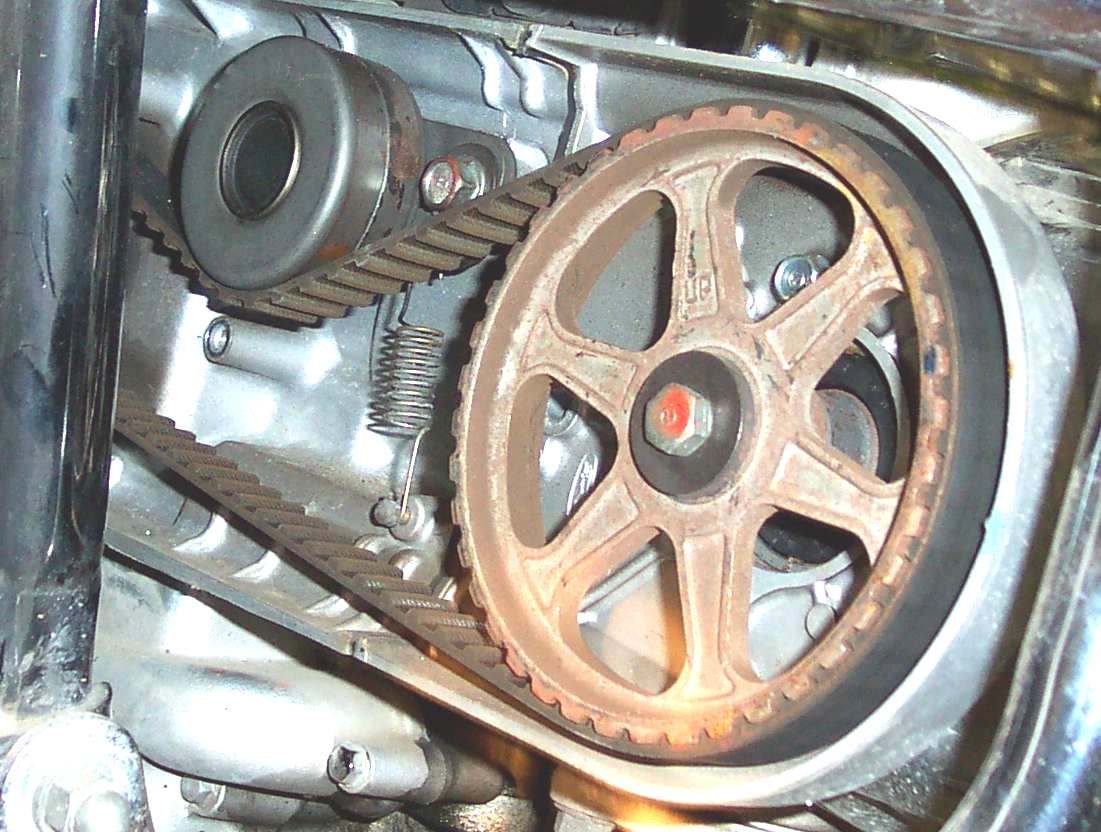
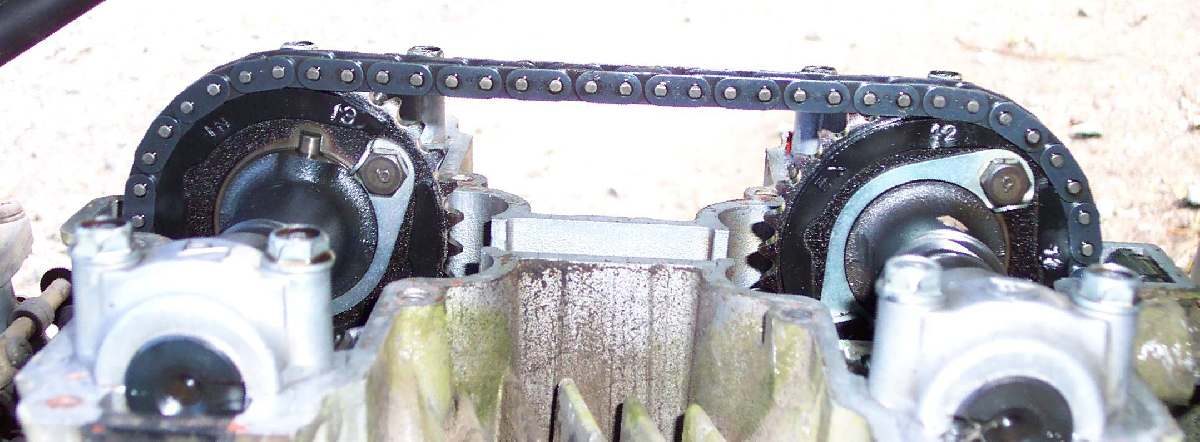
The cam chain is a small chain inside the engine that links the crankshaft to the camshaft in the cylinder head. It runs in a tunnel on one side of the cylinder. Only overhead-cam (OHC) engines have one. The K-Light 125 is a pushrod engine and has no cam chain; it drives its cam by a gear.
What it does
The chain turns the camshaft at half crank speed so the valves open in time with the piston. A tensioner and guides keep it tight. The chain stretches slowly as its pins wear, faster with dirty oil or long oil change intervals. A slack chain slaps on its guides, and if it jumps a tooth the valves can hit the piston.
Signs it is worn or failing
- Rattling from the cam chain area, loudest at idle or on a cold start.
- Low power or rough idle if the valve timing has moved.
- Metal in the oil from worn guides.
When to replace it
When the tensioner has no adjustment left, the chain is stiff or stretched past the maker's limit, or the sprockets are worn. Replace the chain, tensioner and guides together if the guides are worn. There is no common adjustment or limit for all models; use your bike's manual.
What to match when buying
- Match engine code, chain type (roller or silent/inverted tooth) and number of links. Two chains can look alike and differ by one or two links.
- Endless chains need the crank side of the engine opened; split chains need a riveting tool and a matching link.
- Good chains come from known chain makers, with stamped side plates and smooth, even links.
Fitting notes
- Workshop job: Check the cam chain and tensioner.
- Timing marks on the crank and cam must line up before the tensioner is released.
- Turn the engine by hand two full turns and check the marks again before starting.